Articles
Goodbye to dark suits: Why Zohran Mamdani's “rumpled politics” is rewriting the rules in the U.S.
For decades, traditional politics accustomed us to a staging as predictable as it was distant: dark suits, solemn lecterns, speeches read in a doctoral tone and an invisible but impassable barrier between the representative and the represented. Yet, in a context marked by institutional disenchantment and absolute distrust of traditional party structures, that aesthetic and communicative model simply stopped working.
For decades, traditional politics accustomed us to a staging as predictable as it was distant: dark suits, solemn lecterns, speeches read in a doctoral tone and an invisible but impassable barrier between the representative and the represented. Yet, in a context marked by institutional disenchantment and absolute distrust of traditional party structures, that aesthetic and communicative model simply stopped working.
It is in this setting that the figure of Zohran Mamdani, whose emergence and consolidation on the New York scene have shaken the local board, acquires fundamental analytical value. In my view, his phenomenon represents much more than a one-off electoral success; it is a masterclass in what genuine political humanization means.
Mamdani's great merit does not lie in inventing anything radically new, but in understanding the era he lives in. Against empty solemnity, he sets closeness; against abstract rhetoric, he sets everyday problems such as the cost of rent or the price of transit; and against campaigns designed in closed offices, he offers a constant presence on the street.
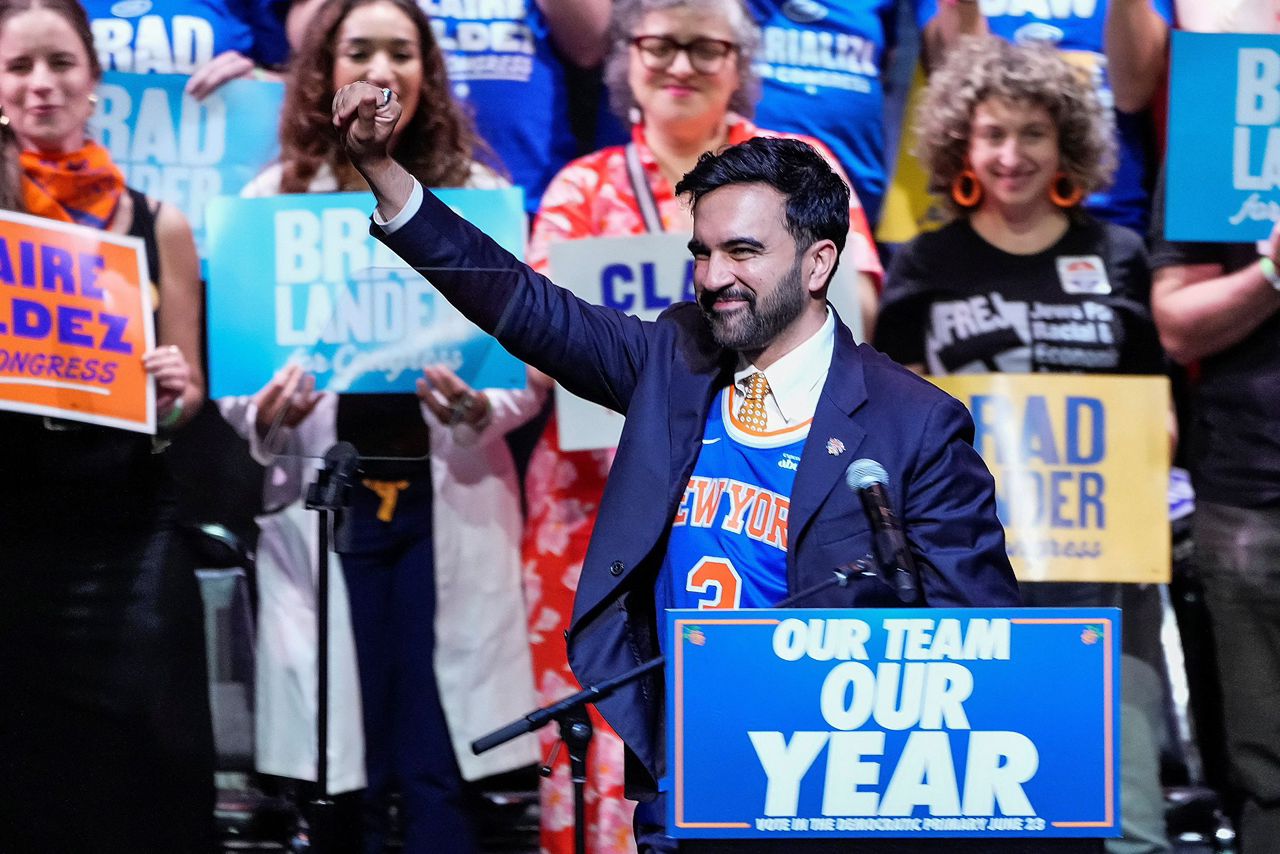
Mamdani's first victory is visual. Classic politics has sold us the idea that seriousness depends on rigor in dress and on patriotic symbols carefully placed within the frame. Mamdani breaks that convention by adopting an absolutely down-to-earth aesthetic that ordinary citizens recognize.
Symbology and Color Palette: Rather than saturating his materials with the classic institutional two-tone scheme (patriotic blue and red), his graphic identity favors warm, identity-driven colors such as orange and electric blue. These are the tones that mark the city's daily rhythm: the taxis, the subway signs and the neighborhood bodegas.
Body Language and Clothing: It is hard to picture him in the rigidity of a formal suit. His usual attire suits the urban setting, and his body language conveys openness: he walks among people, listens on the platforms and smiles naturally, presenting himself as one more resident who understands the problems because he lives them.
Community Design: The pieces of his campaign draw on a typeface reminiscent of neighborhood posters or local restaurant menus. The implicit message is powerful: the proposal is not dictated by image consultants but comes from the community.
Many public figures make the mistake of using social networks as a simple bulletin board for official notices. Mamdani's strategy, by contrast, operates under the native logic of the content creator.
The element I consider most revealing of his social media strategy is his willingness to show imperfections. Instead of projecting the unreachable image of the politician who knows everything, he has shared humorous and candid videos about his own process of learning to deliver speeches in Spanish and other languages spoken by immigrant communities in New York. That display of vulnerability generates an immediate empathy that no high-budget advertisement can buy.
Likewise, his formats on TikTok and Instagram focus not on him but on his neighbors. By conducting brief street interviews about the price of food or housing, Mamdani makes the citizen the true protagonist of the story. Reaching Generation Z and Millennials is today the great headache of campaign teams. The usual mistake is trying to "look young" through forced efforts that end up bordering on the ridiculous.
Mamdani does not suffer from this problem because his rapport is organic. His cultural background and his own identity allow him to move fluently among the codes of pop culture, digital humor and urban diversity without sounding phony. Moreover, he has achieved something fundamental: turning digital impact into territorial organization. A Reel or a TikTok does not stop at a simple "like"; it serves as a gateway for recruiting volunteers for leafleting days and community work. The Zohran Mamdani phenomenon shows that the humanization of politics is neither an aesthetic ornament nor a passing social media fad; it is the inevitable response to a citizenry tired of artifice.
His model makes clear that, ahead of the coming electoral cycles in the United States, the key to mobilizing disenchanted voters lies not in grandiloquent speeches or multimillion-dollar campaigns, but in the real capacity to come down to earth, listen to people with humility, and communicate solutions with clarity, empathy and a sense of community.