Articles
Latin America and the sad sentence of being the planet's eternal warehouse
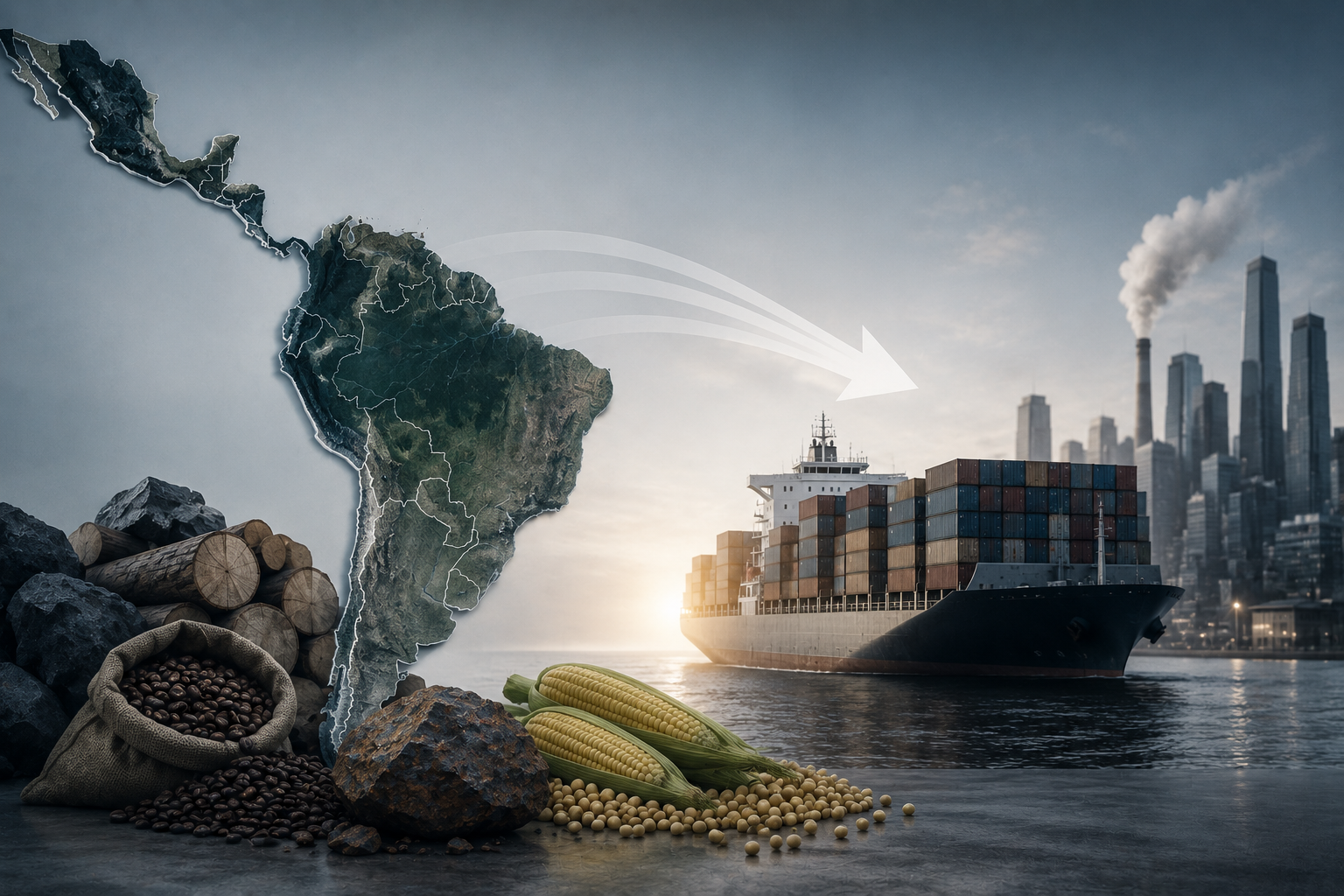
Let us look for a moment at the logic on which trade in our region operates: we export millions of barrels of heavy crude to foreign refineries only to end up importing expensive gasoline; we export millions of tonnes of raw soybeans to Asian plants and then buy packaged processed foods; we export lithium and pure copper in sacks of earth and then import smartphone batteries and electric vehicles made in Asia with a profit margin of 800%.
How much longer are we going to keep putting up with this colonial absurdity in Latin America?
In the 21st century, the region's productive structure remains trapped in the primary-export model designed in the 19th century. We debate whether to privatize or nationalize the wells, but almost no government dares to take the real qualitative leap: processing raw materials on our own soil. As neighboring countries compete with one another by cutting taxes and lowering their workers' wages to see who attracts the extractive multinational of the moment, we will keep being serfs of the global value chain. We are left with the mine shafts, polluted rivers and environmental liabilities, while the financial gains go straight to offshore accounts.
Leaving blind extractivism does not mean closing the mines overnight, but demanding technology transfer and national industrialization as a mandatory condition for operating. The regional development banking system, led by the Development Bank of Latin America and the Caribbean (CAF) and the Inter-American Development Bank (IDB), must stop financing useless consulting studies and channel its credit resources into creating public and mixed enterprises that manufacture high value-added inputs. Without industrial sovereignty or homegrown science, the political independence of our peoples will remain a pretty poem for history books.
Sources: Economic Commission for Latin America and the Caribbean (ECLAC) (https://www.cepal.org) | Development Bank of Latin America and the Caribbean (CAF) (https://www.caf.com)