Articles
The income tax advance: a drag on liquidity and on your company's growth
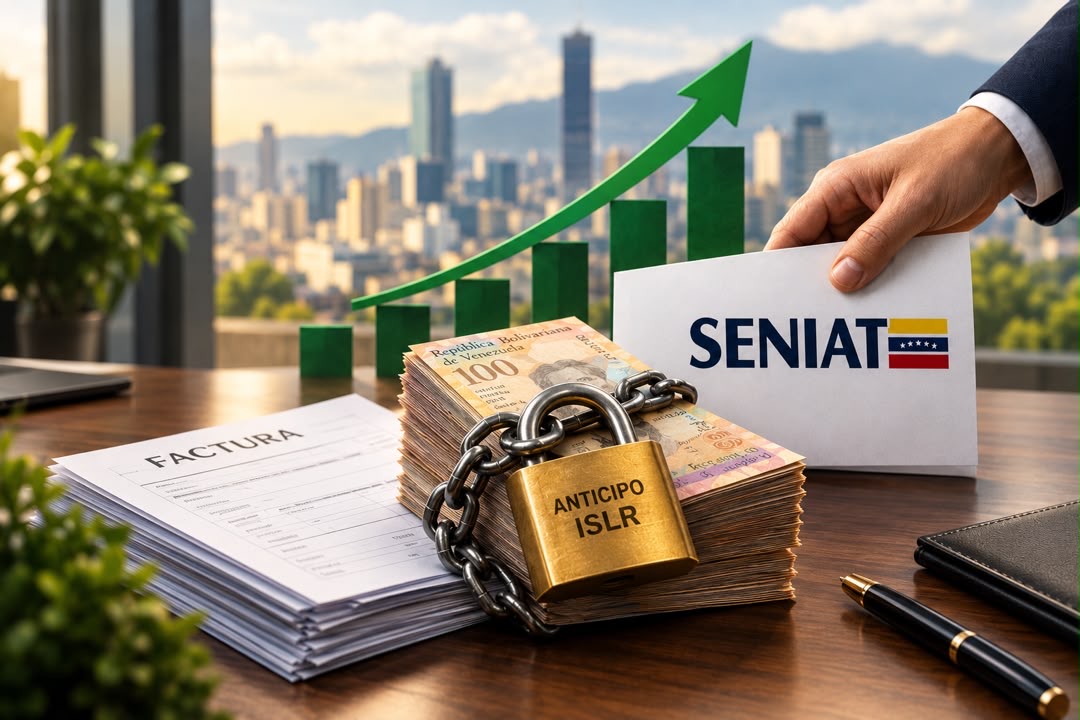
A proposal for SENIAT and the private sector to work together to free up working capital, generate jobs, boost growth and strengthen tax collection.
How much could your company grow with the money it advances on income tax?
A company may have customers, orders and expansion opportunities, yet lack the cash needed to seize them. For many business owners, part of that pressure comes from the income tax advance calculated on gross income. These are funds that leave operations and are no longer available to buy inventory, pay suppliers or invest.
Tax reform represents an opportunity to address this reality. SENIAT and the business sector share an interest in building an economy that grows, brings more businesses into the formal economy and generates sustainable tax revenue.
Billing is not the same as earning. Revenue must cover merchandise, payroll, transport, financing and other expenses before it becomes profit. For that reason, requiring advance payments based on sales can generate a liquidity squeeze that is out of proportion to the business's results.
Consider an example. Two companies each bill Bs. 100 million. With an advance of 1%, both pay Bs. 1 million in advance. If the first has a profit margin before income tax of 3%, that payment equals 33.3% of its profit. If the second has a margin of 20%, it equals 5%.
The same billing and the same advance produce a relative weight on profit more than six times greater at the company with the thin margin. These percentages show the size of the money advanced relative to profit, not the definitive income tax rate.
Advances are deducted from the final income tax. However, that later credit does not eliminate the financial cost of having had fewer resources available during the fiscal year. When the amount advanced exceeds the tax owed, a credit balance in the company's favor does not replace cash either. Its recovery may be delayed and its real value may erode.
In addition, many companies that are significant for their sales volume and essential to the supply of basic goods and the functioning of distribution chains operate on thin margins. A considerable share of their revenue corresponds to the cost of the merchandise they buy and distribute. For that reason, their sales volume should not be confused with their ability to pay taxes.
Easing the pressure that advances place on their working capital can also benefit consumers, by allowing companies to finance larger inventories, improve supply and reduce financing costs. In competitive markets, these conditions can foster greater supply and better prices for goods that meet the essential needs of the population.
One alternative for Venezuela would be to gradually replace the advance on gross income with payments on account of estimated income tax, reviewed quarterly and paid in monthly installments. The calculation would consider revenue, costs and expenses admissible for tax purposes, allow adjustments based on results, and credit the applicable payments and credits to avoid overpayment.
The transition must take into account the state's cash needs. Designing its timetable through joint work between companies and SENIAT's technical teams would help moderate the fiscal impact, maintain periodic revenue and free up productive capital.
Accompanying this change with simple procedures and taxpayer assistance can also encourage formalization. Facilitating compliance can progressively bring more businesses into the formal economy and broaden the tax base.
The capital a company can reinvest today is part of the economic activity that will be taxed tomorrow.