Articles
European energy suicide: Brussels bureaucracy stuck in the Stone Age
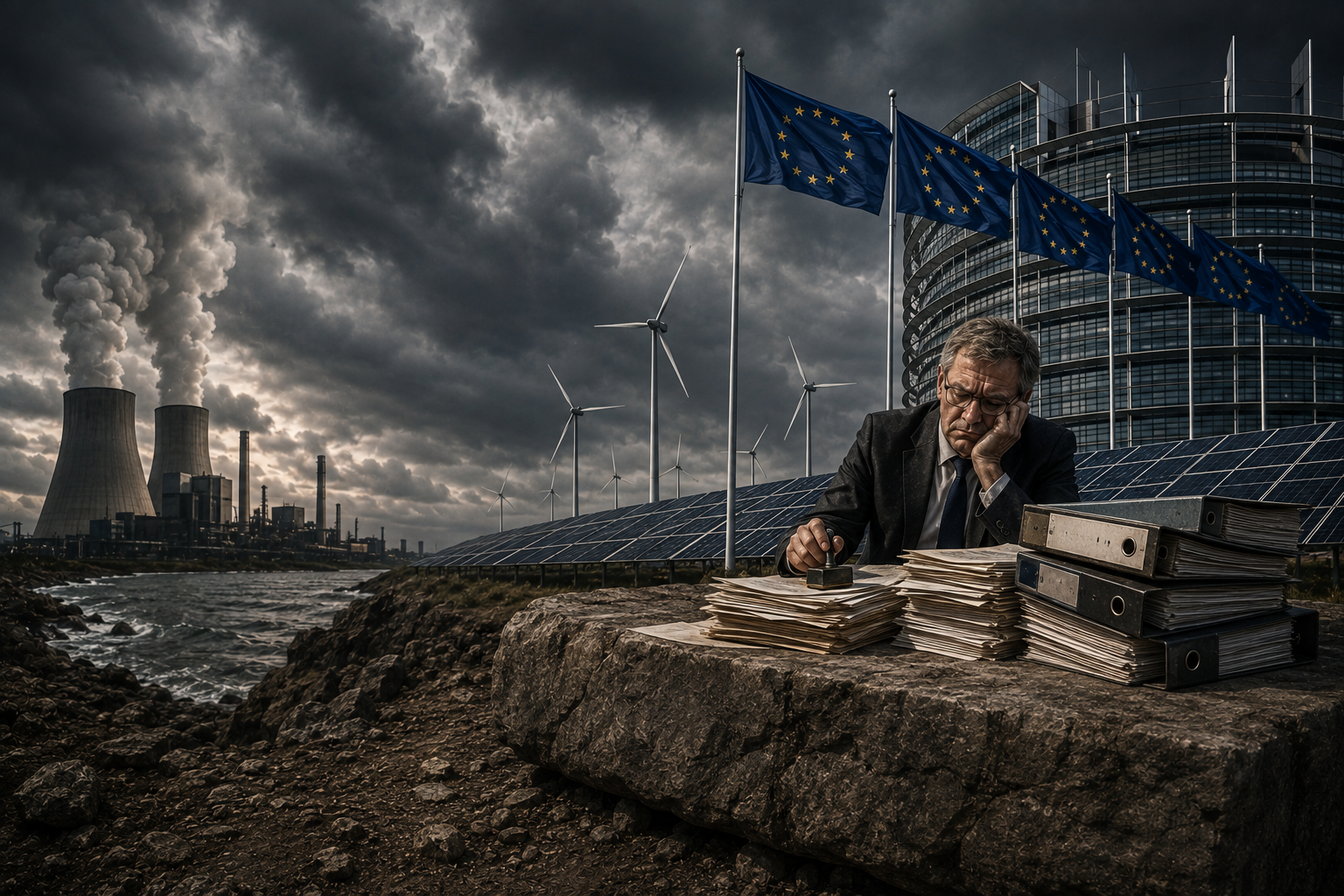
Some political decisions border on the absurd, but what Europe's Union bureaucracy has just done deserves an honorary prize for macroeconomic clumsiness. In a fit of geopolitical enthusiasm, Brussels decided to shut off the cheap gas piped in from the east and replace it with liquefied natural gas (LNG) shipped from Texas at an outlandish price: 160.00% more expensive than the traditional rate.
The direct result of such genius? An unprecedented industrial catastrophe.
Iconic industrial giants that for more than a century were the pride of European technology, such as the chemical firm BASF or the automaker Volkswagen, are closing historic plants in Germany to open subsidiaries in China and the United States, where energy inputs cost a fraction of what they do in Europe.
Eurostat, the European statistics office, has just confirmed that eurozone GDP grew a anemic 0.20% in the second quarter of 2026. At the same time, the PMI (Industrial Purchasing Index,) plunged in Germany to 42.10 points (below 50 points is considered contraction), accumulating 14 months of agony in recessionary territory.
The foregoing is a tasteless joke: the technocrats at the European Commission intend to finance the ecological transition by squeezing the wallets of the working class with carbon taxes, while multinationals leave Europe in search of cheap energy. By losing access to affordable fuels and subordinating its trade diplomacy to orders from Washington, Europe has destroyed the competitiveness of its factories and the wages of its workers. Trying to compete in the 21st century by applying fiscal austerity and buying inflated energy is an announced economic suicide. Without energy sovereignty or national industry, the old continent is marching at full speed toward an irrelevant position on the world economic map.
The trap is double for Latin America. On one hand, a cornered Europe without industrial growth sharply reduces its demand for raw materials and processed manufactured goods from South America, which hits hard the export volumes of countries such as Brazil, Uruguay, Colombia and Argentina. On the other hand, desperate to protect its battered domestic agricultural sector, European governments (with France at the head) are intensifying the use of protectionist barriers disguised as "environmental requirements." The supposed deforestation and carbon footprint rules imposed from Brussels are nothing more than a mechanism to block Latin American exports of beef, soy, coffee and cocoa. Moreover, as energy becomes more expensive in Europe, imports of heavy machinery and fertilizers that our farmers buy from European firms have become inaccessible, stifling regional agricultural production. While Europe drowns in its own energy crisis, it intends to pass its losses on to the Latin American countryside.