Articles
Venezuela's 2028 elections: rebuilding the country before voting?
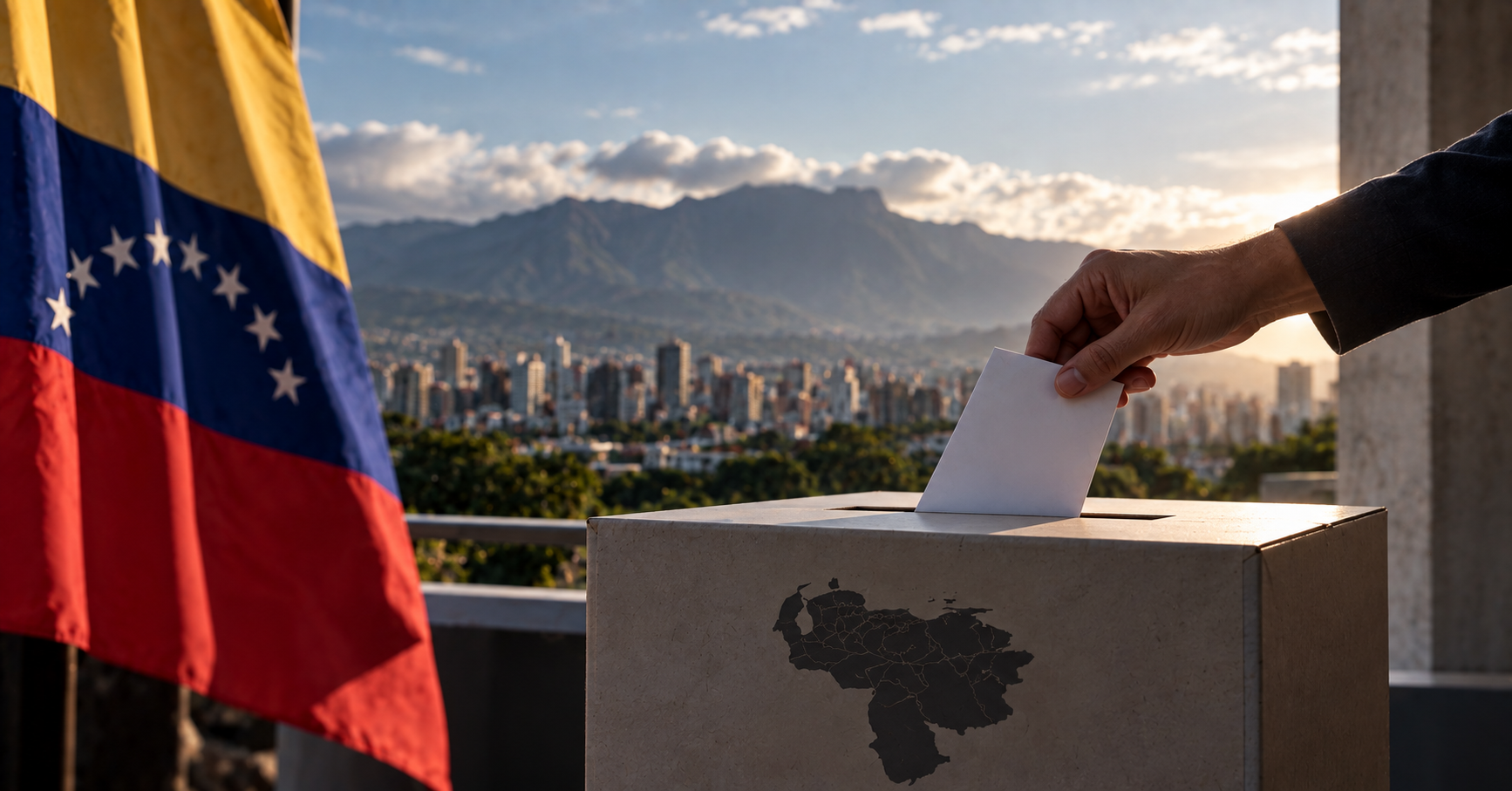
Holding elections without minimum conditions would mean meeting a requirement without any guarantee that the will of the majority will be truly respected.
Setting a realistic electoral horizon for late 2027 or 2028 does not mean surrendering or bowing to official wishes or to those of the gringos; on the contrary, it is about acting strategically to guarantee a real and sustainable political transition.
Without clear rules there are no reliable results
Before thinking about elections in Venezuela, we need independent electoral institutions, with the capacity to arbitrate and decide autonomously, fully separated from the executive.
In this sense, we need a renewed National Electoral Council and Supreme Court of Justice that, above all, conform to constitutional principles and that also meet the expectations of most Venezuelans, as well as of the main actors in the government and the opposition.
This is part of the agenda of meetings and negotiations between the current National Assembly and the National Assembly elected in 2015, still very embryonic, and which should be achieved in the coming months.
In addition, the legal status of candidates who decide to pursue an electoral career must be reviewed and their eligibility restored, along with a reliable voter registry with a cleaned and updated roll that includes both Venezuelans residing in the country and those living abroad.
Obviously, all of this takes time, and it would be illusory to attempt to re-institutionalize and organize a country in less than a year.
Eating before voting
Can one think about political campaigns when a family's daily worry is whether there will be electricity, water or something for dinner?
The crisis that Venezuelans have lived through and still endure is no small matter: 60% of household income is spent on subsistence needs related to food and health, and 90% on basics such as transport, public utilities, education and housing. In addition, 80% of Venezuelans face daily power outages and inadequate water supply and sanitation services.
Obviously, circumstances as painful as these leave little room for political thought and judgment. Before subjecting the country to the strain and expense of a massive electoral process, the priority of political leadership should be to address the most basic economic needs of Venezuelans.
People need services that work, inflation that does not eat up their wages in two days and, above all, that voicing a political opinion does not mean sacrificing their daily meals.
Voting while economically suffocated only breeds apathy, frustration and poor decisions.
International participation does not happen overnight
If the validity of elections in Venezuela is questioned, the international community (the United Nations, the European Union, the Carter Center) would be needed as electoral observers.
International observation involves auditing the voter registry and the software and machines months in advance. It also entails ensuring the eligibility of candidates, freedom of expression, and equal access to the media for candidates and political parties, and, without doubt, protecting votes until the last minute.
Building that international safety net of observers requires negotiations and agreements between the political parties and with the observing bodies themselves, which takes time.
The 2028 horizon: from improvisation to strategy
The year 2028 is not a date pulled out of a hat; it is the minimum technical and human time needed to heal the country's most urgent wounds. This would provide a margin of a couple of years to free the remaining political prisoners and legally restore the eligibility of candidates.
In addition, living conditions for Venezuelans can be improved somewhat more, while the electoral system is cleaned up and registration is opened to Venezuelans abroad, and governability agreements are established so that, whoever wins, whoever governs does so on behalf of the majority.