Articles
France, between curfews and the question of causes
After the most violent weekend in years, the government of Emmanuel Macron is imposing local curfews while Prime Minister Sébastien Lecornu prepares a round of crisis meetings. As the courts hand down the first convictions, the underlying question remains open: why did a movement that began in the lycées end in looting?
A quiet night, under restrictions
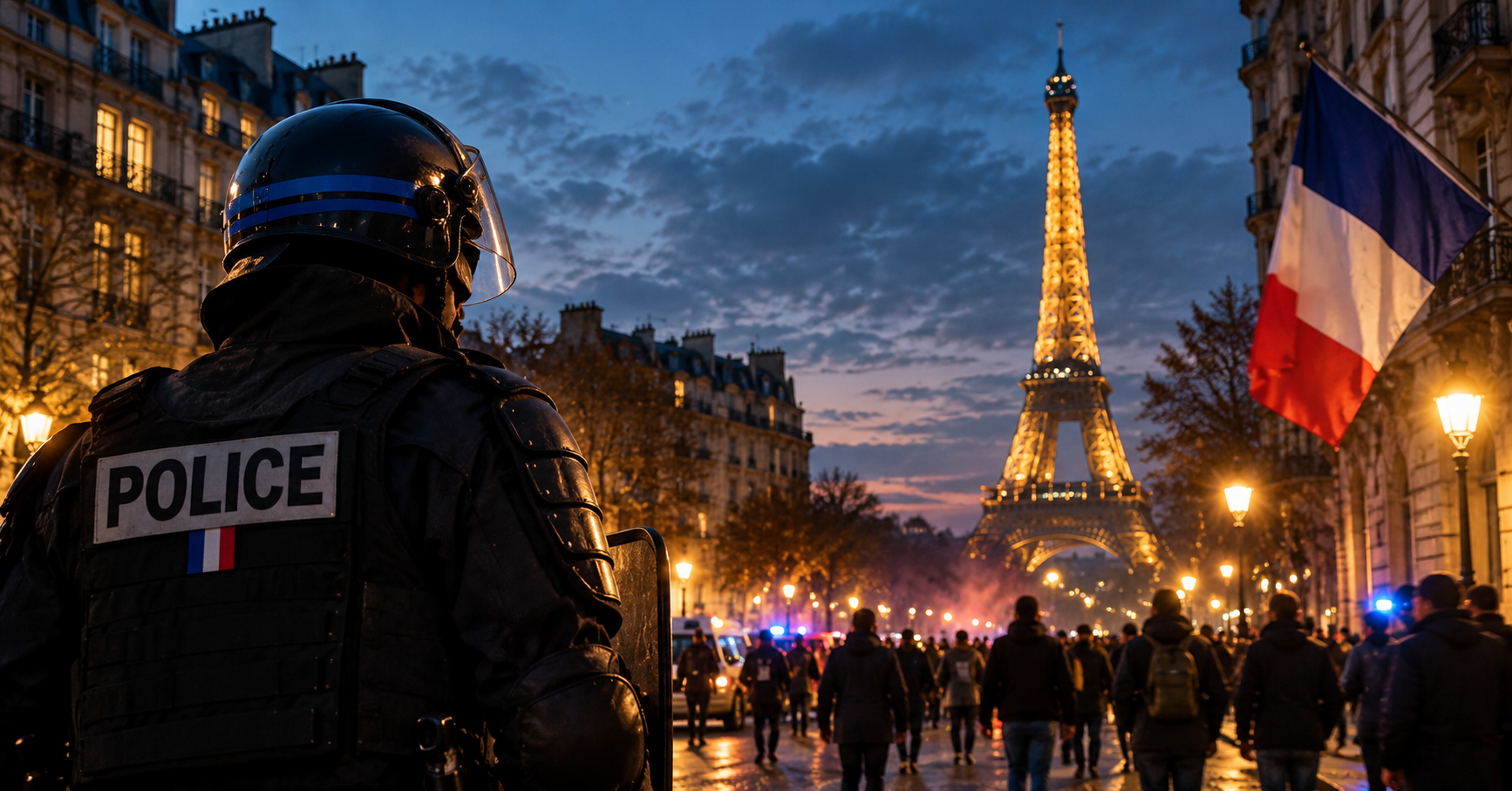
France experienced a relatively calm night from Monday to Tuesday, for the first time since Saturday. In Paris, the curfew ran from 23:00 to 6:00 in the Place de la République. There were also restrictions in Lyon, Nice and areas of the north of the country. In parts of Paris and central Lyon, demonstrations were banned.
Prime Minister Lecornu attributed the calm to these measures and announced that prefects, together with mayors, will decide tonight whether to extend them. According to the government, more than 3,000 shops were damaged during the disturbances. Economy Minister Roland Lescure promised aid so that merchants can reopen soon.
The justice system is already acting. On Monday there were the first prison sentences and community service orders in fast-track trials in Paris, Toulouse and Bobigny, and hearings for the most serious cases continue today. The government also asked platforms such as Vinted, Amazon and eBay to remove listings of products stolen during the looting.
In Marseille, Saturday began as just another protest. Hundreds of people, mostly young, gathered at the port with banners against the cost of living and the state of the schools. Shortly after 2 p.m., police began to disperse the crowd with tear gas. Some protesters threw the canisters back at the officers.
The chaos and riots left other images of the city center as it looked in the morning hours. Groups of hooded men smashed shop windows and carried off clothing, footwear, computers and phones, in many cases on electric scooters, while police largely limited themselves to dispersing the looters and trying to clear the streets. Anti-theft alarms rang until the early hours of the morning. According to the Interior Ministry, in Marseille there were also break-ins at city hall and an attempt to storm a police station, as well as damage to public transport stations.
The development of the protests
The movement was born on September 18 at a lycée in Créteil, on the outskirts of Paris. Students denounced crumbling buildings, overcrowded classrooms and a shortage of teachers. Within weeks, hundreds of schools were blockaded. Joining that protest was a call spread on social media against the price of gasoline and the cost of living, which reactivated former members of the gilets jaunes movement, which led protests against Macron's government in 2017, as well as unions, public employees and farmers.
On October 17, between 550,000 and 800,000 people took to the streets, according to government sources. Some 2,400 people were arrested and nearly 1,000 police officers and members of the National Guard were injured.
Justice Minister Gérald Darmanin attributes the violence to groups and movements of the far left. Among those arrested, authorities describe two profiles: young people from disadvantaged neighborhoods and radical activists. According to Darmanin, 95% are men.
The criticism is not directed only at the rioters. During the weeks of student protests, several minors were seriously injured in police operations. The most serious case was that of a 15-year-old student who lost a hand in Lens to a stun grenade. The Inspectorate General of the Police opened at least 18 investigations, and Interior Minister Laurent Nuñez suspended the use of those grenades against lycées.
The contrast fuels the debate. The state takes months to repair schools, but mobilizes thousands of officers in hours.
Political pressure six months before the election
Nuñez acknowledged that the police lost control at some moments and offered his resignation. Macron rejected it. Lecornu begins a series of crisis meetings today, starting with the major social media platforms. On Wednesday he will meet the unions and on Thursday the political parties. Marine Le Pen and Jordan Bardella of the far right have already announced that they will not attend.
The crisis comes at a decisive moment. About six months before the presidential election, the country is polarizing toward the extremes. Le Pen and Bardella's Rassemblement National promises an iron fist, law and order and a restrictive migration policy. Jean-Luc Mélenchon's La France Insoumise proposes breaking with the liberal model: more social justice, constitutional reforms and higher taxes on the wealthiest. Both parties accuse each other of fueling the violence with an eye on 2027.
The next test will be Saturday, October 24, when a new day of protest has been called.
The government is quick to point the finger at the far left. Organized militants may be behind some of the attacks, such as the one on the Limoges city hall. But what I saw in Marseille did not resemble an ideological bloc. They were mostly young men, with their faces covered, who moved in groups and seemed to know the city center well. Several shops in many areas, especially those run by people with migrant backgrounds, were left intact while brand-name stores fell one after another. They were not looting like protesters, but like opportunists.
The official figures point in the same direction: nearly all those arrested are men, and many come from disadvantaged peripheral neighborhoods. Here lies the uncomfortable question. France has spent decades failing to truly integrate a large part of its banlieues, where many children and grandchildren of immigrants live. There are young people who do not feel part of the Fifth Republic and who, when order breaks down, feel they have nothing to lose. Whether what failed is migration policy, integration policy or both is a debate France needs to have. Silencing it only leaves the issue in the hands of the far right.
I doubt that those who looted on Saturday had anything to do with the protests over education. That may be the greatest damage: the looting discredited weeks of effort by students. The paradox is that many of the lycées where the protest began are in those same peripheries.