Articles
The masterful legal maneuver that shields Venezuela's oil money
The controversial judicial surrender of hydrocarbon sovereignty in exchange for legal protection against creditors of Venezuelan debts
If any academic insists to you that constitutional laws are unbreakable, just show them the persuasive power of $100 billion in foreign direct investment.
To give viability to this gigantic corporate oil pact, the Venezuelan National Assembly had to swallow hard and quickly approve, in January 2026, what was a controversial reform of the Organic Hydrocarbons Law. Controversial for a few weeks, it should be noted.
Under this law reform, the dogma that PDVSA had to maintain sovereign control through holding "50% plus one" of oil associations was extinguished in seconds, opening the way to "Productive Participation Contracts" (CPP), which grant the foreign partner the majority in terms of ownership, as well as autonomy over the management, extraction and sale of crude.
Beyond the extinction of dogmatic sovereignty, to recover the confidence damaged by the expropriations of the 2007-2010 era (which affected giants such as ExxonMobil and ConocoPhillips), the Venezuelan state waived its immunity in matters of commercial arbitration. Indeed, the new contracts will be governed by foreign jurisdictions (U.S., United Kingdom, Singapore), and any dispute will inexorably be submitted to independent international arbitration.
To be clear, given pragmatic convenience, the Venezuelan government did not only cede control and power; the U.S. Treasury Department also eased OFAC sanctions through General Licenses 46, 47, 48C and 50B, which dictate which companies, such as Chevron, BP, Shell, Repsol, Eni and others favored by the State Department, may participate in Venezuela's oil business
The financial miracle of Executive Order 14373
Up close, the new oil agreement between the United States and Venezuela looks like a regulatory confiscation, in which we Venezuelans have outsourced the governance of our natural resources. Nevertheless, the clear tactical advantage of the agreement and of the Executive Orders and General Licenses surrounding the oil pact is that the revenues derived from it cannot be touched by creditors holding sovereign bonds and other financial and commercial debts in default, as well as by pending arbitral awards. Under normal conditions, vulture funds and creditors holding those claims could seize more than $200 million of the projected revenues from the oil agreement.
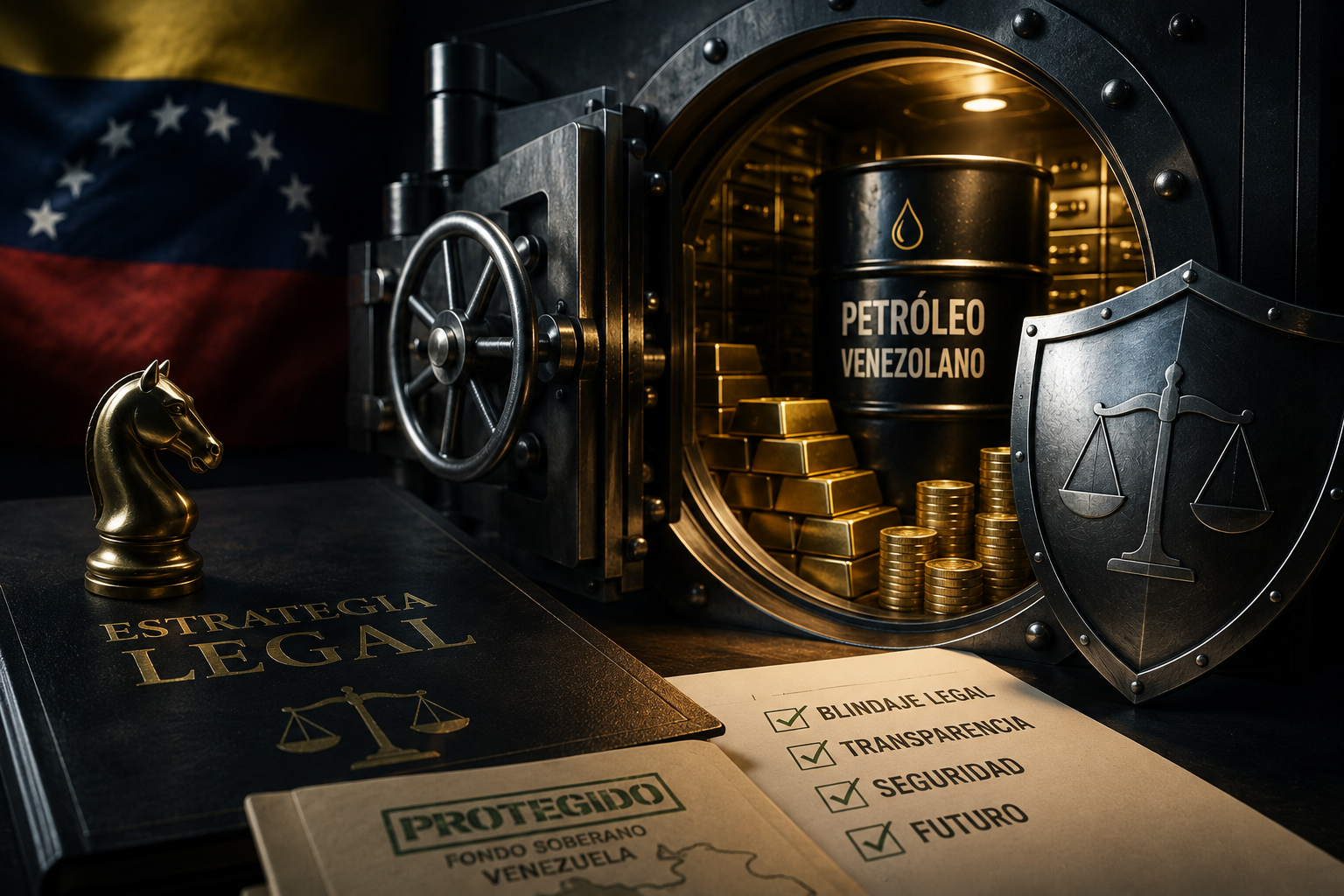
The solution came from Washington, as President Trump issued Executive Order 14373, which establishes an impregnable "ring-fencing" (shield). Venezuelan oil revenues are deposited in accounts held in custody by the U.S. government, declaring null and void any attempt at seizure by private creditors.
The aforementioned thus amounts to a fascinating paradox: Venezuelans ceded sovereignty over our hydrocarbons and over our own national courts, yet the very Empire now acts as custodian and protective shield economically and even politically.
This new regulatory architecture for Venezuela, as well as that of the United States regarding Venezuela, allows us to avoid a debt restructuring that would have been mandatory for Venezuela's economic recovery, ensuring that the oil cash flow reaches the treasury for the country's reconstruction, protected from international seizures.