Articles
Milei's “Malvinization”: a strategic opportunity in the polls
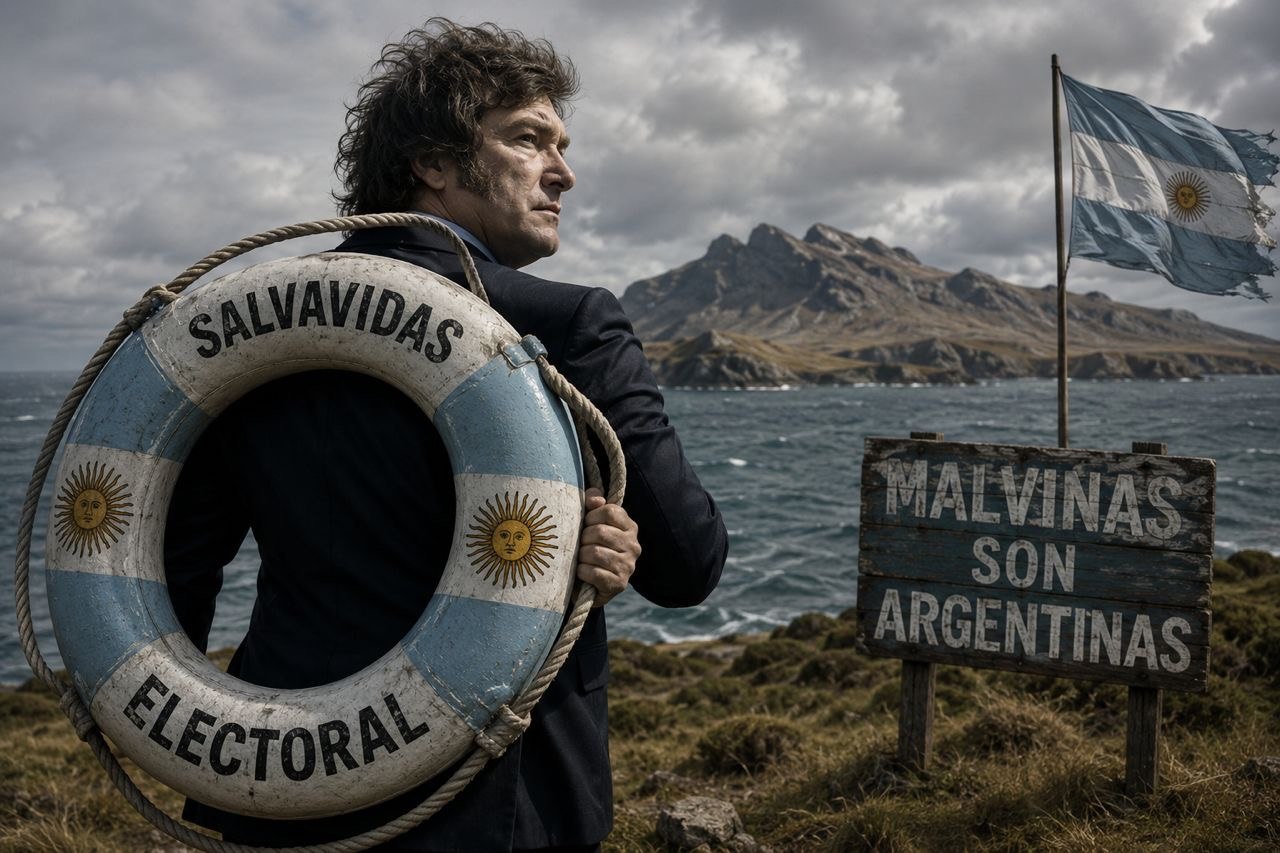
The question of the Malvinas Islands represents a crucial strategic opportunity for President Javier Milei to reverse the recent downward trend in his approval ratings and build a new electoral base. In the complex ecosystem of Argentine politics, the claim to the South Atlantic archipelago is neither a simple territorial dispute nor a relic of the past. On the contrary, it is an intimate, cross-cutting and deeply active fiber of national identity, almost like Maradona or Messi announcing his retirement from the national team. Something we all regret, for the football star.
By shifting his speech toward a more traditional position, but with a marked diplomatic pragmatism, the president has the chance to turn a historic cause into a high-impact tool of political recovery for his administration. To understand the potential of this shift, it is necessary to examine the psychological weight the Malvinas exert on society. Unlike almost any other topic of public debate, sovereignty over the islands acts as the only national unifier capable of breaching the so-called “grieta” (the political divide). It is a cause mandated by the National Constitution itself, and citizens embrace it with a mixture of pride and grief, directly tied to the memory of those who died in the 1982 war. No political leader in Argentina can afford to show indifference or ambiguity toward this claim without paying a very high political price in the eyes of public opinion.
At the start of his term, Milei was the target of harsh criticism from the opposition because of his earlier expressions of admiration for figures such as Margaret Thatcher. His detractors interpreted those statements as a lack of commitment to the national interest. However, his recent public statements mark an extremely clever change of course by proposing an active, long-term diplomatic path, explicitly inspired by the successful handover of Hong Kong from Britain to China. Milei not only cleans up his image but also formally adopts the language of the state. This move gives him a far more presidential stature, distancing him from the role of rebel politician and bringing him closer to that of a responsible statesman.
The direct political benefit of this strategy rests mainly on three fronts. First, it allows him to begin winning back nationalist voters and the moderate right. Many citizens who supported the economic program of La Libertad Avanza were deeply uneasy with the government’s initial foreign policy. By taking a forceful and structured stance in defense of sovereignty over the Malvinas, the president extends a bridge of reconciliation to more traditional sectors, the armed forces and the broad community of families of war veterans, a group that has historically carried enormous symbolic weight.
Second, the Malvinas cause works as a necessary distraction and a media lightning rod against the hardships of the economic crisis. Sweeping structural reforms and fiscal adjustment plans invariably wear down the population. Bringing the sovereignty debate onto the agenda allows the government to diversify the public conversation, balancing everyday discussions about inflation and utility rates with a message of national pride. This gives the executive branch valuable breathing room in opinion polls while the underlying economic results take time to mature.
Third, this shift disarms the opposition’s main line of attack. Historically, Peronism and Kirchnerism have treated the Malvinas flag as an almost exclusive possession of their political rhetoric, systematically accusing center-right options of being submissive to foreign interests. By claiming the cause through a serious and structured international proposal, Milei neutralizes this devastating attack. In doing so, he shows that the libertarian right can be just as deeply patriotic as any other current, depriving his rivals of their most effective rhetorical tool.
Nevertheless, this political maneuver is not free of risks and walks a knife’s edge. Ultimate success in the polls will depend on consistency in execution. If citizens perceive the statements as merely empty rhetoric or opportunistic use without real diplomatic progress in international forums, the initial positive effect will evaporate quickly. Likewise, the government must ensure absolute internal cohesion; any careless or friendly remark by other officials toward British authorities would undermine the credibility of the presidential strategy.
In conclusion, Javier Milei’s renewed stance on the Malvinas Islands should not be read as an improvised comment but as a politically calculated maneuver. At a time when enthusiasm for economic adjustment is beginning to show predictable signs of fatigue, appealing to the heart of the nation remains the oldest, most effective and most legitimate play in the political playbook. If the president successfully balances his free-market agenda with a firm and institutional defense of national sovereignty, he will not only win key points in the coming polls but also demonstrate a political maturity capable of securing governability and the long-term future of his project in Argentina.