Articles
Satire of the fake: Henrique Capriles, deepfakes and the politics of simulation in Venezuela
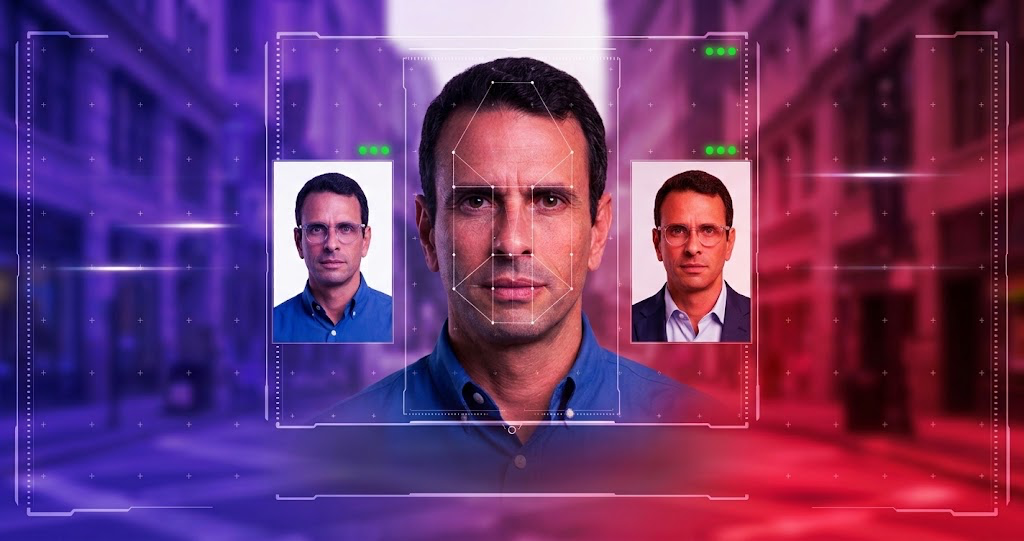
The image is already part of Venezuela's digital folklore: a Henrique Capriles dressed in a Jack Sparrow hat or a Daenerys Targaryen tunic, shirtless and holding a beer as he walks through a working-class neighborhood. The video, widely shared on TikTok and X, is a hyperrealistic piece produced with artificial intelligence. For the casual viewer it is a caricatured snapshot; for the algorithm, an inexhaustible engine of engagement; for Venezuelan politics, a brutal x-ray of how the meme and post-truth have reshaped the national public arena.
In an information ecosystem battered by media censorship, social disconnection and the exhaustion of traditional leadership, the figure of Henrique Capriles has found an unexpected "second wind" on social media, although it is driven by the forces of ridicule, cringe and algorithmic distortion.
Mocking hyperrealism, AI in disguise and the death of the politician's physical image.
The proliferation of deepfakes targeting political leaders has stopped being a future threat and become an everyday practice of the digital space. In Capriles's case, synthetic tools are not primarily aimed at attributing a crime to him or simulating a serious political statement, but at something more damaging to his public profile: systematic ridicule through laughter.
Using generative video models, Capriles is dressed in outlandish costumes, from pirate outfits to grotesque disguises such as Pennywise or Lord Voldemort, superimposed on his walks through towns in Miranda, Anzoátegui or La Guaira. The destructive power of this low-cost deepfake, or cheapfake, lies not only in the lie but in its visual plausibility. In the collective memory of Venezuelans lives the image of the early-rising Capriles, in a cap and plain T-shirt, walking through popular sectors while serving as governor or deputy of Miranda state. AI takes that earlier naturalistic aesthetic and bends it with absurdities, creating a comic hyperrealism in which the viewer knows the piece is false, yet enjoys it precisely because it demystifies the character.
The meme works here as a corrosive acid. By layering synthetic elements over the politician's body, hypermodern humor strips him of his capacity to inspire respect or solemnity, turning his work in the field into a circus spectacle consumable in 15- to 20-second clips on Instagram, Twitter and TikTok. "Capriles is everywhere, they got him going crazy," says a taxi driver from the company Ridery.
Humor, cheapfakes and the anatomy of hoaxes on social media
The dynamics governing TikTok and X regarding this phenomenon differ in form but converge in impact:
TikTok and playful consumption: On the short-video platform, consumption happens through decontextualized laughter. The algorithm rewards the audacity of the filter and clever editing. Users do not consume Capriles's video in search of information but for entertainment. The hoax circulates as a "joke" yet leaves an imprint on the subconscious: the irrelevance of the subject. Capriles is viral, but not in the way he should be.
X (formerly Twitter) and informational polarization: On X, the deepfake takes on a more aggressive tone. There, the AI-generated piece is interspersed with malicious edited clips (cheapfakes) in which his words, such as his complaints about the electricity crisis, are cut so that his denunciations appear as empty or incoherent phrases. "Capriles, 'el Manguangua,' they got him drunk, I feel sorry for him, buddy," comments a neighbor who voted for him in the Baruta municipality; the woman received the video through her grandson, who is in ninth grade and understands nothing about politics.
The line between harmless parody and deliberate hoax becomes porous. Fact-checking organizations in Venezuela have had to devote efforts to debunking videos in which the politician supposedly appears drunk or in ridiculous outfits. Revealingly, Capriles himself has had to step forward to deny the synthetic material by publishing the original footage with the clarification: "The real video is without artificial intelligence." That a leader of his stature must spend political capital proving whether or not he was wearing a shirt during a walkabout shows the extent to which the comic hoax dominates the conversation about his figure. The serious concern is how easily such content is generated, and how quickly.
Positioning by omission. Capriles and the politics of the meme
What does it mean that Henrique Capriles's greatest digital reach in today's Venezuela depends on artificial satire?
For a leader who in 2012 and 2013 embodied the hopes of nearly half the country, the current moment reflects a paradox of positioning. On one hand, the constant mockery demonstrates his continued relevance: someone who is no longer considered a relevant actor does not receive the treatment of the mass meme. In the economy of attention, parody remains a form of centrality. Capriles exists in the daily feed of Venezuelans precisely because the digital ecosystem still identifies him as a recognizable political brand.
On the other hand, this positioning based on carnivalesque humor represents an emptying of content. Capriles is trapped in the role of a "supporting character" in TikTok's political humor. His message on wages, public services or electoral agreements is completely diluted by the comic frame through which the audience processes his content. Citizens do not debate his political proposals; they consume his caricature.
AI, apathy and the reconfiguration of Venezuela's public space
The "hype" surrounding memes and deepfakes of Henrique Capriles does not occur in a vacuum; it is a symptom of the deep estrangement between Venezuelan society and its traditional political class. After years of wear, abstention and frustration, the average citizen finds in artificial intelligence a tool to return a cynical gaze toward power.
AI applied to Venezuelan politics not only serves state-linked bot farms or information-warfare operations; it also functions as a popular safety valve in which dark humor undermines any attempt at opposition or ruling-party epic. By turning Capriles's walkabouts into surreal memes, the audience tells the politician: "Your speech no longer moves me, but your image entertains me".
Henrique Capriles's presence on TikTok and X under the AI filter exposes the new rules of the game. In the post-political Venezuela, the line between territorial reality and algorithmic simulation has collapsed. Whoever walks the streets of Miranda is no longer just the flesh-and-blood leader but a digital avatar shaped by satire, artificial intelligence and the cynicism of an audience that preferred to laugh rather than believe again.