Articles
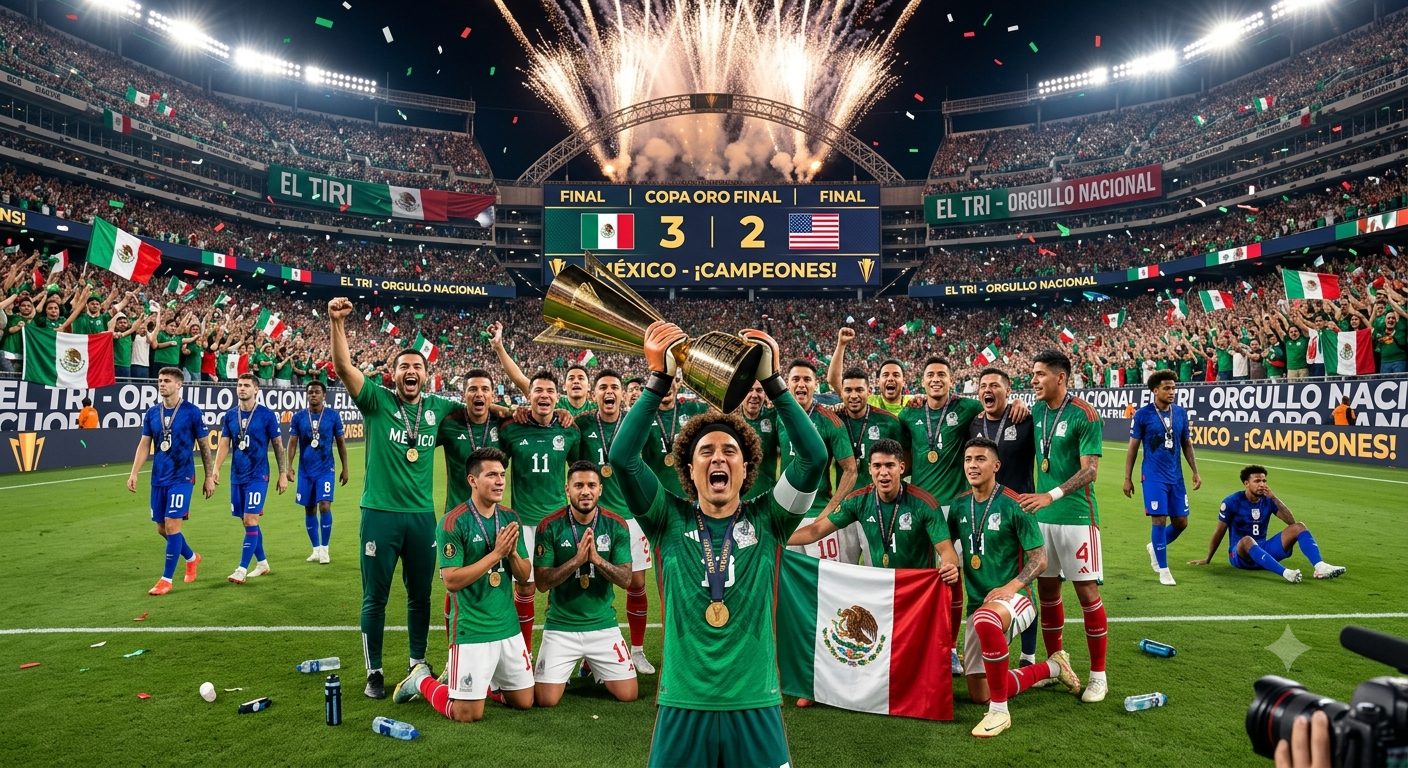
Mexico beat the U.S. at the World Cup
Mexico beat the U.S. at the World Cup
SurEconomics staff, July 2026
Mexico hosted the fewest matches of the 2026 FIFA World Cup, with just 13 of the 104 games. The United States accounted for most of them, including the final. Even so, once the books were closed, it was the Mexican economy that recorded the bigger boost. Deloitte estimated that the tournament left about 2,543 million dollars in Mexico, equivalent to between 0.1% and 0.5% of national GDP, along with more than 101,000 temporary jobs. For the United States and Canada, by contrast, the event did not register in the macroeconomic data.
The explanation, obviously, lies not in the quality of the football but in the numbers.
The denominator changes everything
The impact of an economic event or shock, positive or negative, on GDP is not measured in absolute dollars but as a share of the economy’s size. The U.S. economy is sixteen times larger than Mexico’s and, although the United States collected more revenue than Mexico by hosting more matches, that sum was diluted within an annual output of 32 trillion dollars.
What represents a noticeable percentage in Mexico becomes an insignificant decimal in the United States. Moody’s Analytics quantified this well before the tournament, projecting a contribution of about 0.13 percentage points to Mexico’s GDP, compared with 0.07 for Canada and just 0.05 for the United States. The firm was explicit: Mexico’s advantage was relative, as it stemmed not from the number of matches but from the smaller size of its economy.
A multiplier effect
When a tourist pays for a hotel night in Mexico City, that money goes to suppliers, transport, retail and services, which in turn spend it on their own suppliers or on direct consumption. The impact described tends to be felt more quickly in small economies with many services sensitive to immediate consumption. The benefits, however, were concentrated in the largest Mexican host cities, such as Mexico City, which captured about 548 million dollars; Jalisco, 290 million; and Nuevo León, 270 million.
No public works or private investment
Another factor that equally affected all three countries in keeping the economic impact moderate was that the tournament was played on existing infrastructure, without a substantial increase in public spending or private investment in new developments or construction, which would have had a greater effect on GDP.
In Mexico, the stadium renovations were financed almost entirely by the private sector, which avoided the classic “fiscal black hole,” but it also eliminated public investment in works that, in previous World Cups, had acted as an engine for the economy. Without that spending, the impact was reduced almost exclusively to tickets and tourism. In economies as large as the U.S. and Canadian ones, that barely moves income.
Something fleeting
It is worth closing with a point that nearly all analysts repeated: “Not even for Mexico did the World Cup change the structural trajectory of its economy.” It was a short-term stimulus, concentrated in a few sectors and a few cities. One figure is enough to put this in perspective: the capital mobilized by the entire tournament came to roughly 2,000 to 2,500 million dollars, less than half of what Mexico receives in remittances in a single month. The football lifted national spirits and filled headlines, but the GDP needle barely stirred in Mexico and, in the United States and Canada, did not move at all.
Sources
· Deloitte (2026). What Happens After the World Cup? The Economic Impact on Businesses. Reported in LJA.MX, “Mexico Gets an Economic Impact of USD 2,543 Million from the 2026 World Cup,” July 17, 2026.
· Moody’s Analytics (2026). World Cup Tracker: A North American Bet. Reported in El Financiero, “2026 World Cup to Leave Mexico With a ‘Poor’ Economic Windfall,” June 10, 2026.
· Forbes México (2026). “The World Cup Would Add 0.13 Points to Mexico’s GDP in 2026, Moody’s Estimates,” April 14, 2026.
· Bloomberg Línea (2026). “What Economic Impact Will the 2026 World Cup Have on Mexico, the U.S. and Canada? Here’s What Moody’s Says,” April 15, 2026.
· Grupo Financiero Banamex, Department of Economic Studies. Cited in La Razón de México, “2026 World Cup Adds 0.1 Points to GDP,” June 3, 2026.
· Grupo Financiero Banorte. Estimate cited by Reuters and reported in La Jornada, “2026 World Cup Falls Short in Boosting the Mexican Economy: Specialists,” July 17, 2026.
· World Travel & Tourism Council (WTTC) and Oxford Economics. Cited in Grupo Animal, “Goal for the Economy? The Effects of the 2026 World Cup in Mexico,” June 11, 2026.