Articles
Midterms 2026: the battle for Congress
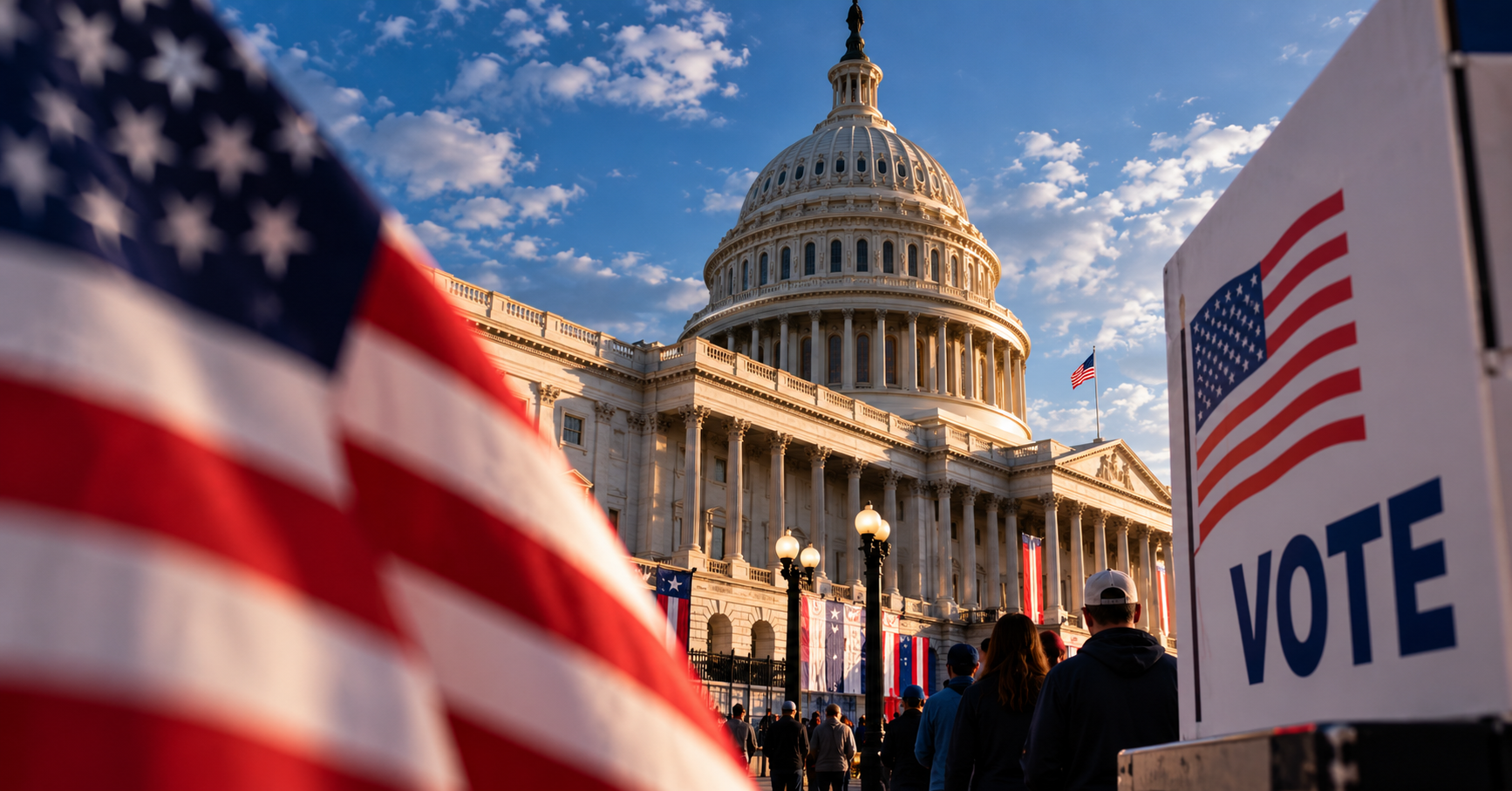
The midterm elections are approaching, and several polls point to a favorable scenario for the Democrats. Still, a divided Congress remains a plausible outcome: a House of Representatives under Democratic control and a Senate that Republicans manage to hold, although by a narrow margin.
The contest for the upper chamber remains open in races such as Texas, Michigan and Iowa. Their results will be decisive in determining whether the Democratic advance is enough to win both chambers or whether the GOP manages to contain it and preserve a decisive position to push the president's agenda.
There is a reason to be cautious about forecasts: Republican support may be larger than some surveys reflect. The 2016 election left a warning about the risk of treating a poll lead as an early victory. Hillary Clinton entered as the favorite, but Trump ended up prevailing in the Electoral College. Last-minute decisions and difficulties in adequately representing certain sectors of the electorate contributed to that surprise.
That precedent does not guarantee that history will repeat itself, but it invites consideration of conservative support that is less visible in public conversation. The silence of some voters does not necessarily imply indifference. In close contests, the ability to identify that support and bring it to the polls can tip the result.
Trump has announced an intensive 32-day campaign tour ahead of the November 3 elections, which will occupy virtually all of October. His ability to draw crowds could help Republican candidates close gaps. The outcome of that effort will depend on whether attendance at rallies translates into local organization and electoral participation.
One of his main challenges will be recovering the enthusiasm of the young voters who helped him win in November 2024. The assassination of Charlie Kirk left a leadership vacuum among conservatives of that generation. His ability to connect with them and the organizing work of Turning Point helped turn youth discontent into support for Trump's return to the White House. Maintaining that connection will be essential for the Republican Party.
Added to this challenge is the distancing of Tucker Carlson from the president and the GOP. His criticisms reflect tensions within the conservative coalition and pose a risk of demobilization among some of his followers. The conflict with Iran deepens that debate between those who back a firm foreign policy and those who expected an administration less involved in wars.
The economic dimension of that conflict also weighs on the campaign. Disruptions to traffic through the Strait of Hormuz and higher risks for maritime shipping have put pressure on energy markets. As of October 6, the average price of regular gasoline in the United States was around $4.37 per gallon, compared with $3.13 a year earlier. Although it had fallen from the previous week, the year-over-year increase remained considerable.
For the White House, that figure poses a concrete challenge: maintaining a position of strength against Tehran while offering relief to consumers. The price of fuel turns an international dispute into an everyday concern. National security arguments may find support, but their persuasive power diminishes when household budgets remain under pressure. In that scenario, the energy rapprochement between Washington and Caracas gains relevance. The increase in Venezuelan crude shipments to the United States offers an additional supply route and allows the administration to show efforts to diversify supply. Its immediate reach, however, is conditioned by the investment and infrastructure needs of the Venezuelan industry. Venezuela's oil potential may contribute to the American energy strategy, although it would be premature to credit it with a decisive reduction in prices before November.
The Democrats, for their part, also face a tension of their own. The more radical left is gaining ground in shaping the party's direction. The influence of Alexandria Ocasio-Cortez, Bernie Sanders and Zohran Mamdani now finds another expression in Abdul El-Sayed, the Democratic Senate candidate for Michigan, who is backed by Sanders and Ocasio-Cortez.
That rise may energize the progressive base, but it raises a question about its ability to attract moderate voters. Republicans have an opportunity there: to compete for voters who want a counterweight to the president but who could feel uncomfortable with a sharper turn to the left. Seizing it will require contrasting concrete proposals and responding to the economic concerns that dominate everyday life.
October will be a test of mobilization, political discipline and capacity to respond. The possibility of a Republican Senate depends on the GOP activating support that may be underestimated, containing its internal differences and offering a convincing message on the cost of living. The precedent of 2016 counsels caution regarding forecasts. To defy them again, Republicans will have to turn potential support into votes actually cast.