Articles
Milei: the president who won by promising people they would be worse off
MILEI: THE PRESIDENT WHO WON BY PROMISING PEOPLE THEY WOULD BE WORSE OFF
SurEconomics staff, July 2026
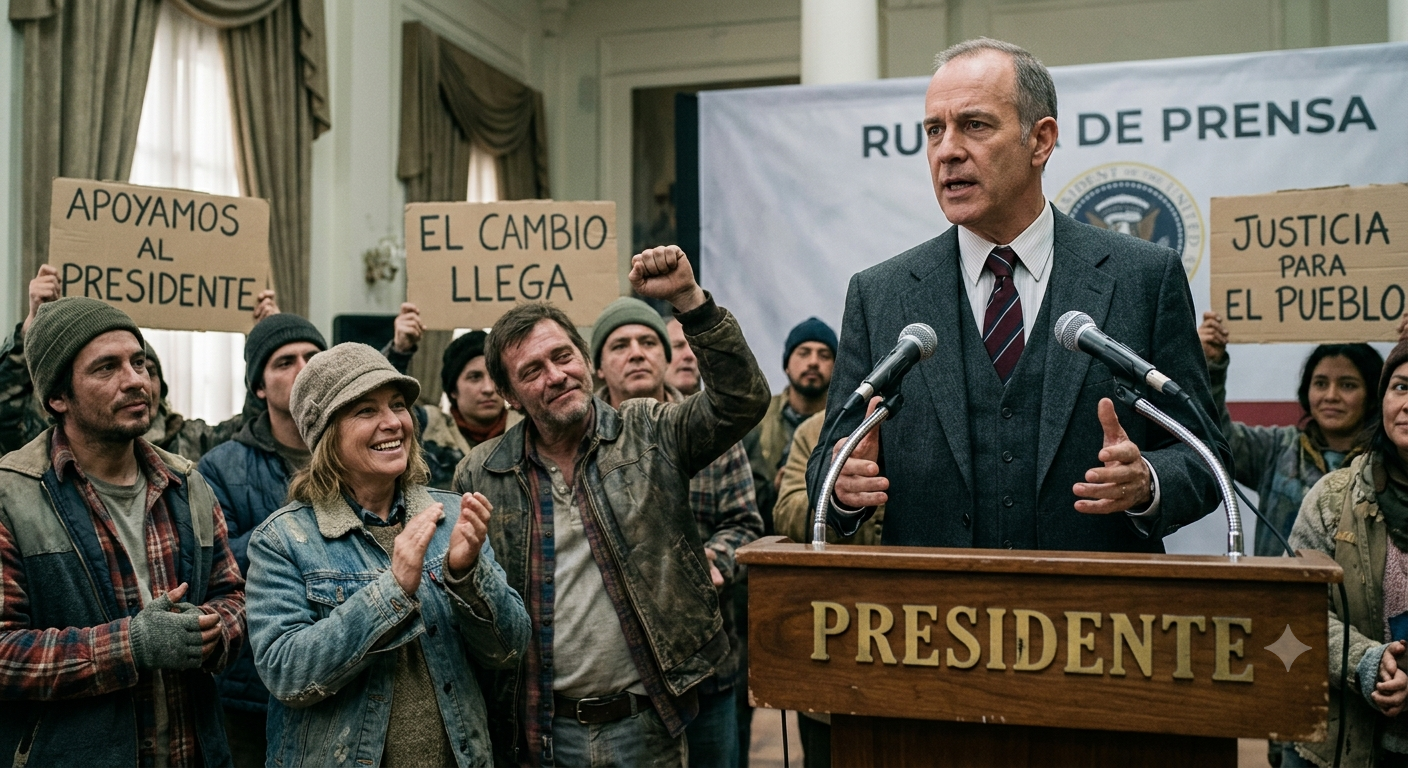
In December 2023, the day he took office as president, Javier Milei warned that his government's plan would hit employment and wages, and would also produce poverty. He had been saying this since he launched his campaign for the presidency of Argentina. No policy manual recommends that; on the contrary, it is counterintuitive, but the context in which he said it has to be understood.
Argentina has defaulted on its sovereign debt nine times in its history, most recently in 2020. The promise of improving the country's economy without hurting the population had been made so many times that no one believed it anymore. Warning voters in advance about the social cost of the economic measures needed to stabilize Argentina was the only thing that sounded credible to people.
When Milei won the election, the country looked like this: prices were rising more than 200% a year, the central bank had no dollars, the street-market dollar cost more than twice the official rate, and every Argentine was poorer than in previous decades. These problems had recurred cycle after cycle for more than a century. The state spent more than it collected, printed bills to cover the gap, those bills pushed up prices, people rushed to buy dollars to protect the value of their money, dollars became scarce and their price rose, devaluation and inflation followed, and the state had to print more pesos to cover its spending...
The first thing Milei did was stop printing money without foreign-currency backing, cut public spending and subsidies, devalue the peso all at once to bring its price in line with reality, and keep interest rates high so that people would want to hold pesos rather than dollars.
Eighteen months after Milei took office, inflation fell from 211% a year to 33%. The economy grew 4.4% in 2025. Poverty fell from 41.7% to 28.2%, the lowest since 2018. International credit rating agencies upgraded the country's rating. In addition, something that was not so clearly spelled out in the government's plan emerged: Vaca Muerta, the main oil-producing region, drove oil and gas output to a record high and, in 2025, increased hydrocarbon exports by $7.8 billion, making them the country's second-largest source of foreign income after agricultural exports.
The year 2026 has taken a particular turn for Argentina's economy, and Milei's popularity is tending to fall. In the first four months of the year, prices rose 12.3%, more than the government itself had expected for the entire year. Prices are rising by nearly 2.9% each month and are not falling, and unemployment rose by more than one million people. This is because, with the removal of government subsidies, the prices of public services such as electricity, gas and transport have risen, which weighs on prices and produces higher inflation.
While Milei is following the right formula to structurally improve Argentina's economy, it remains to be seen whether people are willing to tolerate his candor and support a government that takes unpopular measures affecting the population's quality of life now, in expectation of a better future. That remains to be seen....
Sources
· IMF, World Economic Outlook, April 2026
· INDEC
· Fitch Ratings
· JPMorgan
· EIA
· CNN en español
· PIIE (Peterson Institute for International Economics)