Articles
Modernize or disappear into the crowd?: Banesco, Cines Unidos and the risk of simplifying until memory is erased.
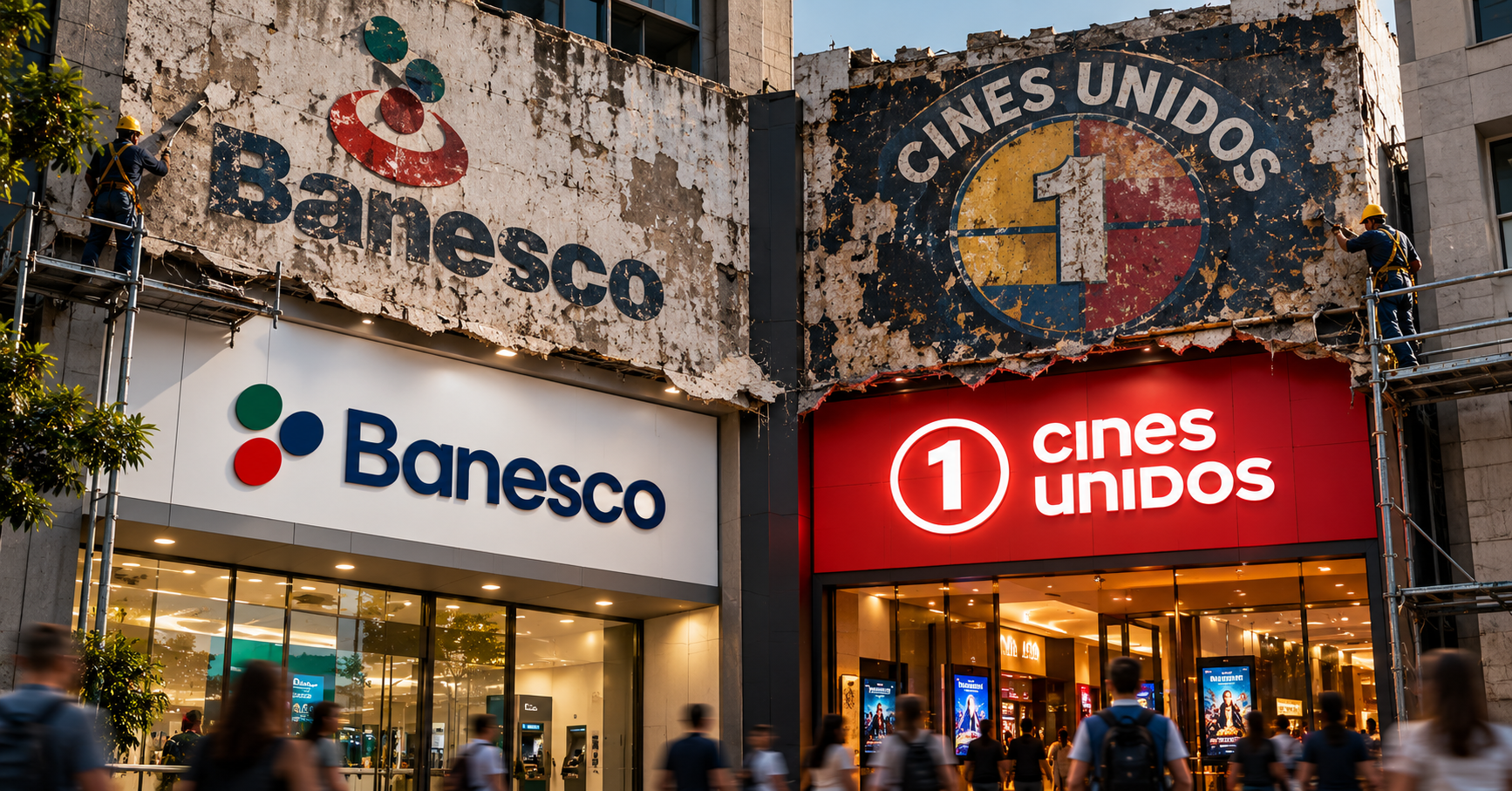
Cines Unidos no longer has a film reel, and Banesco has dropped its spheres. Every time a brand simplifies its identity and the public complains, the explanation is always the same: nostalgia.
We resist, we protest and, in the end, we give in to modernity. But calling it nostalgia is the most comfortable way of not listening to what is really happening: our most beloved brands are losing their memory.
On October 7, Banesco unveiled its first image overhaul in 24 years, with an investment of more than $10 million. Its three spheres, which rested on a red base, have become three loose, tilted ellipses that retain little connection to its previous logo beyond the colors. Weeks later, Cines Unidos followed the same path, and the logo that evoked the countdown that opened each screening was reduced to a 1 in a circle.
Both changes raise an uncomfortable question: if the first thing to go is what people remember, what exactly is being modernized?
Change is not the problem, because no organization survives for decades without updating itself. The problem appears when modernizing is confused with homogenizing, which would be like knocking down a house to build the same one next door instead of renovating it.
In the design world, this is called blanding, the tendency to simplify identities until they all end up looking alike and history, trajectory and individuality dissolve, turning each one into just another brand in the crowd.
More than the aesthetics of these logos, what they left behind is what worries us. Researchers Byron Sharp and Jenni Romaniuk call these elements (a color, a shape, a typeface) "distinctive brand assets", which allow a brand to be recognized without reading its name, and their recommendation is simple: identify them, use them and protect them. Banesco's red base and Cines Unidos' countdown were exactly that: mental shortcuts in the consumer's mind that had formed over decades in the memory of its customers. And they were the first to disappear.
Rejection was not long in coming. According to an analysis of the conversation on X conducted by Ecosistema, 64.8% of the comments on Banesco's new logo were negative, compared with just 3.8% positive. Even so, the history of rebrands suggests that anger does not last long: we make memes, compare the before and after and, a few months later, almost no one remembers the previous logo.
Almost always.
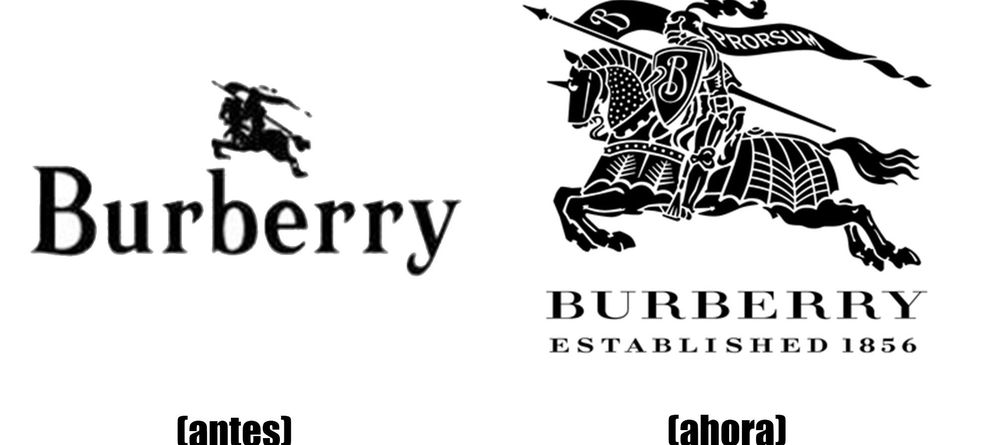
In 2018, Burberry swapped its logo for a neutral typeface and dropped the equestrian knight, an emblem created for the brand in 1901. The public got used to it, and for five years the new logo coexisted without scandal on stores and bags. But when, in 2023, the brand brought back the knight and its serifs, the reaction looked more like relief than nostalgia. That is the trap: getting used to something is not the same as approving of it. Burberry's customers' silence over those five years was not approval; it was resignation.
And sometimes there is not even silence. In August 2025, Cracker Barrel, a well-known American restaurant chain, removed from its logo the old man sitting beside a barrel, a fixture since 1977, and the backlash was so strong that within just eight days it had to bring it back. Cracker Barrel returned under pressure and Burberry out of conviction, but both ended up going back to what made them recognizable.
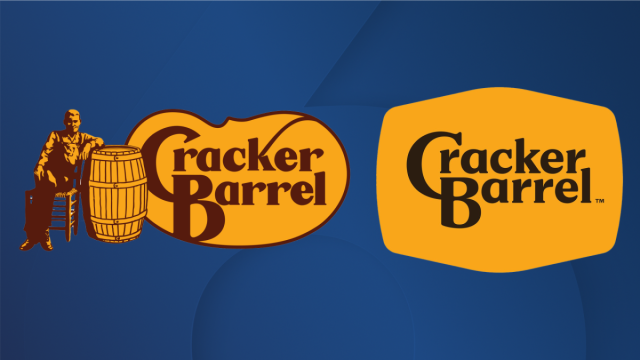
What we can take from both cases is that, if the public always ends up giving in, the responsibility for doing things right and protecting their history does not fall on the public, but on the brands.
Minimalism was born to strip away what is superfluous. What was once synonymous with intelligence and innovation is beginning to signal mediocrity: it no longer eliminates the unnecessary, but rather a history and a trajectory that no one took the time to understand. Brands can renovate the house as many times as they like; the problem comes when they make it identical to all the others, because on a street of identical houses, no one remembers which one was yours. A brand's recognition and presence do not show up on the balance sheet while they exist; they are only noticed when they are gone. And that leaves the real question: what does it cost when a brand forgets who it is?