Articles
OpenAI and the horse-racing bets
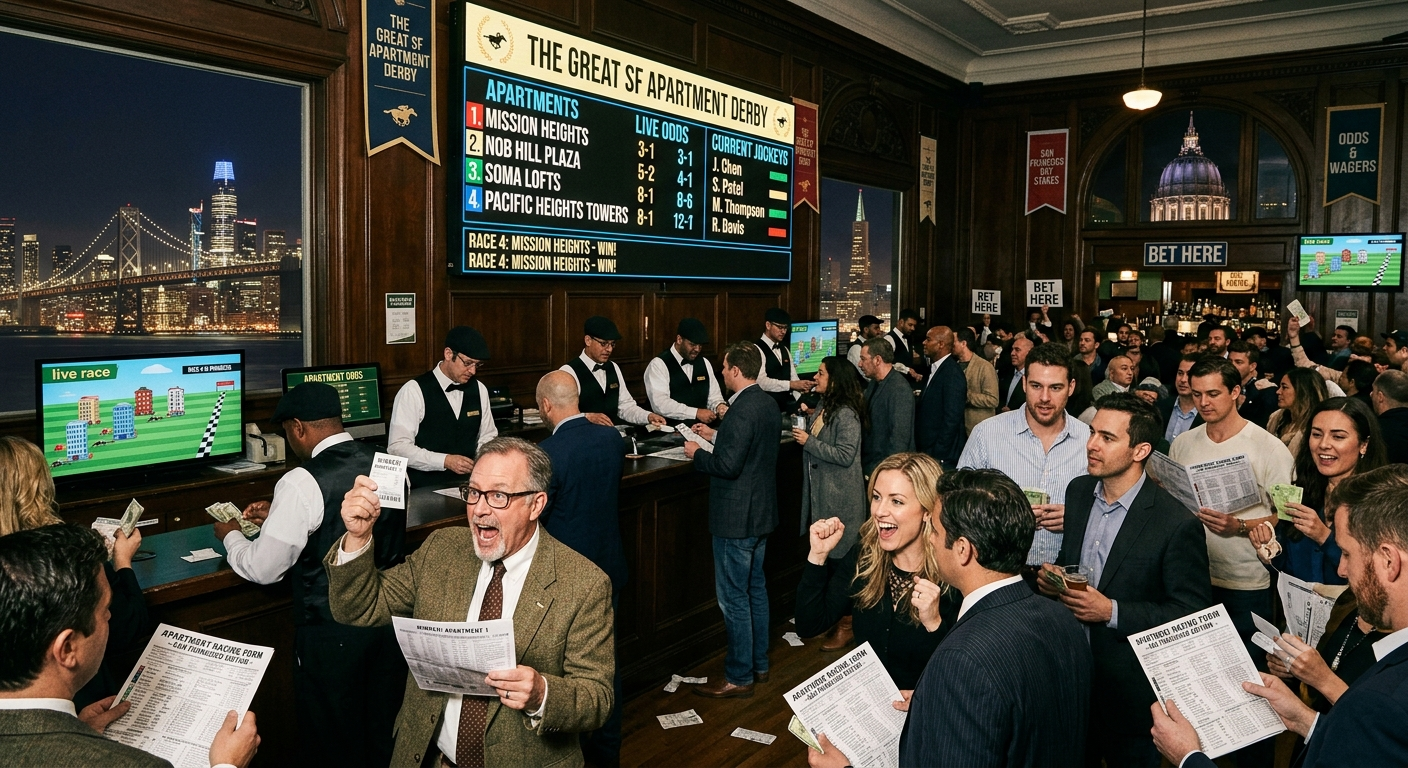
OPENAI AND THE HORSE-RACING BETS
SurEconomics staff, July 2026
Between January and June 2026, more than 140 homes in San Francisco sold in the following way: the owner asked for a price, and buyers (especially those who worked at OpenAI) paid at least one million dollars more.
But those who bought overpriced homes in San Francisco did not pay with their savings, much less with their salaries, but with mortgages obtained from banks that bet on their future... Why?
In March this year, the technology and innovation giant OpenAI received an injection of $122 billion in investment, and the company's valuation rose to $852 billion. Its employees receive part of their pay in shares, and those shares will be worth a fortune on the day the company is sold or goes public. That day has not yet arrived, since OpenAI remains a private company owned by Microsoft and some investment funds.
The OpenAI employees who bought overpriced homes in San Francisco, as well as the banks that granted them the loans for those purchases, are betting on a promising future for the technology company, which is not very different from betting on horse races, or is it?
Perhaps the difference is that the bet on OpenAI looks very good, while the bet on horses is more questionable. "People have a lot of money and are ready to buy," says Daryl Fairweather, an economist at the real estate firm Redfin. A home in San Francisco now costs $2.15 million, 18% more than a year ago. Apartments rose 27%. In the rest of the country, prices rose 0.8%. A rented room in the technology capital costs more than $4,000 a month, and some tenants pay several months in advance, in cash, to get ahead of other applicants. That is where the similarity between San Francisco's real estate market and horse racing ends.
When someone loses a bet at the racetrack, they lose their money and no one else finds out. When someone "wins" a home in San Francisco, a person or family linked to technology companies moves in and everyone finds out. This creates a domino effect, and both real estate and the value of technology companies increase, because positive expectations about both are also higher.
In fact, in Noe Valley, Mission Bay and Duboce Triangle, iconic San Francisco neighborhoods near OpenAI, longtime residents are leaving because they cannot afford what someone directly linked to technology companies can pay.
The neighborhoods where artificial intelligence companies are located are now known as "AI Alley" and their prices have risen substantially. Everything around them rose too: rents, services, restaurants.
At the racetrack, the odds of winning a bet are low; in San Francisco, perhaps the ones who lose are those who never bet. What do you think?...
Sources
· Redfin
· The Guardian (cited by Gizmodo)
· Bloomberg Línea
· CNN
· BBC Mundo
· U.S. Department of Commerce