Articles
Economic reconstruction after Venezuela's earthquakes: a crisis within another crisis
Óscar Doval analyzes the economic impact of the twin earthquakes of June 24 in Venezuela and the dual financing strategy, international and domestic, needed for reconstruction.
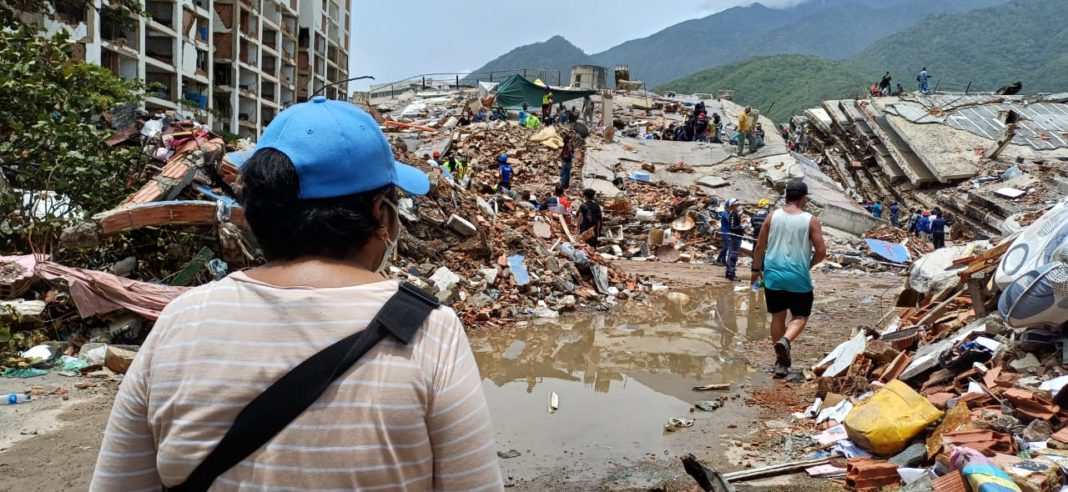
More than 3,300 dead, nearly 17,000 injured and 18,000 displaced, 190 buildings collapsed and 856 structures with compromised integrity: these are not only numbers but figures that convey the horror of the twin earthquakes that all of us lived through on June 24.
The enormous destruction caused by this natural disaster has produced an incalculable humanitarian, social and economic crisis. Unfortunately, the earthquakes struck in the midst of another economic and political crisis that Venezuela had been suffering in recent times. To the painful circumstances the country has endured, since January of this year there have been added the political dynamics and demands of chavismo, the radical opposition and, now, the Americans. The transitional government led by Delcy Rodríguez "walks a tightrope" amid these political complexities.
Frustrated economic dreams
Following the economic opening brought about by Maduro's forced departure and the country's new trade alliances with Trump, also forced, this year was expected to bring extraordinary oil export revenues of between $10 billion and $15 billion, which was supposed to translate into economic growth of 8% to 10% for the Venezuelan economy. Alongside these favorable projections, there was also the expectation that inflation would fall to single digits from May onward and that the exchange rate would stabilize in the second half of the year.
Hopes for economic recovery in 2026 could well vanish in the face of the economic shock caused by the earthquakes, which would generate total net losses of between $8 billion and $10 billion, equal to 8% to 10% of projected GDP. It can therefore be understood, at first glance, that if the extraordinary measures needed to recover the country are not adopted, the catastrophic losses suffered could lead to an economic paralysis in Venezuela this very year.
What is to be done?
Repairing and rebuilding urban infrastructure alone could cost between $15 billion and $20 billion and require two to three years of intensive fiscal spending. We are not talking only about the loss of nearly 20,000 homes and the damage to countless residences between La Guaira and Caracas, but also about serious damage to 38 hospitals and more than 400 schools, one third of the capital's school facilities.
On July 4, the national government launched the "Gran Misión Venezuela Renace" (Great Mission Venezuela Rebirth), under which a $200 million reconstruction trust fund was created. In addition, the program includes the reactivation of the national banking system's mortgage lending portfolio, as well as tax exemptions and facilities for real estate sales transactions and the financing of building repairs. With this initiative, the government seeks to address the initial phases of repairing critical residential and road infrastructure and Maiquetía Airport. Nevertheless, these measures are insufficient to recover from the economic damage caused by the earthquakes.
The country's economic reconstruction should be structured around a dual financing model, combining international measures of financial flexibility with domestic measures aimed at boosting consumption and public spending and attracting private investment.
In addition, it is urgent to speed up the release of funds from Venezuelan oil exports that are under the control of the U.S. Department of the Treasury, providing direct, non-inflationary liquidity to the state's coffers.
Moreover, to access resources from multilateral organizations, the country must formally request an IMF technical mission to audit the direct physical damage and structure a concessional financing package. This step is a priority for enabling Venezuela's immediate access to the $5 billion in Special Drawing Rights (SDRs) available from the IMF. Likewise, the restructuring of Venezuela's debt should be accelerated so that special development credit lines can be activated with the World Bank, the Inter-American Development Bank (IDB), CAF and other competent institutions.
At the domestic level, economic recovery depends on sustaining household purchasing power in a context where the average Venezuelan spends more than 50% of total income on food.
To that end, it is important to provide direct subsidies to earthquake victims through emergency vouchers for food, health, education and housing expenses for affected families. Likewise, special salary incentives for public employees in the regions most affected should be maintained, to avoid a decline in consumption of basic goods.
Furthermore, as the "Gran Misión Venezuela Renace" rightly proposes, it is vital to activate mortgage and construction financing lines, as well as to promote the massive hiring of local labor for debris removal and for the repair and construction of residential, commercial, industrial and service infrastructure.
Perhaps one of the most important aspects of the country's economic revival, both in this painful situation and in the long term, is attracting foreign direct investment through a program of legal reforms and guarantees for private enterprise promoted by the transitional government. This could well accelerate investment opportunities in strategic economic sectors that have immediate capital needs and attractive potential returns, such as hydrocarbons, infrastructure, electricity, mining, food and others.
No room for pettiness
Overcoming the effects of the twin earthquakes of June 24 presents Venezuela with an economic and financial re-engineering challenge that goes well beyond the simple mobilization of emergency resources. The prolonged recession and the political crisis require that the implementation of the "Gran Misión Venezuela Renace" and other initiatives involving national reconstruction funds be managed under strict standards of transparency, auditing and coordination with national and international stakeholders.
At this moment, there is no room for political differences or pettiness of any kind that might undermine the ability to help the earthquake victims and the country.
The viability of Venezuela's economic recovery will depend on the capacity of the executive branch, as well as of all political and social actors, to advance in parallel toward obtaining greater flexibility from OFAC, resolving the bottlenecks of external debt, and consolidating a framework of legal certainty and operational facilities that attracts foreign direct investment.
Originally published at Contrapunto.com.