Articles
A $4.675 billion miracle 50 km from a bankrupt country
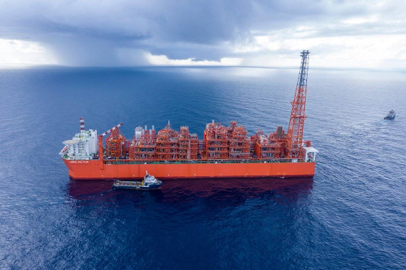
In January 2017, Mozambique declared a full default on its debt and entered what is feared as a "sovereign default." For the financial world, the African country became forbidden territory. Yet only 11 months later, a masterstroke achieved the unthinkable: raising $4.675 billion for a gigantic project 50 kilometers off its coast.
How do you persuade 15 major international banks and five export credit agencies to lend billions to a bankrupt country? The answer lies in financial engineering: the lenders did not put up their money on trust in the government of Mozambique, nor in the structure of the enormous Coral Sul FLNG floating plant. They lent against two shielded contracts.
The secret of this success lay in structuring a Project Finance scheme in which the money never touched public coffers or depended directly on the country's risk. On one side, the oil giant BP signed a contract to exclusively purchase 100% of the gas extracted over 20 years (offtaker). On the other, construction of the floating liquefaction plant, operated by Italy's Eni alongside multinationals such as ExxonMobil, CNPC, Galp, Kogas and the state-owned ENH, was awarded to the TJS consortium (TechnipFMC, JGC and Samsung Heavy Industries) for $2.5 billion.
The loan figures clearly show how credit risk works in emerging markets. Most of the financing was backed and insured by state export credit agencies (Bpifrance, KEXIM, K-Sure, SACE and Sinosure). For these protected and fairly safe tranches, interest rates were set at optimal levels, between LIBOR + 130 and LIBOR + 200 basis points. However, for the tranche with less risk coverage, a $200 million loan led by Standard Bank, the rate soared to between LIBOR + 400 and LIBOR + 600 basis points. With the same asset, the same cash flow and the same buyer, the lack of insurance against Mozambique's risk cost the project a premium of up to 470 basis points on the exposed capital.
Most relevant for economies in restructuring or in sovereign default is that the Mozambican state did not have to grant public guarantees. The state-owned ENH financed its $585 million equity contribution by borrowing from its own private partners at 8.7% over 25 years, repayable directly from future revenues generated by liquefied natural gas (LNG), with a structuring cost of 7%.
For any country battered by debt default and severe financial restrictions, as often happens in Latin America, the Mozambique case shows that the lack of sovereign credit does not paralyze the development of large offshore energy fields. Through ring-fenced structures, independent trust accounts (DSRA) and long-term sale-and-purchase contracts with top-tier multinationals, any of our countries in debt default could attract large-scale private capital to exploit its vast gas and oil resources without having to commit public guarantees or depend on sovereign debt.