Articles
Venezuela after the 2026 earthquake: losses, impact and economic roadmap
Venezuela after the 2026 earthquake: losses, impact and economic roadmap
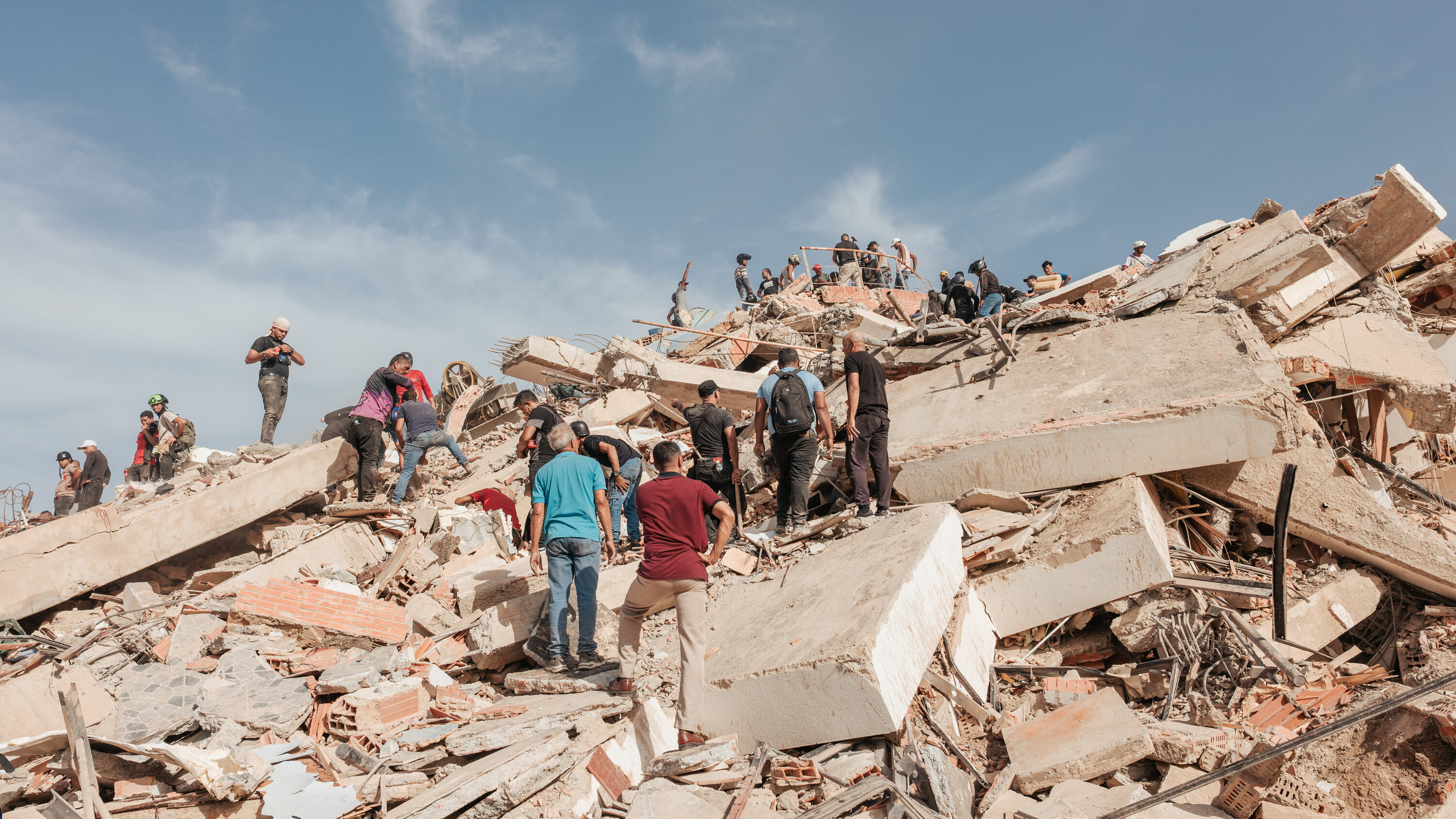
The scale of the catastrophe The double earthquake recorded in northern Venezuela on June 24, 2026, with magnitudes of 7.2 and 7.5 Mw and an intensity of grade IX on the Mercalli scale, represents the largest physical and financial shock the country has suffered in the last century. As of July 16, 2026, the government's official bulletin records: 4,930 dead · 16,740 injured · 6,462 rescued from the rubble 17,907 people without homes · 21,210 people in temporary camps 856 buildings affected · 190 with total collapse 432 schools damaged · 91 hospitals in the zone of severe shaking Simón Bolívar International Airport in Maiquetía closed 40% electricity deficit in affected areas 1,308 aftershocks recorded The earthquake did not hit a country in normal conditions. Venezuela was already carrying a cumulative contraction of GDP of 75% since 2014, a diaspora of some 8 million people and deeply deteriorated public services. The quake struck an economy that was only beginning to stabilize. The economic impact Preliminary assessments by the UNDP estimate direct physical damage at approximately USD 6.7 billion, or about 6% of national GDP. The overall net impact, including the paralysis of activity and the rupture of value chains, is estimated at between USD 8 billion and USD 10 billion, or between 8% and 10% of projected GDP for 2026. The full cost of urban reconstruction will require investment of between USD 12 billion and USD 15 billion, with projections that could rise to USD 20 billion over a horizon of two to three years. Before the disaster, the BCV projected GDP growth of 8% for the close of 2026, and the IMF estimated 4%. Both projections will have to be recalibrated. Logistical bottlenecks Simón Bolívar International Airport in Maiquetía remains closed to regular commercial operations, which forced Iberia, Air Europa and Copa to suspend their connections to Caracas indefinitely. The collapse of the Caraballeda bridge and the blockage of the old Caracas-La Guaira highway fractured land connectivity along the central coast. The La Guaira port is operating under a contingency regime due to power failures and cracks in its piers. The National Electric System, which was already running with a deficit of 3,000 MW before the quake, has deepened its crisis. To date, state crews have managed to restore only 60% of electricity and telephone service in the affected areas. The government's response The national executive decreed a national state of emergency and on July 4 created the "Gran Misión Venezuela Renace" under the leadership of engineer Jacqueline Faría, to centralize housing reconstruction, roads and the restoration of basic services. The immediate measures include: · Mandatory activation of the mortgage loan portfolio of all banks, with government subsidies of up to 80% on interest rates for the purchase and repair of damaged homes. · Full and temporary exemption from notarial fees and property registration charges in municipalities declared disaster areas. · Creation of the "Venezuela Renace" trust fund with an initial tranche of USD 200 million, leveraged with Special Drawing Rights (SDRs) available at the IMF. · Ban on exports of construction materials: 100% of domestic steel, cement and aggregates production must be allocated to the reconstruction plan. The economic roadmap: two simultaneous fronts The scale of reconstruction exceeds the capacity of the national treasury. RendiGroup Advisors proposes a dual financing model that acts on two fronts at once. On the international front: · Expedited lifting of OFAC sanctions to reconnect the Venezuelan banking system to the international SWIFT platform and release blocked assets abroad, estimated at more than USD 20 billion, including approximately USD 2 billion in gold held at the Bank of England. · Release of oil revenues held in custody by the U.S. Treasury Department. · Access to USD 5 billion in IMF Special Drawing Rights (SDRs), subject to approval by a technical damage-assessment mission. · Loans from multilateral agencies: CAF, IDB, the World Bank and FONPLATA. · Issuance of catastrophe bonds (CAT bonds) within the sovereign debt restructuring enabled by GL58, which allow principal and interest payments to be postponed in the event of verified seismic events. On the local front: · Direct subsidies indexed to affected households, given that the average Venezuelan already spent 52% of their income on food before the quake. · Credit lines for local construction firms and small affected businesses. · Temporary tax exemptions on imports of construction materials and basic necessities. · Opening to private foreign investment in the sectors with the greatest immediate demand: construction, electricity, logistics, telecommunications, health, agribusiness and hydrocarbons. The investment opportunity Paradoxically, reconstruction widens the window for private investment in Venezuela. The regulatory framework approved in 2026, namely the reform of the Hydrocarbons Law in January and its regulations published in July, offers legal guarantees, international arbitration and a flexible tax regime that did not exist before. The sectors with the greatest immediate demand and structural return are: physical infrastructure and roads, electricity and renewable energy, telecommunications, health, agribusiness and data centers. However, the sustainability of any external capital flow, whether public or private, depends on Venezuela consolidating a predictable institutional framework and a political agreement on national governance that provides certainty to international investors. At RendiGroup Advisors we identify, structure and support the entry of investment into Venezuela and the emerging markets of South America. odoval@rendigroup.com · +1 786 661 7260 · rendigroup.com/venezuela