Articles
Runaway Wall Street and Uncle Sam's unpayable debt
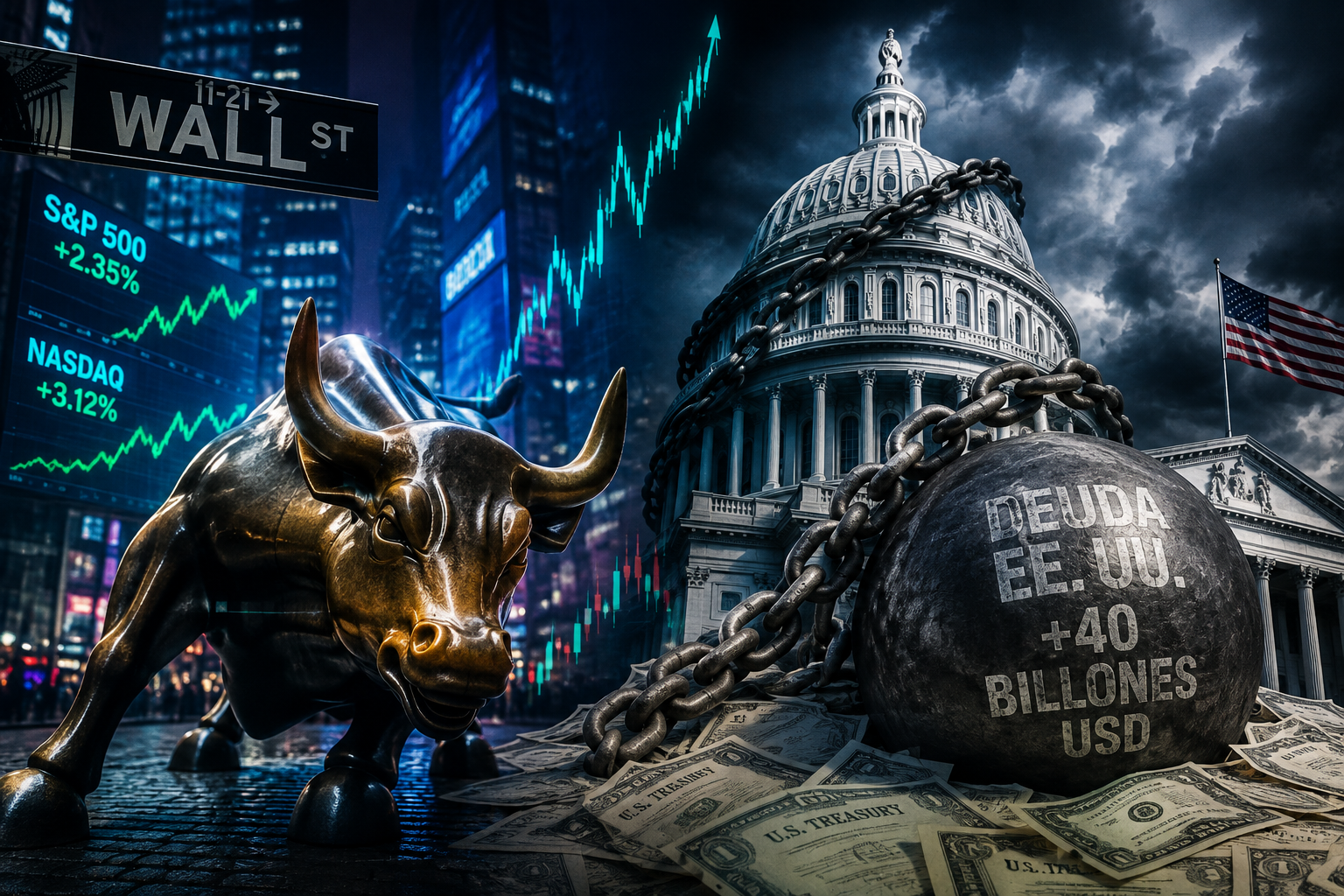
Let us imagine the scene: “a reckless cousin who borrows from ten different banks to pay for a luxury vacation in Miami, while back home there is not even enough to buy the week's bread. When his credit cards run out, he simply issues a paper voucher signed by himself and demands that his neighbor accept it as real money”.
Well, there is no need to imagine much: this extravagant cousin has a name, the United States, and its headquarters are on Wall Street, the heart of New York's financial system, where the shares of the most powerful corporations on the planet are traded.
For more than four decades, Washington and the International Monetary Fund (IMF), a multilateral body that lends money to countries in trouble in exchange for drastic austerity reforms, lectured Latin America about "fiscal responsibility". They forced us to freeze teachers' salaries, privatize strategic state-owned companies and cut hospital budgets on the grounds that "you cannot spend more than you take in". Yet today the emperor has no clothes: the US federal public debt has just surpassed the colossal and unpayable figure of $35 trillion, or 124.00% of its GDP.
To grasp the magnitude of the absurdity: the Federal Reserve (Fed), the US central bank, is keeping the cost of money at a high 5.25%, seeking to curb domestic price increases. This means the US government is currently spending more than $892 billion a year just to pay interest on its debt to large banks and investment funds. It is an astronomical sum that far exceeds the military budget of the North American superpower. The great paradox is that Washington sustains its global hegemony by printing greenbacks with no real backing and exporting inflation to the rest of the planet.
Every time the US government issues bonds to finance its deficit and the Fed keeps rates high to hold on to investors, the cost of international credit for our countries soars to confiscatory levels. To issue a sovereign bond in New York, countries such as Ecuador, Colombia, Bolivia or Argentina must pay usurious interest surcharges that devour the national budget. Instead of using public resources to build aqueducts, schools and roads in our provinces, Latin American finance ministries are forced to send fresh foreign currency to the North solely to pay interest on debt made more expensive by decisions taken in Washington. In addition, the stronger dollar makes imports of medical supplies and agricultural fertilizers more expensive, driving up the inflation of the food that reaches the tables of our working-class families. The United States lives it up on credit while Latin America picks up the bar tab.
Sources: U.S. Treasury Department Debt Register (https://www.fiscaldata.treasury.gov) | Congressional Budget Office of the United States (CBO) (https://www.cbo.gov)