Articles
Washington reopened the tap on Venezuelan crude, but keeps the country strangled by sanctions
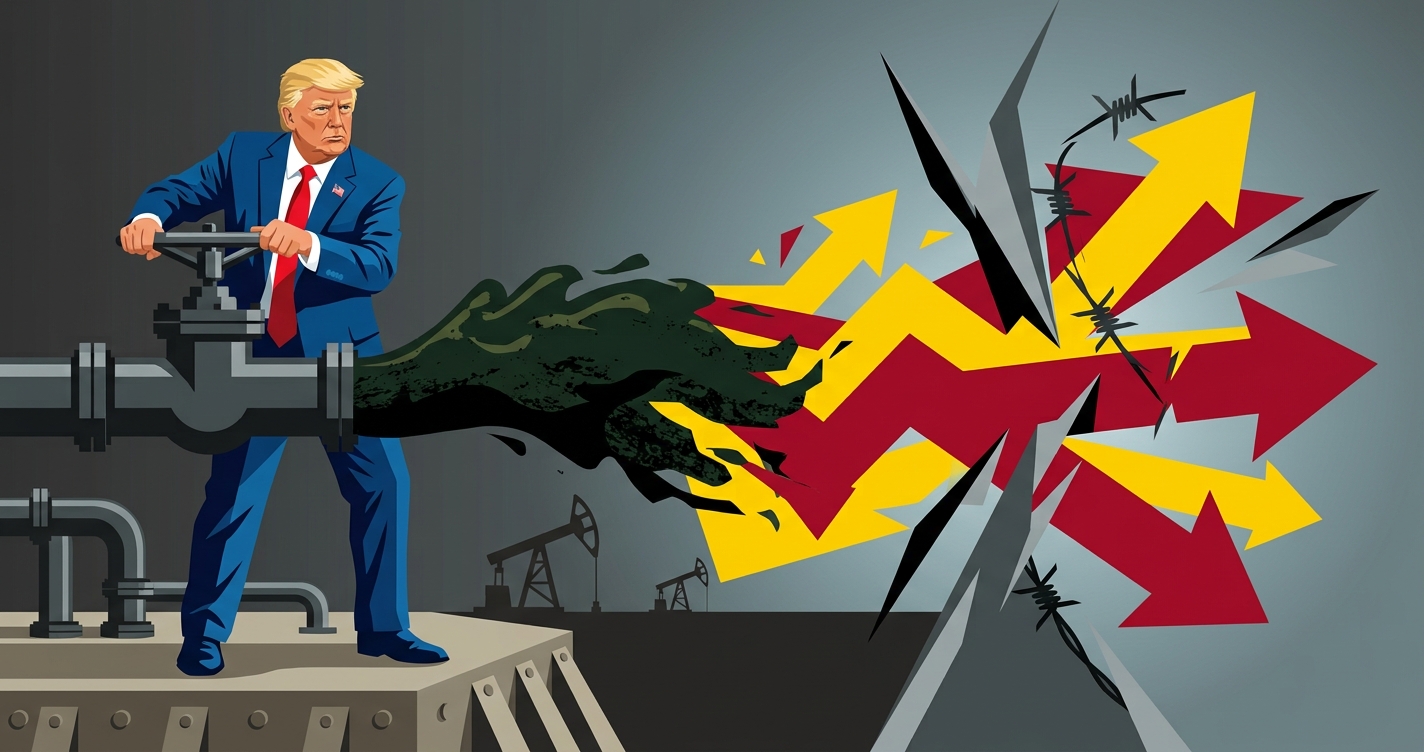
Since January 3, 2026, OFAC has granted a slew of licenses that have allowed the country's rigs to be revived and growth projections to soar. Still, the country remains shackled by sanctions. Without mechanisms that allow Venezuela to integrate into the global economy, the oil rebound could prove a short-term mirage.
In the country's oil fields, rigs that had sat idle for years have come back online. Venezuelan oil output finally reached some 1.2 million barrels per day by mid-2026, the highest level in seven years and well above the mere 715,000 barrels per day of 2022. Still, that figure is less than half the 2.1 million barrels per day the country was producing a decade ago.
The switches Washington flipped
It all started with the executive order signed on January 9, 2026 (E.O. 14373), which created a financing mechanism (Foreign Government Deposit Funds) to channel Venezuelan oil revenue under U.S. control, in what amounts to a functional legalization of Venezuela's oil trade under U.S. regulatory and financial oversight.
Twenty days later came the centerpiece of the new framework, General License 46, which authorizes "established U.S. entities" (incorporated in the United States before January 29, 2025) to buy, export and refine Venezuelan oil already extracted, though it does not permit geological studies, well drilling or investment negotiations with PDVSA to develop new fields.
From there, the pace did not let up: just ten days later, GL 46A widened the scope, and on March 13 came GL 46B, now explicitly permitting direct dealings with the Venezuelan government and PDVSA, covering extraction, exports, re-exports, sales, resale, storage, marketing and transport, including refining.
On February 13, Washington unlocked the major international oil companies with Licenses 49 and 50, allowing global energy firms to resume oil and gas operations in Venezuela, though with an impassable red line: no transactions with companies from Russia, Iran or China, or with entities jointly controlled by people from those countries. Thus, Chevron, BP, Eni, Repsol, Shell and Maurel & Prom were cleared to operate under GL 50A and its successive versions.
The drip of licenses continued until June, when a comprehensive package (GL 50B, 47A, 48B, 51B and 54A) directly replaced the technical guidance issued between February and March, specifically authorizing the export, sale and transport of Venezuelan oil and its petrochemical derivatives destined for the United States.
Just a few weeks ago, in September, GL 46D, 50C and 52B arrived, further expanding the permitted transactions with PDVSA, though they stop short of a full lifting of sanctions or of allowing any company to operate without restrictions.
GL 52B, the most recent, expands dealings with PDVSA but continues to bar anyone on the Specially Designated Nationals (SDN) list. In addition, GL 51C authorizes the export of Venezuelan minerals (gold included) but leaves out extraction and processing inside the country.
What does change, in numbers
The macroeconomic effect of the OFAC licenses shows up in the projections, since the country could grow by more than 10% in 2026 thanks to oil and sanctions relief, although these measures "are far from guaranteeing a sustained recovery of the Venezuelan economy."
In short, this is an economy breathing again through the same lung that suffocated it for years: crude.
What's missing: the padlock Washington has not opened
Each license repeats, almost like a mantra, the same warning: this is not the end of sanctions, which, together with questionable institutional strength, limits investor confidence and makes it hard to build favorable medium- and long-term expectations.
What the licenses do allow, buying and selling crude already extracted, importing diluents, and providing maintenance and technical support, is, at bottom, keeping an aging extraction infrastructure alive. What almost no license yet authorizes is what would truly boost the country: new investment in exploration and production. OFAC itself made this clear in writing in its frequently asked questions: GL 46 does not authorize geological studies, drilling of new wells or negotiations with PDVSA to develop fields.
Herein lies the real challenge ahead. As long as Washington keeps treating Venezuela like a patient in intensive care, barely given oxygen to survive, license by license, month by month, rather than as a partner with which a structural and sustained relief is negotiated, the current oil rebound will remain what it is today: a partial, conditional and reversible revival...