Editorial
Open the windows before going to the polls
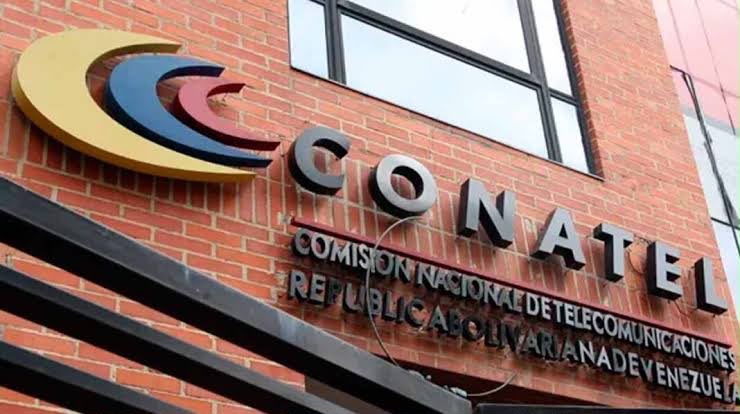
In less than a week, Venezuela witnessed two scenes that a year ago would have seemed impossible. The first took place in New York. There, before the 81st session of the United Nations General Assembly, acting president Delcy Rodríguez announced that Venezuela will hold elections and said her administration had begun a dialogue process with sectors of the opposition to advance toward a democratic transformation. The second took place in Caracas two days later. National Assembly president Jorge Rodríguez and former lawmaker Dinorah Figuera, who heads the opposition group at the negotiating table and has been in dialogue, read a joint statement in which they agreed to support the decision to continue and expand the lifting of administrative measures against news portals, websites and electronic media.
This decision is welcome, and it should be deepened. Few measures carry as much weight for democratic life as returning to citizens the right to inform themselves without intermediaries or bureaucratic permits granted out of fear. That fear must disappear from the public mood.
The most valuable aspect of the statement is that both sides, seated on opposite sides of the table, agree on the diagnosis. According to the text, the measure seeks to "strengthen freedom of expression, pluralistic thought and the right to information." It also invites actors in the public and private communications system to contribute to democratic coexistence. In a country accustomed to government and opposition not agreeing on the time of day, that shared phrase is a starting point.
The agreement also goes beyond screens. The parties will promote a discussion agenda on the use of the national radio spectrum, with participation from all actors in the country and a review of any legal instruments that require it. This matters because radio and television remain the main source of information for millions of Venezuelans outside the big cities.
For years, reading certain portals in Venezuela required virtual private networks, alternative links and patience. That barrier did not only punish the media. It also impoverished public conversation, because each camp ended up talking to itself and the adversary became an enemy that no one listens to. Political coexistence begins with something as basic as being able to read what the other side says.
The opening comes at a decisive moment. After the dialogue, Jorge Rodríguez said the timetable will include parliamentary, regional, municipal and presidential elections within constitutional deadlines, and he was emphatic that there will be no shortcuts outside the ballot box. In New York, Delcy Rodríguez spoke of leading Venezuela from a stage of uncertainty and conflict toward a stage of full democracy.
No presidential election can be full if the voter arrives at the polling station without having been able to compare proposals, verify promises or learn the records of those seeking to govern. Free access to digital media has four concrete effects before a campaign.
The first is deliberation. With portals open, voters can compare versions, read journalistic investigations and form their own judgment instead of repeating slogans.
The second is fairness. Candidates, whether from the government or the opposition, can reach citizens without depending on a single channel. That reduces suspicion of unfair advantage and makes the result more credible to everyone.
The third is defense against disinformation. Paradoxically, blockades tend to favor rumors, because when verified journalism does not circulate, the chain of anonymous messages takes its place. An open and plural information ecosystem is the best antidote to lies of any stripe.
The fourth is citizen mobilization. An informed population organizes better. It knows where and how to update its electoral data, how to register as a polling-station witness, what guarantees to demand and how to coordinate with its neighbors. Peaceful and orderly mobilization of voters threatens no one; it is the clearest sign that a society trusts the vote as a tool for change. This also applies to the millions of Venezuelans abroad, to whom the acting president addressed a message at the end of her speech, and who follow the country almost exclusively through digital media.
Welcoming the opening does not mean considering it complete. Delcy Rodríguez's order to immediately lift restrictions on another group of platforms does not specify which portals will be unblocked or how many. Jorge Rodríguez said that most of the portals that remained blocked had already regained operability, but he deferred to next Monday decisions on the administrative cases and open judicial proceedings against journalists.
That Monday will be an important test. An unblocked portal is of little use if the person writing for it still faces a court file for doing their job. Press freedom is not measured only by the pages that open; it is also measured by how calmly journalists can work.
Critical voices cannot be ignored either. The Plataforma Unitaria Democrática responded to the UN speech by demanding guarantees for exercising political rights, the restoration of party cards and symbols, the elimination of disqualifications and the release of all political prisoners. It also called for a trustworthy National Electoral Council, clear deadlines and a verifiable electoral timetable. These demands do not contradict the media opening; they complement it. A well-informed country is precisely the one that can monitor whether those guarantees are upheld.
Therefore, the right course is to turn the gesture into stable policy. That means publishing the list of rehabilitated portals, closing the proceedings against journalists, writing into law the guarantees that today depend on an administrative order, and opening the debate on the radio spectrum with clear rules.
After this second round of negotiations, a third is scheduled for mid-October, according to Jorge Rodríguez. Between now and then, Venezuelans will have the chance to see whether the open windows stay open.
Democracy is not decreed from an international podium or signed in a joint statement. It is built every day in the ability to read, listen, discuss and dissent without fear. If the government and the opposition want the next presidential election to be accepted by all, starting with free information is the best investment they can make. A well-informed public votes better, mobilizes peacefully and, above all, accepts the result with greater serenity, whatever it may be.