Editorial
Delcy and Trump embrace at the UN
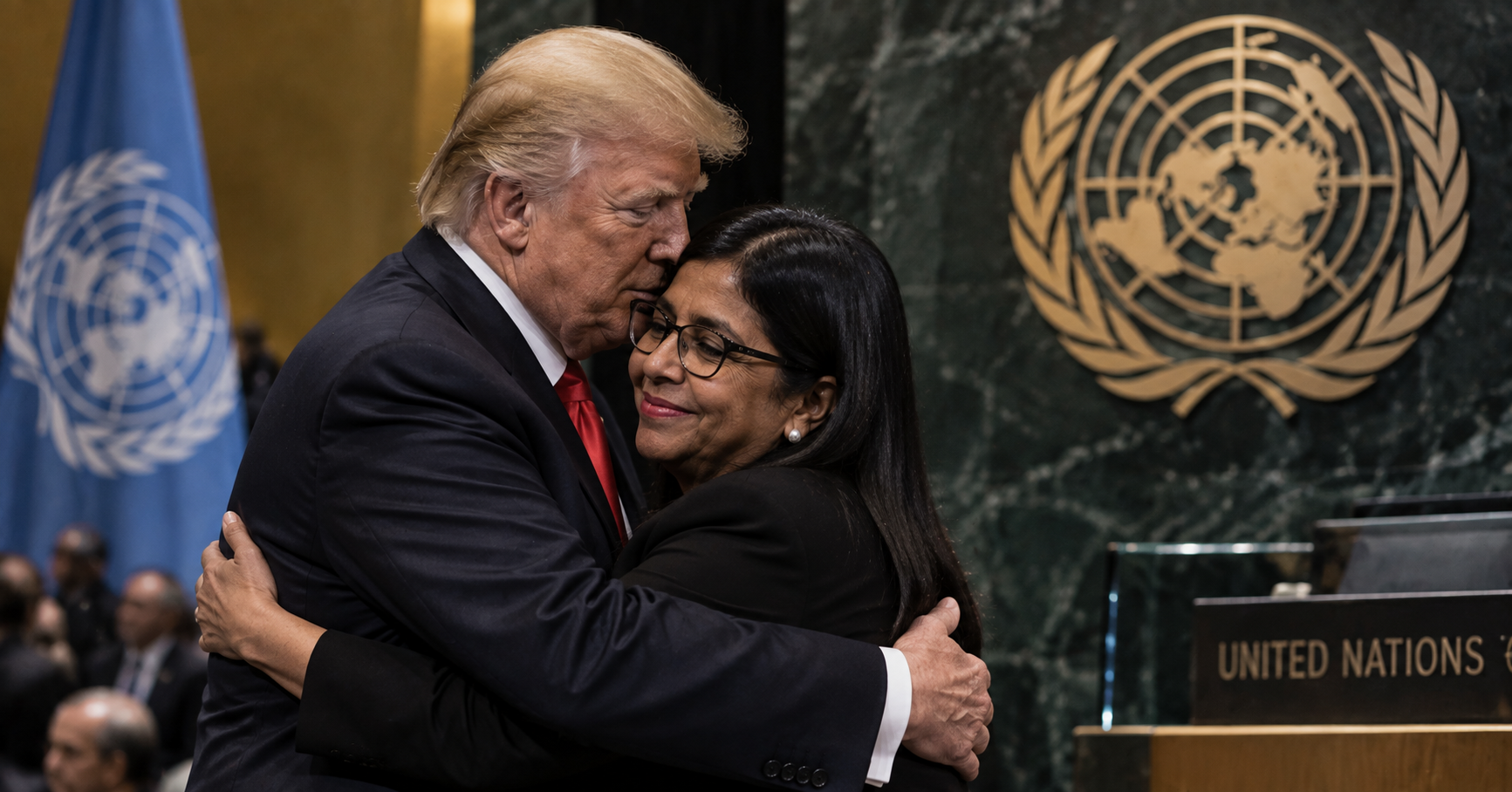
Analysts on the conservative right in Miami and Madrid must have choked on their coffee when they heard the news...
In the corridors of the UN General Assembly this week, we will witness a feat of diplomatic contortionism worthy of Cirque du Soleil: delegates from the United States and from stodgy Europe lining up to shake the hand of Venezuelan president Delcy Rodríguez. Yes, the same woman who until yesterday was, in their speeches, the very "antidemocratic demon" of Venezuela.
What changed? Did Washington suddenly become devoted to Bolivarianism?
Not at all. Welcome to the new era of pragmatic diplomacy, a very elegant and antiseptic concept for saying that, when the noose tightens in the global energy market, the supposed "democratic" principles of the Global North go to the highest bidder.
Amid this new oil idyll between the United States and Venezuela, the strategy of the radical Venezuelan opposition has been sidelined. Figures such as María Corina Machado, Leopoldo López and Julio Borges spent years of political capital walking the corridors of Washington, advocating a total financial siege and openly flirting with the idea of a US military intervention as the only path to political transition. They did win sanctions, yes, but the outcome was far from what they had promised. When the global crude market wobbled, the White House made clear that in realpolitik there are no friends, only financial interests.
The swift exclusion of opposition leaders from the new diplomatic equation leaves a stark lesson about how the global economic and political chessboard operates: at the end of the day, great powers care more about the flow of barrels and cash than about promises of ideological loyalty.
For years, the gringos sold us the line of "maximum pressure" as the cure for Venezuela's ills. A recipe that cost more than $232 billion in losses from sanctions, destroyed the purchasing power of millions of Venezuelans and imploded public services. Now, it turns out that the 300.3 billion barrels of proven oil reserves in Venezuela look far more attractive to Western capital than sustaining political isolation.
This handshake at the UN between Delcy Rodríguez and the major Western political leaders is not a reward for political virtue; it is the open confession of the failure of American interventionism. Americans realized that isolating Venezuela, a key country in the global energy matrix, is "a shot in the foot" that its own corporations are no longer willing to tolerate. The checkbook, as always, killed the rhetoric.
From a genuinely progressive perspective, we cannot be naive. Venezuela's reintegration into the global economic chessboard, driven by this transactional pragmatism, brings with it the enormous danger of voracious extractivism.
The great challenge at this stage is not simply to celebrate that Venezuelans are being invited back to participate in the markets, but to ensure that this opening does not end up mortgaging the country's sovereignty.
It is time to play smart: charge full price for the crude and demand that this wealth translate into reindustrialization, decent wages and national development. Otherwise, this embrace at the UN between Delcy and Trump will not mark the beginning of popular prosperity, but simply the signing of a new neocolonial contract.