Editorial
The doping of remittances in Central America: celebrating the expulsion of our people
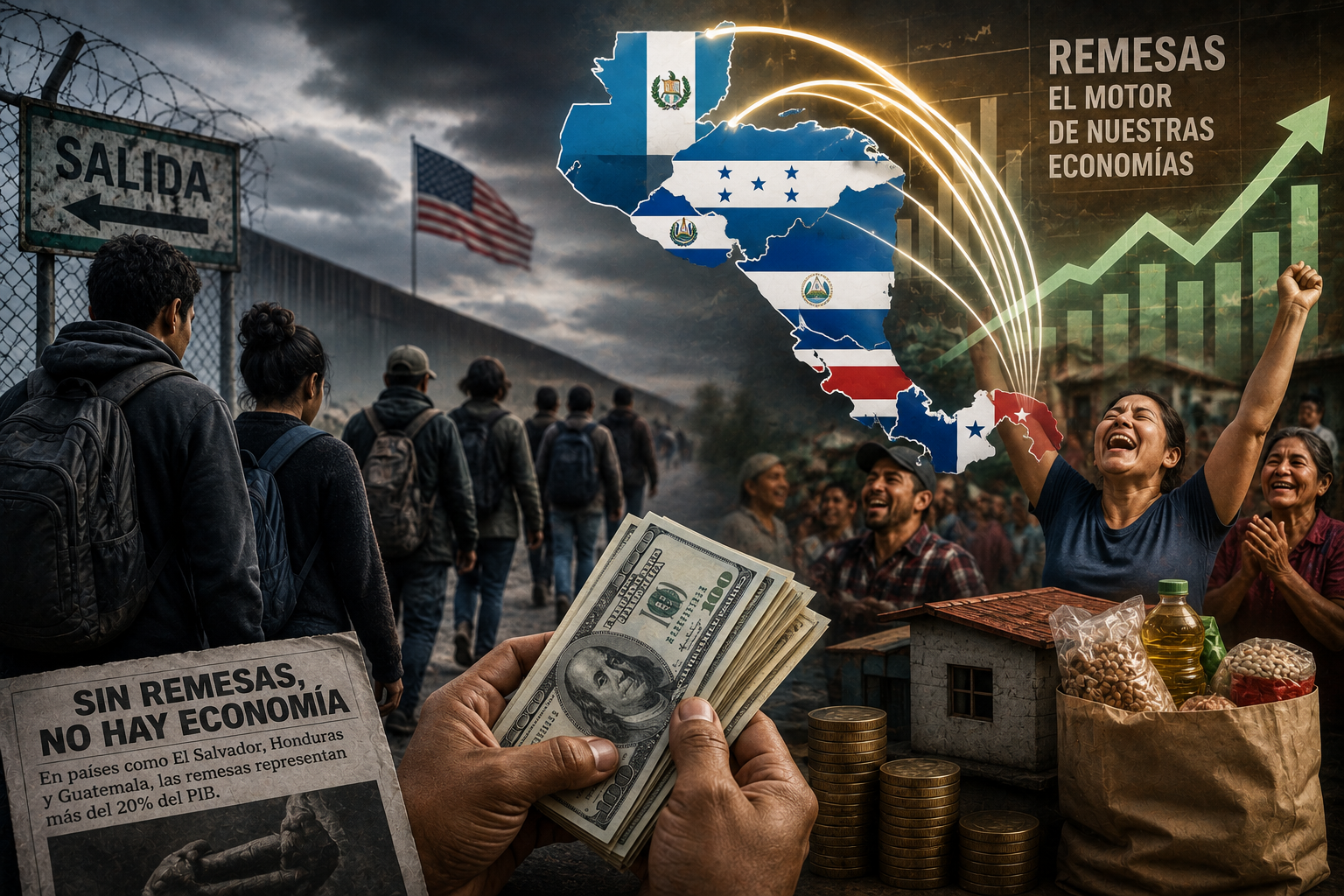
The central banks of Guatemala, Honduras and El Salvador have just published record figures: family remittances that Central American migrants send home from the United States reached an astronomical $38 billion on an annualized basis. In countries such as Guatemala or El Salvador, these inflows already account for more than 22% of national GDP. Politicians of the moment smile before the cameras and present these figures as a resounding triumph of their macroeconomic management.
But let's say it without anesthesia: celebrating the rise in remittances is an analytical aberration and a profound confession of state impotence. Every dollar that enters through the teller window of a bank in Chiquimula or San Miguel is the bitter outcome of a young person who had to leave his land, risk his life crossing the desert and endure family separation because his own country did not offer him decent work at a fair wage.
The Central American economic model has specialized in exporting human beings and importing greenbacks.
To make matters worse, this massive injection of dollars acts as a financial "doping" that distorts the local economy. The torrent of dollars generates excess liquidity in private banking that artificially inflates the prices of land and the basic food basket, while appreciating the local currency and destroying the competitiveness of small farmers and domestic manufacturers.
Relying on the sweat of the diaspora to sustain domestic consumption is building a house of cards on a social time bomb.