Editorial
Argentina's libertarian experiment: fiscal windfall on paper, hunger in the streets
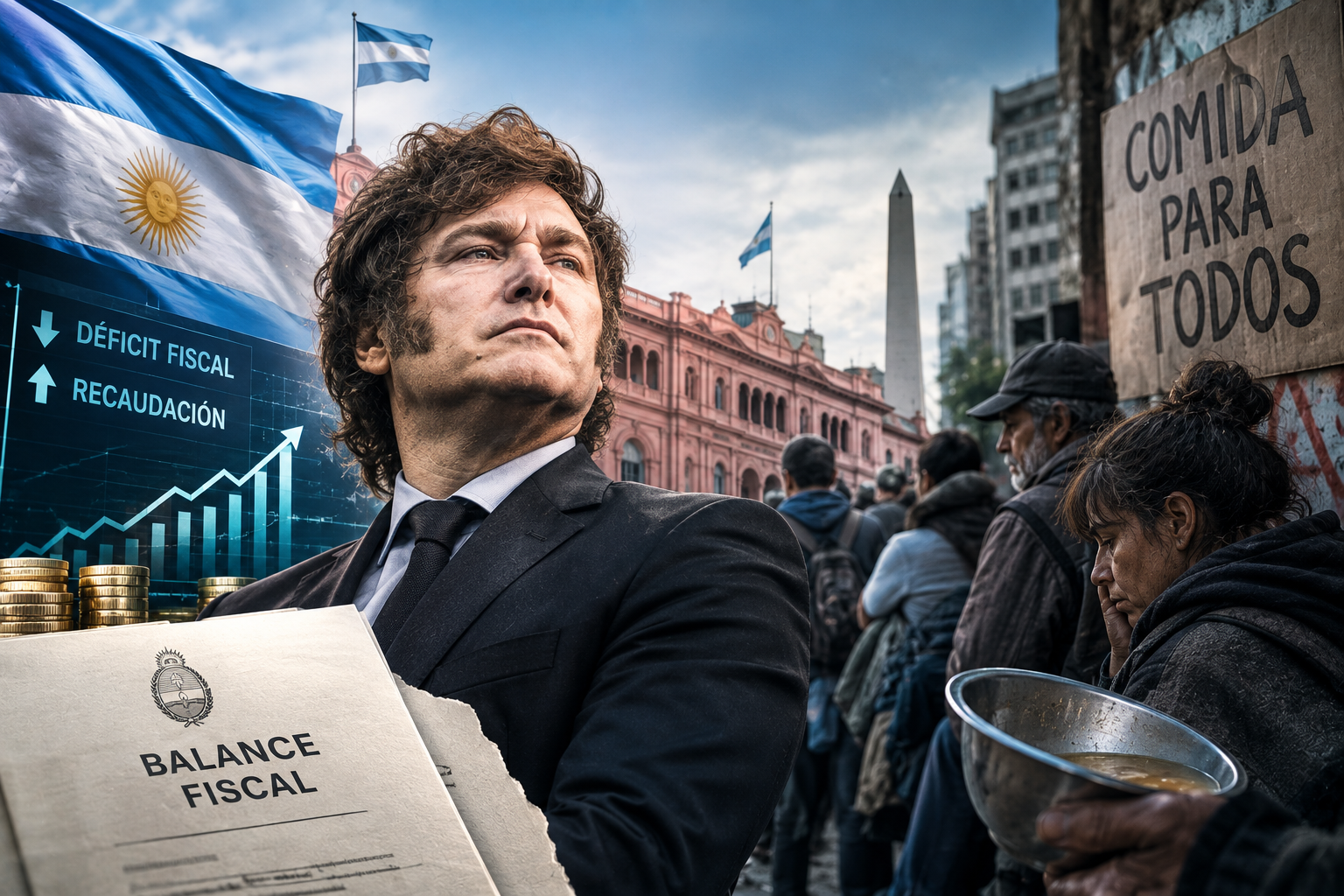
In the offices of the Palacio de Hacienda in Buenos Aires, champagne bottles are being uncorked to celebrate the "primary fiscal surplus" (the state collects more money than it spends before paying debt interest). Yet once you leave the Casa Rosada and walk the streets of Greater Buenos Aires, the reality of the real economy is bleak: non-primary gross domestic product (GDP) has fallen 3.8%, mass consumption of beef and milk has collapsed 8.4%, and urban poverty has soared past 52% of the population.
The so-called "shock adjustment" or "creative destruction" doctrine, championed by Milei's new populist ultraliberal right, promised that by cutting public spending at its root, inflation would disappear and the economy would flourish like a spring garden. But what the technocracy calls "fiscal balance" has been achieved by squeezing pensions of older adults, freezing budgets of public universities, halting road works, and triggering the mass closure of thousands of small and medium-sized industrial enterprises (SMEs) battered by the collapse of real wages.
No nation in human history has achieved development by destroying its domestic market, giving away its mineral resources through preferential tax schemes, and becoming a mere hub for financial services without science, education or capital public spending.
Putting inflation to sleep by turning society into a productive graveyard is not an economic achievement but a social failure. Stability that does not translate into food on the tables of workers is a laboratory illusion with an expiration date.