Editorial
Oil is not reaching Venezuelans' dinner tables
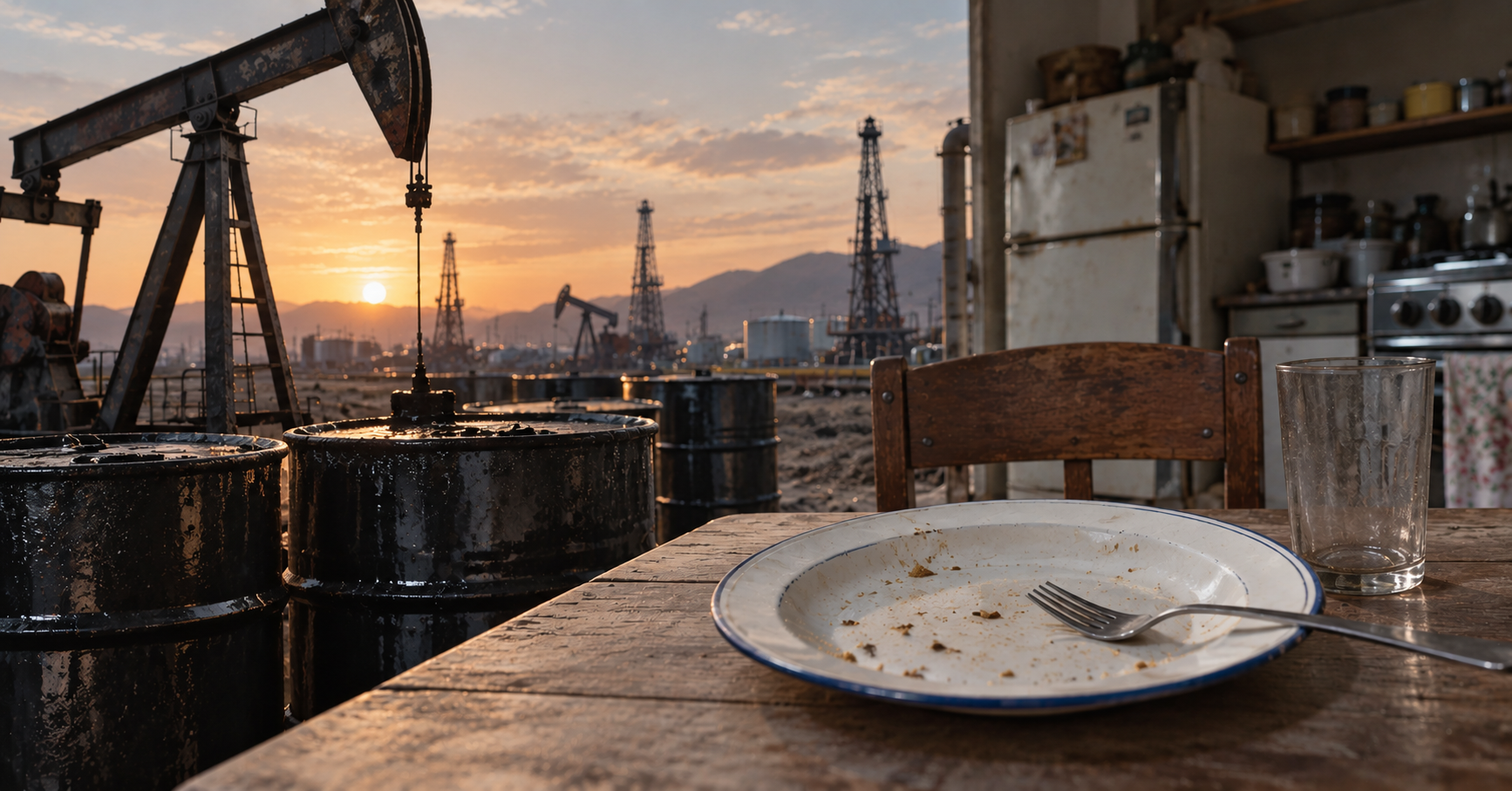
When we hear the news about Venezuela abroad, it seems we are being described as two different countries...
On one side, international headlines speak of a Venezuela that is beginning to wake from its economic lethargy: multinational companies resuming hydrocarbon operations, with a palpable increase in oil production and projections of economic growth.
But when we step out into the street or go to the supermarket, the reality is different. The ordinary Venezuelan asks: Where is the money that is supposedly flowing into the country? If Venezuela is bringing in more money, why does my income stretch to less?
These questions are painfully real. The answer lies in the enormous gaps between the large numbers of the national economy (the macroeconomy) and the pocketbook of each citizen (the microeconomy).
To understand when that wealth will be felt in our homes, we need to look at the national numbers plainly and without embellishment.
The oil mirage
It is true that oil production has improved. Indeed, this year we have already surpassed production of 1.2 million barrels a day, which is above PDVSA's initial estimates. After years of decline in oil output, this is a major achievement, driven by the easing of sanctions and the entry of new players into the country's oil operations. Still, we remain far from the more than 3 million barrels we were producing at the end of the 1990s.
The problem is that the rise in oil export revenue does not go directly toward improving schools or raising wages, because the country is burdened by enormous financial obligations.
Restoring the hydrocarbons industry to meaningful levels (exceeding 2 million barrels a day, for example) would require investments close to $100 billion over a decade. In addition, repairing the National Electric System (vital to recovering domestic production) would demand investments of more than $20 billion. Much of the money entering the country is needed to reinvest in the oil industry itself and in basic public services that are in ruins.
Moreover, of the $35 billion that is estimated to come in this year from Venezuelan oil exports to the U.S. (twice the amount in 2025), no less than about $13 billion is estimated to remain in accounts at the U.S. Treasury Department. This happens for two reasons. The first has to do with operational difficulties in making transfers to the Central Bank of Venezuela, which remains isolated from the international financial system for lack of correspondent banking relationships. The second is that the Trump administration, in its zeal for political control, still does not want to give Venezuelans access to money that rightfully belongs to us.
The silent thief of our wages
While large sums of money circulate among the desks of the rich, the Americans and the government, on the street the real enemy of ordinary people is inflation.
In September, the central bank reported annualized inflation of 465%. In that month alone, prices rose 8.4%. Meanwhile, the bolívar continues to lose value at an alarming pace against the dollar. We began 2026 near 300 bolívares to the dollar, and by the end of September it had already surpassed 850. Because our economy is highly dollarized in practice, this devaluation translates immediately into higher prices for nearly everything.
When bolívar-denominated salaries stay frozen in the face of this devaluation, purchasing power disappears. You may earn more bolívares than you did five years ago, but you buy a third of what you used to.
A blow from nature
On top of this complex economic picture came an undeniable tragedy. The double earthquake of June 2026, which struck mainly the north of the country (La Guaira, Caracas, Carabobo), not only left thousands dead and immense grief, but also dealt the country a brutal economic setback.
The total cost of damage and lost output could reach between $10.5 billion and $12.2 billion, roughly one-tenth of national GDP. As a result, various economic analysis firms have had to drastically cut their growth forecasts for 2026, lowering them from an estimate of nearly 8% to 6%.
The government and the private sector have had to divert resources (which should have gone to productive investment or public services) toward rebuilding infrastructure, housing and hospitals.
When will we feel the economic improvement?
Economic time moves frustratingly slowly, and political time even more so. There are no magic solutions overnight. For the growth we are seeing today to translate into a better quality of life (better wages, functioning hospitals, stable public services), several factors are needed:
· Sustained, massive investment: a few companies are not enough. We need billions of dollars in electricity infrastructure, water, education and health.
· Institutional stability: Foreign investors need legal certainty. A country in constant political crisis drives away long-term capital.
· Real control of inflation: This requires fiscal discipline, an end to printing money without backing, and the restoration of confidence in the national currency.
Venezuela's full stabilization will depend on both economic and political factors. A solid institutional framework, in which transparent democratic processes exist, is essential to generate the confidence that international markets and investors demand. Political certainty and the willingness of the U.S. are the cornerstone for ensuring that the easing of sanctions becomes a lasting policy rather than a temporary concession.
If things are done well and investments materialize and are sustained, economists project that the average Venezuelan could begin to feel real relief in purchasing power around 2028 or 2029. But this is not automatic. It requires not only better numbers on a spreadsheet, but management focused on social well-being and not merely on political survival.
The wealth generated in Venezuela must stop being a number in the news and become bread on the table, medicine in the hospitals and a viable future for those of us who chose to stay and rebuild.