Editorial
Partners or victims of the green transition? The lithium and copper cold war
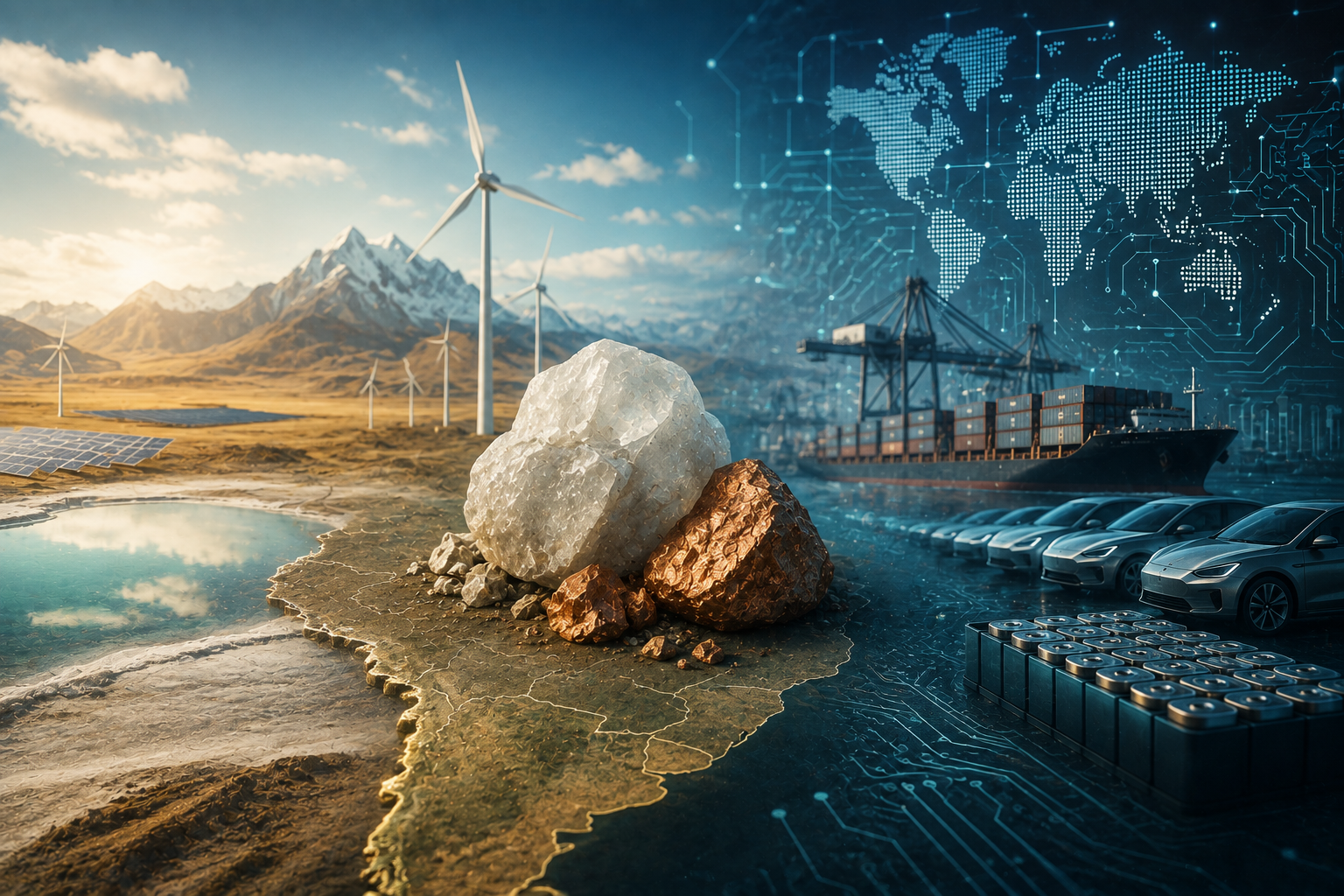
This week, luxury hotels in Santiago de Chile filled with executives in expensive suits and foreign diplomats for the Global Sustainable Mining Forum. The reason for all the commotion is simple: the Andean Region, made up of Chile, Peru, Bolivia and Argentina, holds 56% of the world's lithium reserves (the so-called "white gold" indispensable for batteries) and more than 38% of global copper production (the conductive metal essential for electrification).
The powers of the Global North desperately need our minerals to fuel their ecological transition and manufacture millions of electric vehicles.
Yet, beneath the pretty carpet of "sustainability" rhetoric, a fierce geopolitical dispute is under way between Washington and Beijing over control of the supply chain for the components that will make up the world's future technology.
The deadly danger for 21st-century South America is falling back into the old "resource curse": extracting raw lithium from Andean salt flats, shipping it across the Atlantic, and then buying back the finished batteries and cars from Europeans or Asians at an 800% markup. It is exactly the same extractivist story we endured with guano, saltpeter and rubber in past centuries.
Escaping this trap does not mean closing the mines, but imposing sovereign terms of play. If American, European or Chinese companies want to take Chilean, Bolivian or Argentine lithium, advanced chemical refining, battery cell manufacturing and technology transfer must be established on South American soil. The states of the Andean Region must act as a bloc, like a lithium OPEC, setting royalties and progressive taxes that finance public education and local scientific research. We were not created to be the planet's cheap quarry.