Editorial
South America enters a new contest for power, oil and markets
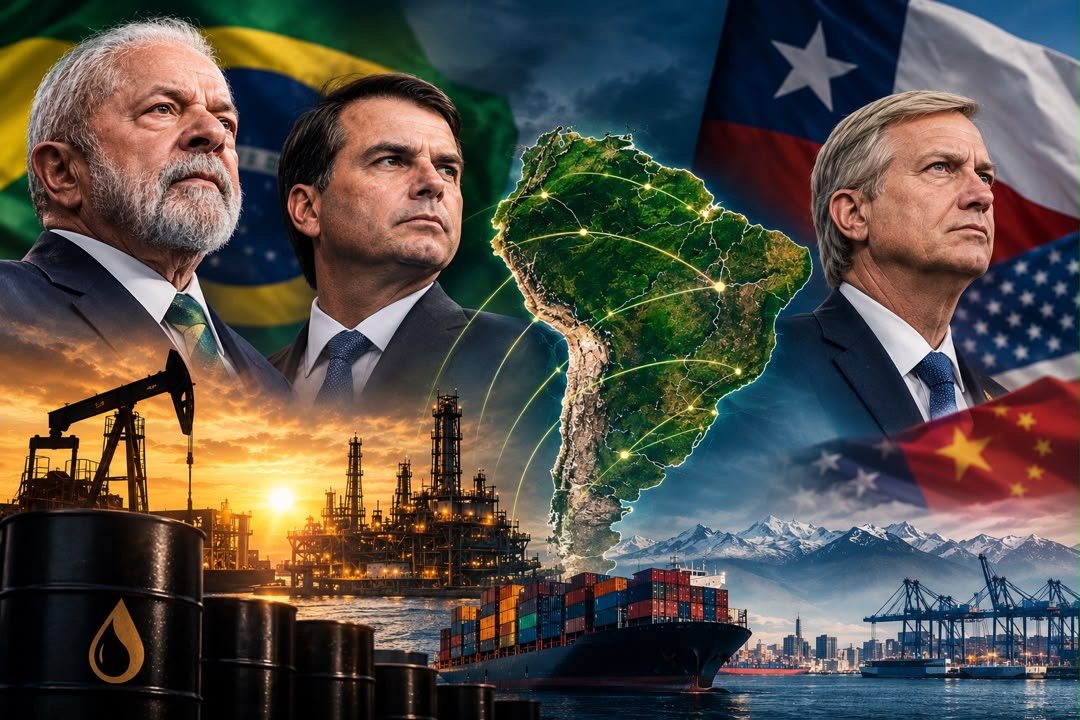
South America's economic chessboard is being reconfigured at an striking pace. What was once a region organized around predictable political blocs has become a arena of intense pragmatic competition. The combination of new economic directions, the race to open routes to global markets and pressure from major powers such as the United States has launched a new era of contest for regional influence, in which each country plays its cards with historic urgency.
The main driver of this change is the transformation of the energy map and the weight of domestic reforms. The most dramatic example is Argentina. Under a strict policy of fiscal balance and openness, the South American country is on track for a record high in exports, powered by its “trident” of energy, mining and agriculture. The oil of “Vaca Muerta” has become its main export product, breaking its historic dependence on the countryside and establishing Patagonia as an energy player of global weight. At the same time, Venezuela is undergoing a deep reconfiguration in how it manages its resources. With changes to its hydrocarbons laws aimed at attracting foreign investment, Venezuelan oil continues to drive regional production, in a context where its room for commercial autonomy is being contested under the watch and supervision of U.S. energy needs. The Trump administration has all of the Delcy Rodríguez government's energy operations in its sights and intends to sell this to its electorate as a foreign policy victory.
Yet the fate of this energy and industrial wealth will depend on the political direction of the regional giant, Brazil. The country is entering a phase of maximum tension ahead of the presidential election in October. Polls show an extremely tight race and a virtual technical tie between President Lula da Silva, who seeks to shield the country from foreign interference, and his right-wing rival, Flavio Bolsonaro, who is gaining ground with a tough-on-crime message. What Brazil votes for will not only define its domestic model but also determine whether the largest economy in the region adopts a stance of “active non-alignment” toward the global powers or moves toward deeper polarization. It is worth recalling that if the right wins the presidency, Venezuela would return to the same political landscape as 2018, with borders controlled by right-wing governments and this time backed by Donald Trump.
While neighboring powers settle their leadership at the ballot box or in the oil fields, Chile faces the challenge of defending its place in 21st-century markets amid a complex domestic situation. With an economy flirting with slowdown and pressures on inflation and employment, the country is pursuing key structural reforms, such as the overhaul of its pension system. Still, Chile's gaze remains fixed on the Pacific; its infrastructure and mining exports are crucial to trade with Asia, but rising logistics costs and the swings in international crude prices act as a constant source of macroeconomic risk.
For the region's leaders and business owners, the challenge of this new era is monumental. South America no longer moves as a bloc but as an archipelago of individual strategies competing to attract investment in energy, lithium and manufacturing. Real economic success will not come to the country that tries to isolate itself in its ideology, but to the one that manages to adapt most quickly to the demands of the global market. The contest for power, oil and markets has already begun; the strategic maturity of each government will decide who leads the continent and who is left behind.