News
Argentina joins US offensive against China
Argentina's government on Wednesday joined a declaration promoted by the United States to combat industrial overproduction and practices considered non-market, an initiative that targets directly the competition with China.
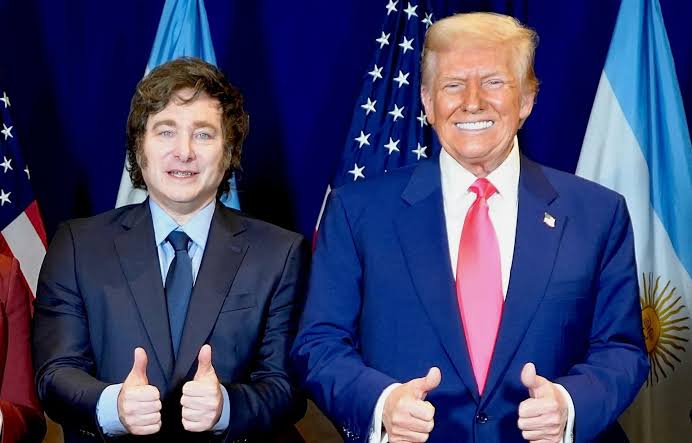
Argentina's government on Wednesday joined a declaration promoted by the United States to combat industrial overproduction and practices considered non-market, an initiative that targets directly the competition with China. According to the newspaper Clarín, on October 8, 2026, the South American country signed the Joint Ministerial Declaration to address global overcapacity and production in key manufacturing sectors, a document promoted by the Office of the United States Trade Representative.
The initiative seeks to curb the surplus of products that, according to Washington, are subsidized by foreign governments and distort global prices by exceeding domestic demand in their own countries. The agreement specifically targets high-technology production, including electric vehicles, according to the text of the declaration, which mentions batteries, chemicals, semiconductors and solar panels. The signatory countries agreed to establish sectoral platforms to identify this structural overcapacity and coordinate possible joint trade responses.
This move represents a firm political and commercial alignment of Buenos Aires with the administration of Donald Trump. However, the decision introduces tensions in Argentine foreign policy, since China remains one of the country's main trading partners and a key buyer of its agricultural exports. The signed document calls for the elimination of practices not oriented to the market, which places Argentine diplomacy in a complex position vis-à-vis its crucial Asian partner.
Washington's protectionist turn diminishes the benefits Argentina could obtain from this alliance, a scenario that already affects other partners in the region. According to the Chilean newspaper La Tercera, Chile's Undersecretary for International Economic Relations, Paula Estévez, noted that currently only 53% of Chilean products enter the United States at a 0% tariff, and acknowledged that this figure will not reach 100% due to the change in US trade policy.
Going forward, it remains to be seen how the Argentine government will manage the balance between its ideological alliance with the United States and the need to preserve its exports to China. The evolution of the sectoral platforms created by the agreement will determine whether this signature translates into concrete trade barriers or remains a political gesture of international alignment.