News
Bolivia extends state of exception as it moves to end fuel subsidies
The Bolivian government has extended the state of exception for ninety days amid persistent social tension and protests triggered by the severe economic crisis.
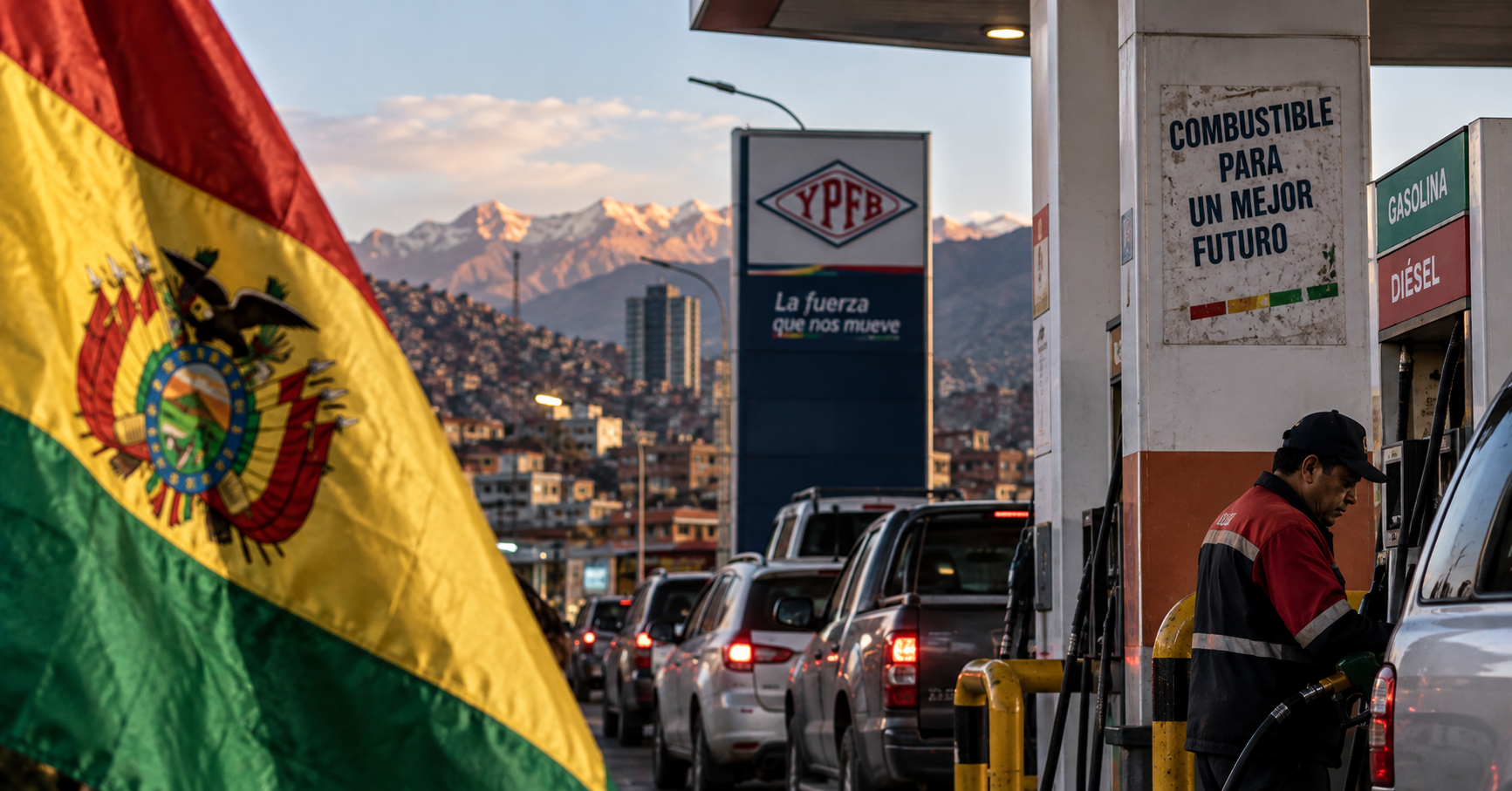
The Bolivian government has extended the state of exception for ninety days amid persistent social tension and protests triggered by the severe economic crisis. According to the outlet Banca y Negocios, the measure seeks to guarantee free movement and supply in a context marked by blockades and demands from various social sectors.
The official decision follows months of mobilizations that began over shortages of gasoline and diesel, a situation that led the administration to double the price of gasoline and triple that of diesel. These increases are part of the measures adopted to stabilize the energy supply in the country.
Alongside the security situation, the Bolivian economy is going through a deep contractionary cycle. According to records from the International Monetary Fund (IMF), real economic activity grew 2.5% in 2023, but fell 1.1% in 2024 and 1.2% in 2025. For 2026, the fund's projections point to an even steeper contraction, at 3.3%.
In the coming months, the Bolivian administration has committed to the IMF to eliminate all fuel subsidies starting in January, as part of the agreements to access international financing. This condition foreshadows new challenges in the relationship between the state and the popular sectors and transport operators affected by the rising cost of living.