News
Brazil deepens its alliance with China and speeds up the Mercosur deal as US tariffs bite
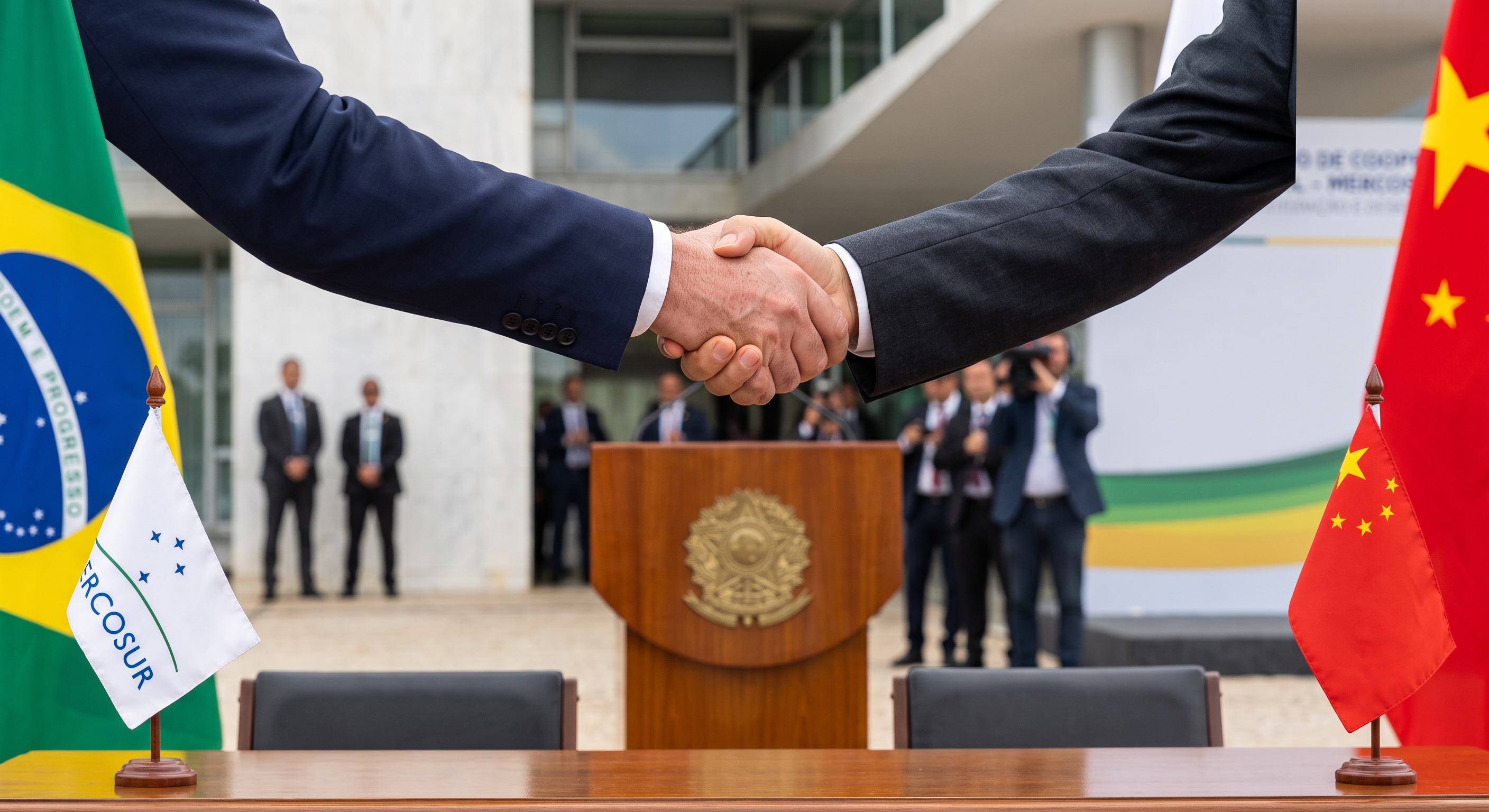
Brazilian President Luiz Inácio Lula da Silva and his Chinese counterpart, Xi Jinping, held a phone call on July 26, 2026, to deepen their strategic partnership and accelerate negotiations toward a trade agreement with Mercosur, according to the outlet América Económica. The diplomatic contact came just days after new US tariff measures on Brazilian exports took effect.
According to information published by América Económica, the US administration has since July 22 imposed an additional 25% tariff on certain Brazilian products, combined with a 12.5% surcharge linked to policies against forced labor. The Brazilian government estimated that 16.5% of its sales to the United States could be subject to a cumulative tariff of 37.5%, while another 1.9% would face only the 25% levy.
Data published by the same outlet detail the uneven weight of the two powers in Brazil's foreign trade during the first half of 2026. China accounted for 31.6% of Brazil's exports, totaling $58.32 billion (a 21.9% year-on-year increase), while imports from the Asian giant reached $38.54 billion (up 8.0%). Bilateral trade with China left Brazil with a surplus of $19.78 billion. By contrast, sales to the United States represented 9.4% of the total, amounting to $17.43 billion (down 13.0%), and purchases came to $18.95 billion, producing a deficit of $1.52 billion.
Brazil's foreign trade shows a growing dependence on the Asian market, especially in agriculture. In 2025, Brazilian exports to China reached $100 billion (6% more than the previous year), driven by soybeans, beef, sugar, pulp and pig iron. To cushion the impact of US restrictions, the two leaders agreed to expand cooperation in key areas such as artificial intelligence, satellite technology, processing of critical minerals and fertilizer trade.