News
China keeps tariffs on Mexican walnuts, prolonging trade dispute
The Chinese government has decided to prolong its trade dispute over Mexican walnuts and will keep tariffs of up to 51.6% on imports of this product, according to the newspaper Expansión, which reported it on September 10, 2026.
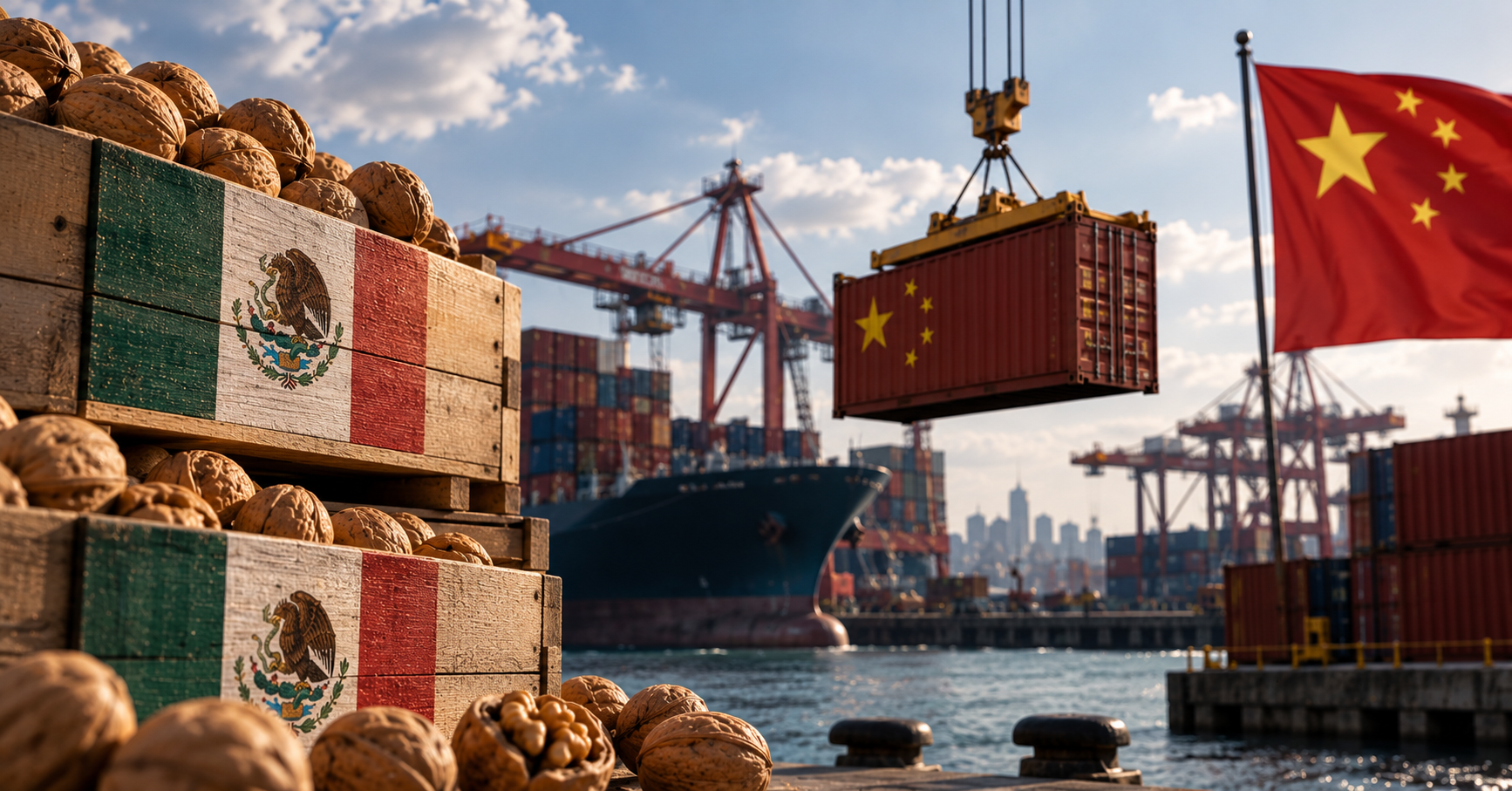
The Chinese government has decided to prolong its trade dispute over Mexican walnuts and will keep tariffs of up to 51.6% on imports of this product, according to the newspaper Expansión, which reported it on September 10, 2026. The investigation into these trade measures, which was originally due to conclude this month, will remain open until March 2027.
A tariff is a tax levied on imported goods, which raises their final price in the destination market and reduces their competitiveness against local producers or other international competitors. In this case, the extension of the investigation by Beijing keeps walnut exporters in limbo, as they face high fiscal barriers to entering the Asian giant.
Elsewhere, trade tensions in the North American region are also a source of concern. According to information from El Financiero published the same day, U.S. tariffs on Mexican imports in key sectors such as automotive and aluminum are creating distortions in the market, Roberto Lazzeri said. Although these U.S. measures are concentrated in heavy industry and manufacturing, they reflect a complex global environment of growing protectionism that affects investment decisions in various productive sectors in Mexico.
For local agricultural producers, the inability to access large international markets such as China's on competitive terms is putting downward pressure on domestic prices due to the accumulation of inventories. In the coming weeks, the key will be to watch whether Mexico's Ministry of Economy seeks to open bilateral negotiation channels with China before the new March 2027 deadline expires, or whether alternative markets are explored to mitigate the impact on agricultural communities in the country's north.