News
Colombia faces fiscal crossroads as Bank of America warns of possible IMF bailout
According to a report published by Bloomberg Línea on September 9, 2026, the investment bank Bank of America (BofA) warned that Colombia could be forced to turn to the International Monetary Fund (IMF) as a contingency plan if the government's proposed fiscal adjustment fails to advance in Congress.
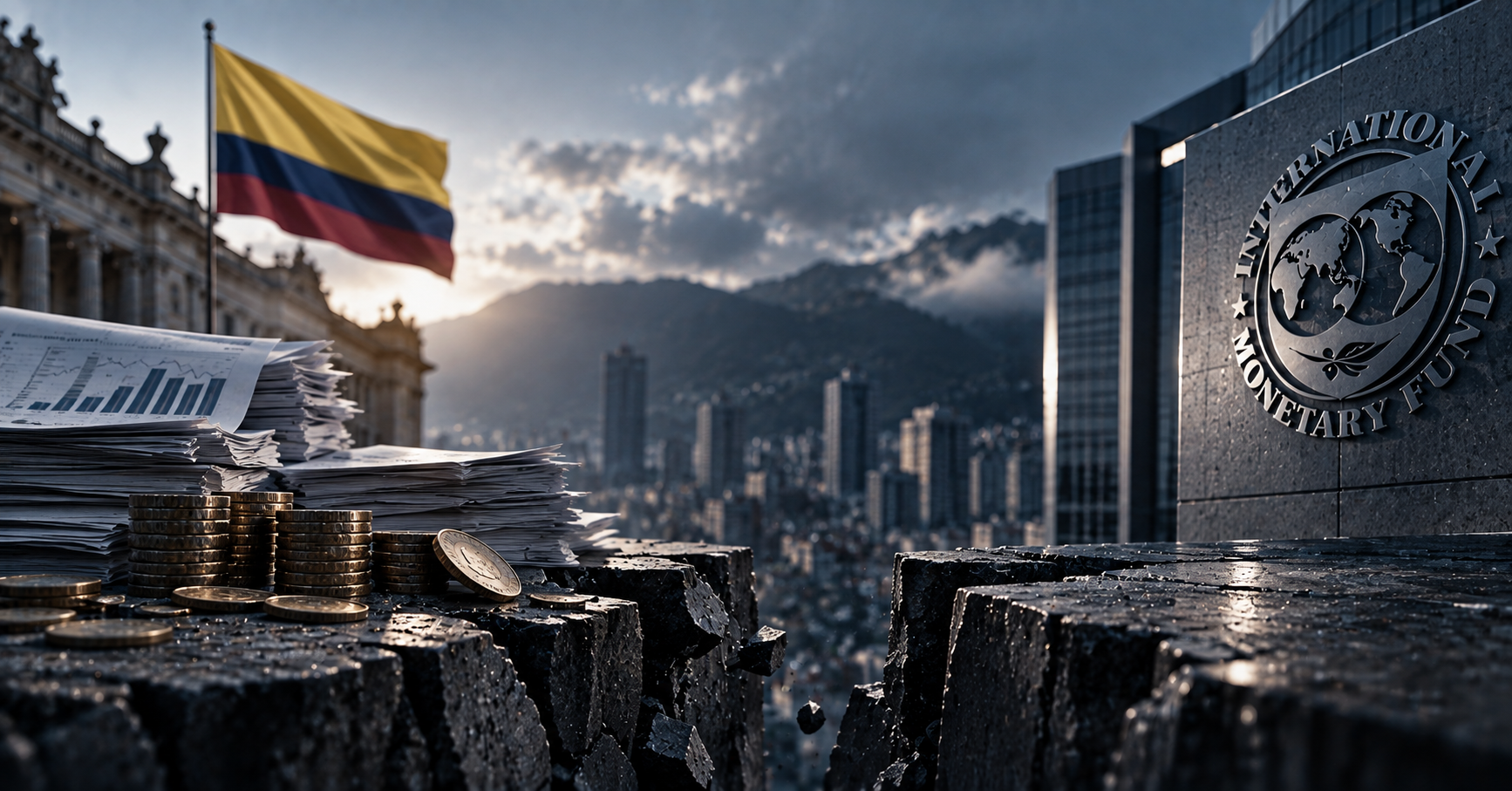
According to a report published by Bloomberg Línea on September 9, 2026, the investment bank Bank of America (BofA) warned that Colombia could be forced to turn to the International Monetary Fund (IMF) as a contingency plan if the government's proposed fiscal adjustment fails to advance in Congress. The bank's analysis raises this scenario in light of the difficulties in consolidating the country's public accounts.
An IMF program typically entails strict austerity conditions and structural reforms that limit the room for maneuver of national economic policy. To avoid this path, the government is seeking approval of a Fiscal Adjustment Law. According to the Bloomberg Línea report, Bank of America's base case assumes that Congress will pass the law, though in a diluted form, which leaves uncertainty over whether the fiscal correction will be sufficient to stabilize state finances.
The debate comes just days before a new tax reform is submitted to the Colombian Congress. In this context of discussion over where the resources should come from, the president of Grupo Aval, María Lorena Gutiérrez, told Bloomberg Línea in an interview that the country's financial sector already bears a heavy burden, ranking second in the world in income tax rate. Gutiérrez argued for redistributing the tax burden rather than increasing it on the same sectors as always.
The lack of a credible fiscal adjustment breeds distrust in international markets. This perception of risk raises the cost of borrowing for the state, which in turn pushes local interest rates higher. For ordinary people, this translates into more expensive mortgages and consumer loans, and into less private investment that slows job creation.
In the coming weeks, attention will focus on the start of legislative debates on the tax reform and the Fiscal Adjustment Law. The government's room to negotiate with political parties and business associations will determine whether Colombia manages to stabilize its accounts through the legislative route or is pushed to consider IMF multilateral financing as a last resort.