News
Delcy Rodríguez meets with Human Rights Watch in Caracas on pluralism of expression
Venezuela's interim president, Delcy Rodríguez, received representatives of Human Rights Watch in Caracas on Thursday, in a meeting led by the organization's deputy executive director, Federico Borello.
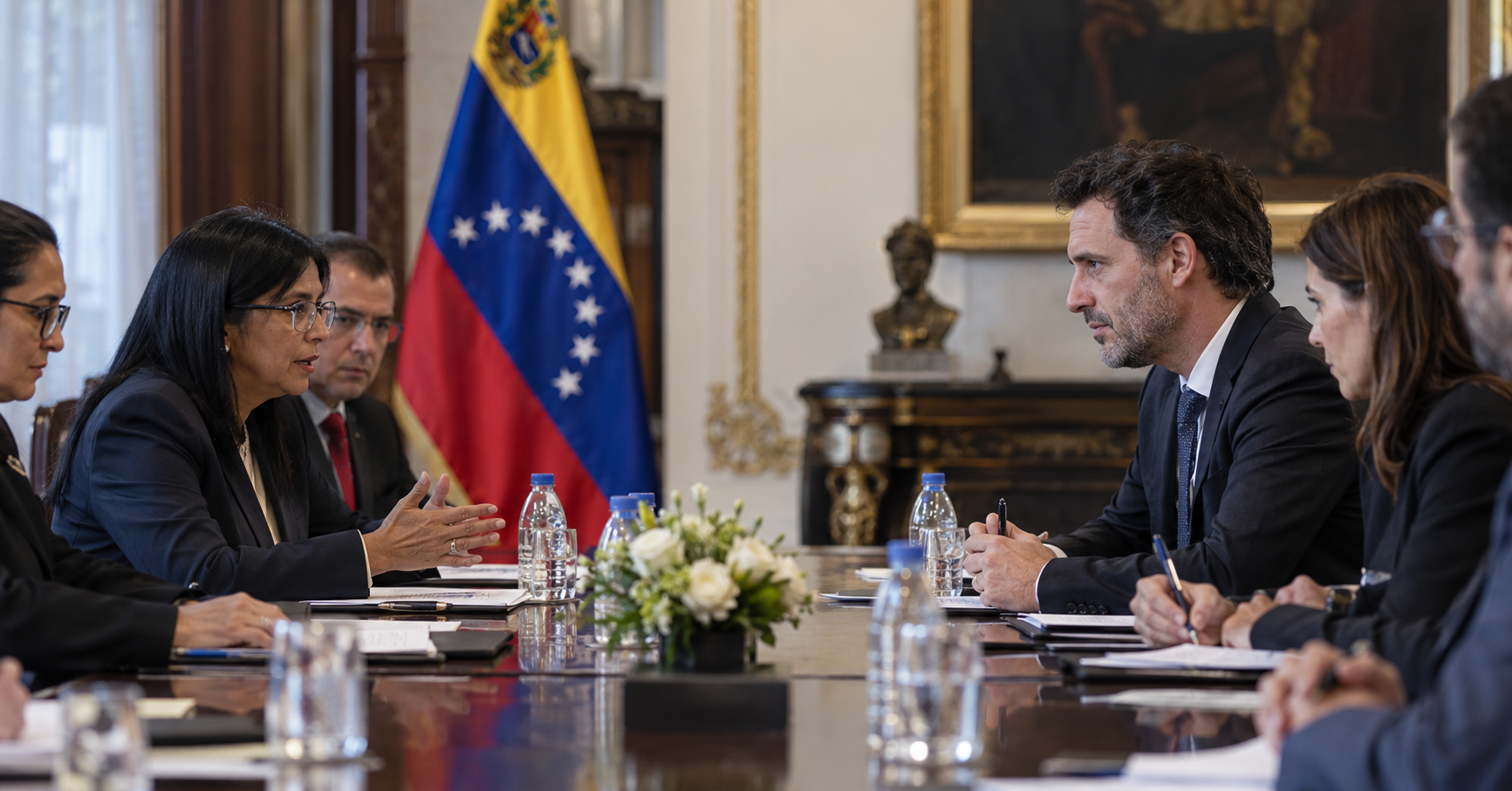
Venezuela's interim president, Delcy Rodríguez, received representatives of Human Rights Watch in Caracas on Thursday, in a meeting led by the organization's deputy executive director, Federico Borello, according to the outlet AlbertoNews. The meeting marks a milestone in bilateral relations, taking place eighteen years after the Venezuelan government expelled José Miguel Vivanco in 2008, then the group's director for the Americas.
The rapprochement comes amid the political and economic changes set off by the U.S. military operation that toppled President Nicolás Maduro in January. Under the previous government, which was marked by a heavy concentration of power and restrictions on independent work, the country closed off space for external oversight and curtailed the activities of multilateral organizations devoted to defending fundamental guarantees.
During the talks, the delegation and the Venezuelan government discussed measures aimed at promoting pluralism of expression and consolidating an environment of democratic coexistence, according to an official statement released by the outlet. The dialogue also sought to reaffirm a commitment to strengthening peace, diplomacy and coordinated work with international bodies, in a context in which the interim administration faces strong pressure from Washington.
Since taking office, Rodríguez's administration has released numerous political prisoners and announced plans to close El Helicoide prison, a facility that international organizations have identified as a systematic center of detention and abuse. The government also reported the unblocking of several news websites that had been censored for years in the country's digital ecosystem.
Despite these signs of easing, recent reports by United Nations investigators warn that the state's control apparatus remains in operation, raising questions about the structural depth of the institutional reforms under way. At the same time, the current administration has pushed to open the mining, oil and electricity sectors to foreign and private capital in order to revitalize the national economy.