News
U.S. links Falklands stance to pressure on UK to raise military spending
U.S. President Donald Trump was asked on August 31, 2026, at the White House by a reporter whether his government was reviewing the U.S. position on the Falkland Islands, according to Bloomberg Línea.
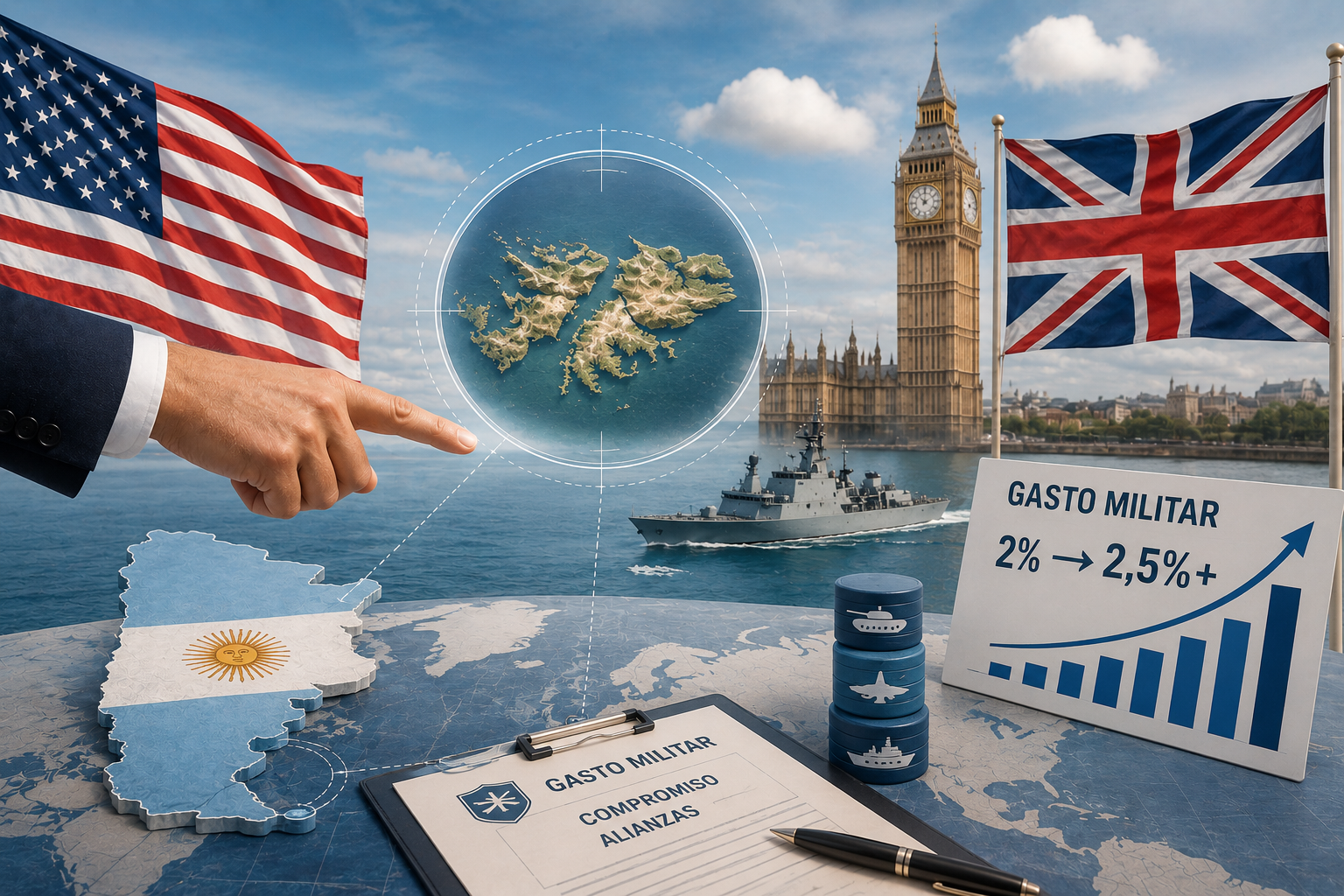
U.S. President Donald Trump was asked on August 31, 2026, at the White House by a reporter whether his government was reviewing the U.S. position on the Falkland Islands, according to Bloomberg Línea. In response, the president said: "I always review all positions. That's just one of many." Following these remarks, a spokesperson for his administration reaffirmed Washington's official position of neutrality: "We recognize that there are competing sovereignty claims between Argentina and the United Kingdom. We recognize the United Kingdom's de facto administration of the islands, but we take no position on the sovereignty claims of either party."
With this statement, it is clear that the United States has not announced any recognition of Argentine sovereignty over the archipelago and maintains its historical neutrality in the dispute. U.S. diplomacy is opting to keep a strategic balance without altering its traditional line on the conflict in the South Atlantic.
However, the press inquiry responds to a prior leak. On August 28, 2026, the British newspaper The Telegraph reported that Pentagon officials are weighing a review of U.S. support for the British position on the Falklands, linking this backing to Washington's demands on military spending within the North Atlantic Treaty Organization (NATO). The article clarifies that these are internal deliberations attributed to anonymous Pentagon sources and not official announcements. A senior official cited by the British outlet said of the Falklands: "I can say that the conversations are frank and no option is ruled out." On the British defense plan, he added: "We have seen the defense investment plan, and it is a step in the right direction. But a step in the right direction is not enough." In the same vein, Elbridge Colby, the Pentagon's policy chief, said: "We expect to see more from countries like the United Kingdom."
The backdrop to this pressure is strictly financial. Donald Trump is pushing NATO members to reach defense spending of 5% of gross domestic product (GDP), according to the Bloomberg Línea report. For its part, the United Kingdom has not committed to reaching 3% of GDP by 2030. These demands contrast with the alliance's existing agreements, under which NATO countries pledged to devote 3.5% of GDP to defense and 1.5% to infrastructure by 2035.
Increasing military spending by several percentage points of GDP represents a colossal financial effort for any economy. In practice, these additional resources must be obtained through a tax reform that raises revenue, through the issuance of new public debt, or by reallocating existing budget items. Since there is no unlimited new money, every point of GDP diverted to purchasing weapons or maintaining troops is directly subtracted from other areas of the national budget, such as productive investment or public services.
Archive, 2007. The White House, in Washington. Photo: Diego Delso, CC BY-SA 3.0, via Wikimedia Commons.