News
Academy of Economic Sciences warns of risks of formal dollarization in Venezuela
On September 10, 2026, the Academy of Economic Sciences of Venezuela warned about the risks of replacing the bolívar with the US dollar.
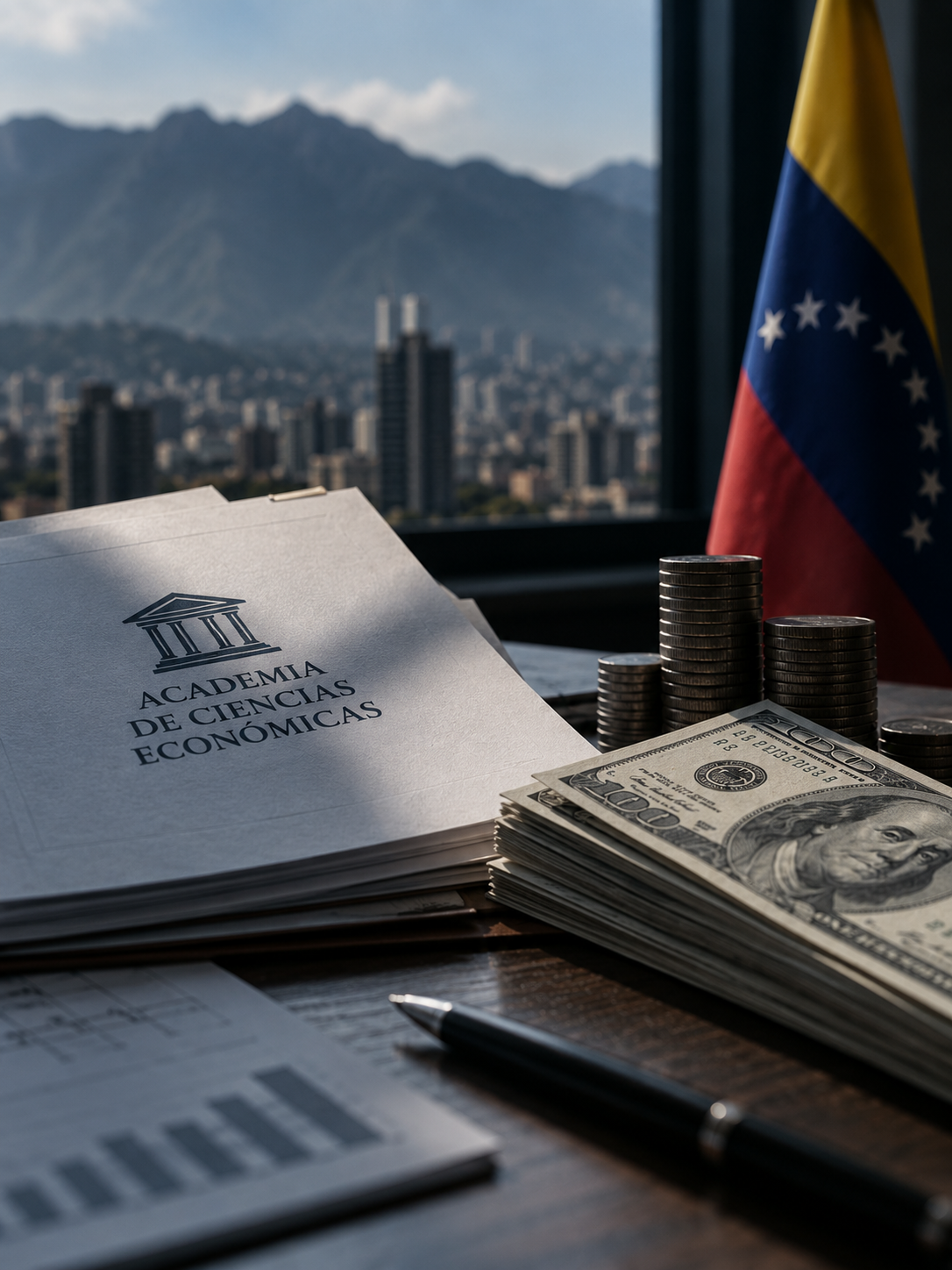
On September 10, 2026, the Academy of Economic Sciences of Venezuela warned about the risks of replacing the bolívar with the US dollar. According to El Nacional, the institution said full dollarization would impose extreme rigidities on the country's economy, and it therefore proposed a bimonetary or multicurrency regime accompanied by deep institutional reforms.
The loss of the national currency would mean that the Central Bank of Venezuela would lose its capacity to design monetary policy and to act as lender of last resort. In practice, this means the country could not adjust its interest rates or exchange rate to gain competitiveness or cushion external shocks, leaving it directly exposed to the availability of foreign currency earned from exports.
This warning comes amid high price volatility. According to data from the International Monetary Fund, Venezuela recorded annual inflation of 337.5% in 2023, which fell to 49.4% in 2024 and rose again to 252.0% in 2025. For 2026, the International Monetary Fund projects inflation of 387.4%, while its projection for 2027 is 94.4%. In this same context of instability, the official price of the dollar rose by more than 32 bolívares in the first ten days of September 2026, according to Central Bank of Venezuela records reported by El Pitazo.
Devaluation and rising prices are hitting household budgets hard. According to the Contrapunto portal, political leader Edinsón Ferrer denounced that cumulative inflation of 200% (in the context of a trade protest over the start of the school year) has crushed family budgets, transportation and the basic food basket. Faced with this situation, the private sector is seeking stabilization alternatives: the Efecto Cocuyo portal reported that the business association Consecomercio proposed formalizing a bimonetary system that would preserve the bolívar, while the newspaper Crónica Uno reported that other commercial sectors are calling for the legalization of dollar use, using Peru's model of currency coexistence as a reference.
In the short term, the debate will center on whether the Venezuelan government will keep the current arrangement or move toward formalizing a bimonetary system, as the commercial sector is requesting, under the academic warning that any measure must prioritize institutional stability.