News
Lula and Bolsonaro close campaigns ahead of Brazil's election
On October 3, 2026, Brazil's presidential candidates closed their campaign activities amid a climate of intense political polarization, according to MVS Noticias.
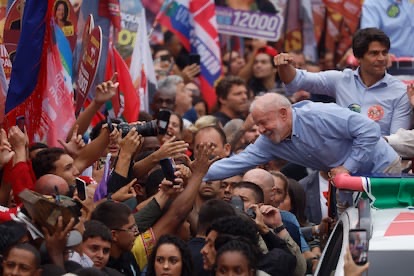
On October 3, 2026, Brazil's presidential candidates closed their campaign activities amid a climate of intense political polarization, according to MVS Noticias. More than 158 million eligible Brazilians are called to the polls this Sunday to elect a president, vice president, legislators and governors. The race is primarily between the incumbent, Luiz Inácio Lula da Silva, and Senator Flávio Bolsonaro, son of former president Jair Bolsonaro.
Under the rules of the Superior Electoral Court, a candidate must win more than 50% of valid votes to win outright. If no candidate reaches that majority, the top two vote-getters will face off in a runoff (balotaje) scheduled for late October. The latest polls put Lula da Silva at 45% of valid votes against 40% for Flávio Bolsonaro, which projects the need for a runoff, a decisive milestone that has not occurred in a first round in the country for decades.
During the closing of his campaign, Lula da Silva led a walk in Rio de Janeiro, a political stronghold where Jair Bolsonaro won 56.5% of the votes in the previous presidential election. According to the state-run network Telesur, the president argued that natural resources must remain at the service of national interests and directly criticized his rival's financial ties. Lula da Silva specifically rejected the funds the senator admitted receiving from banker Daniel Vorcaro of Banco Master for a biographical film about his father, saying that this group cannot be allowed to govern again.
Meanwhile, the landscape of political financing shows a distancing from certain economic sectors. According to the newspaper Folha de S.Paulo, the business owners who made the largest donations to Jair Bolsonaro's campaign in the past have decided not to finance Flávio Bolsonaro's campaign for this election. This pullback follows the prison sentence handed down last year to former president Jair Bolsonaro for attempting a coup d'état.
Sunday's election will determine whether the polarization is resolved directly or whether the country must wait for the late-October runoff to learn who its next leader will be, in a context where the alignment of business support and the debate over democracy remain at the center of the scene.