News
Figuera and Rubio: US backs dialogue between opposition and Delcy Rodríguez.
U.S. Secretary of State Marco Rubio met on Friday, October 9, 2026, in Washington with Dinorah Figuera, president of the National Assembly elected in 2015, according to El Diario Venezuela - elDiario.com.
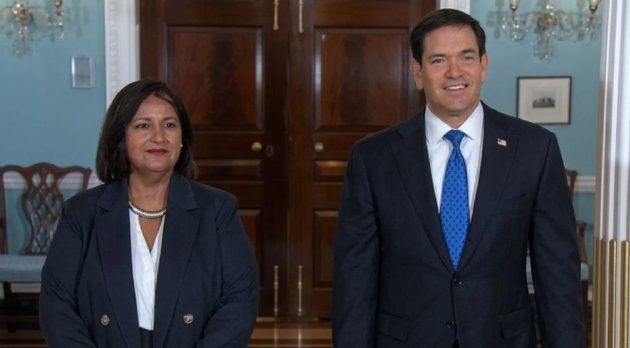
U.S. Secretary of State Marco Rubio met on Friday, October 9, 2026, in Washington with Dinorah Figuera, president of the National Assembly elected in 2015, according to El Diario Venezuela - elDiario.com. During the meeting, Rubio said that Figuera and her team have 100% support from the highest levels of the U.S. government, ahead of the resumption of political working sessions scheduled for October 14.
The meeting takes place within negotiations between the delegation of the 2015 National Assembly and the government of Delcy Rodríguez. This dialogue process has already completed previous rounds of talks, in which preliminary agreements were reached on restructuring the Supreme Court of Justice and the National Electoral Council. According to Rubio's statements reported by the outlet, the ultimate goal of this process should be free and democratic elections in the country.
Alongside the diplomatic track, the energy trade relationship shows its own dynamics. According to data published by El Nacional, Venezuelan oil exports to the United States rose 170%, driven by Citgo, a subsidiary of Petróleos de Venezuela (Pdvsa) in U.S. territory, which resumed purchases of domestic crude in March 2026 after a prolonged period of commercial inactivity. This percentage increase reflects a base effect, since the comparison is made against a prior period of complete standstill.
Although the political backing for the 2015 National Assembly and the resumption of crude flows coincide in time, the two processes run on separate tracks. Citgo's crude purchases respond to market decisions and not to the agenda of the political dialogue table. Going forward, the key question is how both the political negotiations in Venezuela and the bilateral energy trade flow evolve.