News
Venezuela records its highest oil output since 2019 amid severe logistical bottlenecks
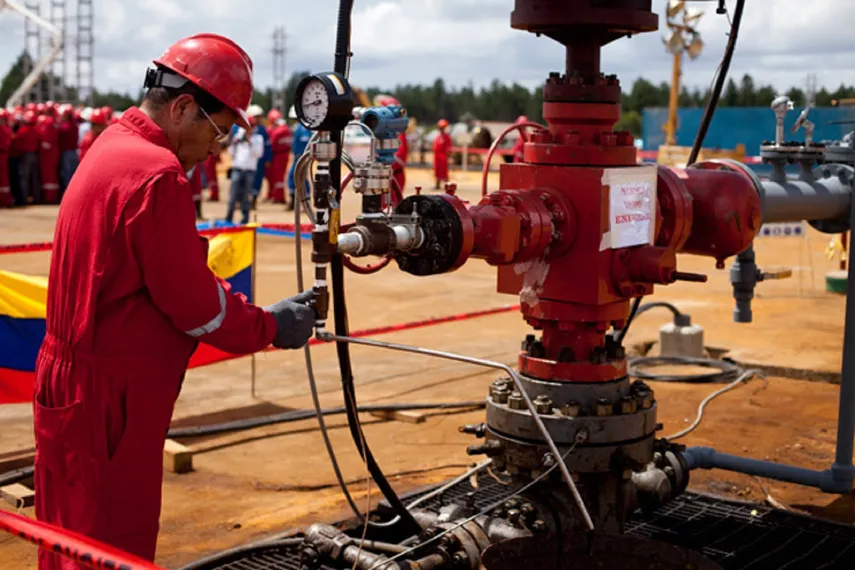
The Venezuelan government announced that the country has reached its highest level of oil production since 2019. According to the German news portal DW, which reported on August 25, 2026, acting president Decly Rodríguez said crude extraction rose 29.8% compared with levels recorded in January of this year.
The upward trend coincides with international reports from the Organization of the Petroleum Exporting Countries (OPEC). According to a report published by El Nacional, secondary sources in the global market estimated Venezuela's output at 1.117 million barrels per day in July. The government delegation, for its part, reported a slightly higher figure to the organization, putting extraction at 1.2 million barrels per day for the same period.
Despite the increase in volume, the marketing of crude faces serious operational difficulties at loading ports. According to El Nacional, citing information from the Reuters news agency, several oil tankers have had to wait up to a month to load the crude. These delays are mainly due to the deterioration of port infrastructure, constant power outages and problems with crude quality, factors that slow the pace of international shipments.
On the macroeconomic front, projections for the sector are optimistic in terms of short-term momentum. El Nacional reported that, according to estimates by Alejandro Grisanti, director of the firm Ecoanalítica, growth of more than 10% is expected for the Venezuelan economy in 2027, driven by the reactivation of idle wells. However, it is crucial to clarify that this double-digit rate largely reflects what is known as the "base effect": after years of deep contraction that shrank the economy to a fraction of its former size, any moderate increase translates statistically into a high growth percentage, without this amounting to a complete structural recovery.
The sustainability of this reactivation is also subject to the investment framework. According to statements by Evanan Romero, former chief executive of Petróleos de Venezuela (PDVSA), as reported by El Nacional, the lack of legal certainty and the absence of real private capital limit the industry's potential. Romero warned that the state company intends to maintain control of 60% of national production without having the financial capacity to provide the capital required for operations.